
Wood grain aluminum cladding looks warm, but specifications can get hairy: substrate, finish, fire evidence, wind loads, sub-framing, and fasteners all matter.
So this guide tracks the four specification steps, from finish and fire documentation to engineering, fabrication, and installation.
Why Wood Grain Aluminum Cladding Elevates Modern Facades
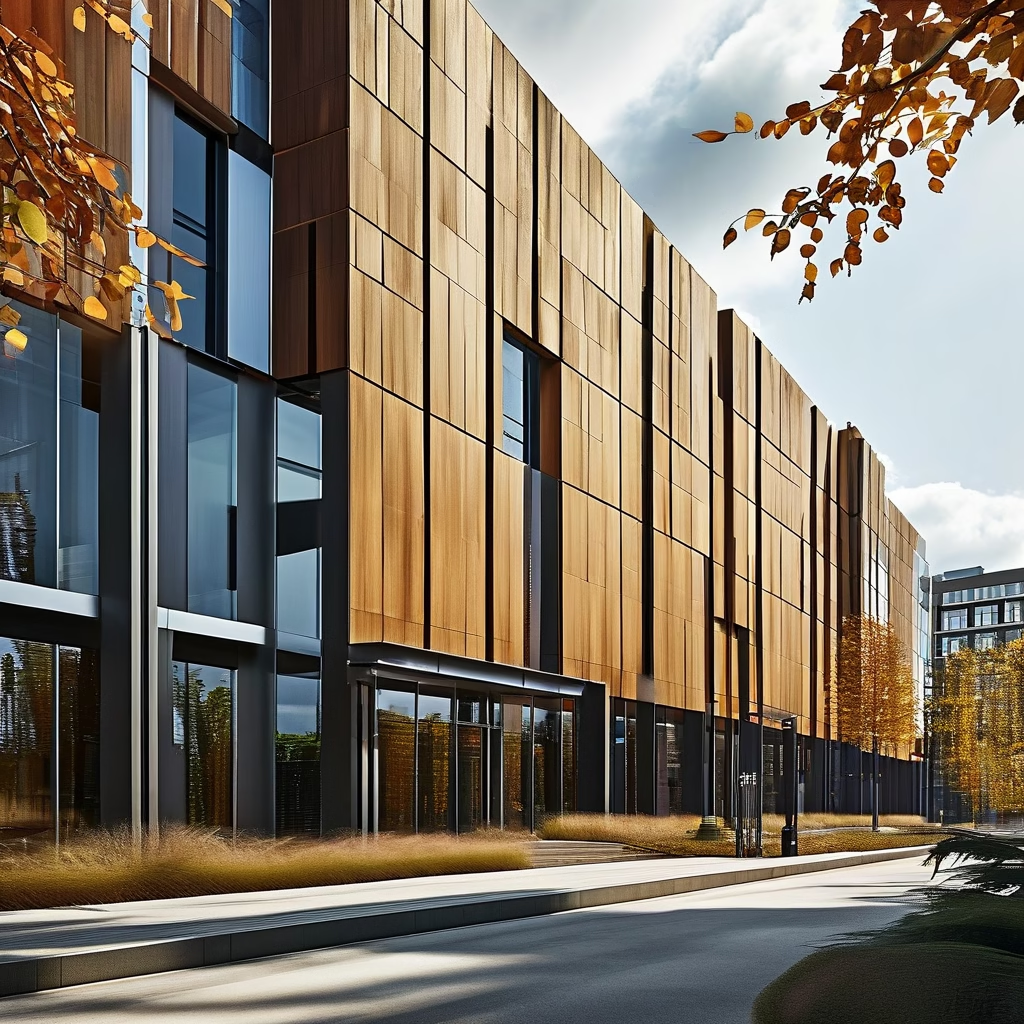
Wood grain aluminum cladding brings the warmth of timber to modern exteriors without the same upkeep headaches. From curtain walls to louvers, wood grain aluminum combines practical metal performance with a convincing natural finish, giving designers plenty of room to play.
Seamless Integration with Building Facade Systems
Wood grain aluminum cladding fits neatly into the building envelope, including curtain wall assemblies and exterior walls.
-
Connection planning
-
A mounting bracket secures panels to the supporting frame.
- A concealed interlocking system can keep visible hardware to a minimum.
-
-
Edge detailing
-
Each installation detail coordinates the joint design, sealant gaps, and drainage paths.
- Where needed, a thermal break limits heat transfer through metal parts.
-
The result is cleaner timber-look lines without making installation a headache.
Authentic Wood Grain Texture Finish and Aesthetic Appeal
Modern sublimation printing transfers grain imagery onto aluminum, creating a convincing timber-look with tonal variation and visual depth. A controlled surface finish, including a low-gloss matte texture, can soften reflections.
That gives wood grain aluminum a natural appearance and visual warmth suited to contemporary architectural design. Unlike natural boards, aluminum also avoids common timber movement caused by moisture changes.
PVDF Coating for Long-Lasting Color and UV Resistance
For exposed wood grain aluminum cladding, PVDF finishes add a durable protective layer.
-
PVDF uses fluoropolymer resin for strong weatherability.
-
UV stability supports fade prevention and long-term color retention.
-
Added corrosion resistance helps protect aluminum in demanding outdoor conditions.
-
The coating makes fluorocarbon aluminum veneer practical for balconies, airports, and cultural buildings. Upkeep is low, though “maintenance free” should be understood as minimal routine care rather than no cleaning at all.
Lightweight Extruded Aluminum Profile Meets Structural Demands
The extrusion process pushes heated metal alloy through a shaped die, producing accurate profiles for panels, louvers, and baffles. That keeps facade weight down while maintaining useful rigidity.
-
Engineers select profile geometry for required structural integrity.
-
Profile thickness and supports are checked against project wind load.
-
Connections are sized for suitable load-bearing capacity and dimensional stability.
So, wood grain aluminum cladding can deliver the timber style architects want while meeting project-specific structural demands.
4 Steps To Specify Wood Grain Panels
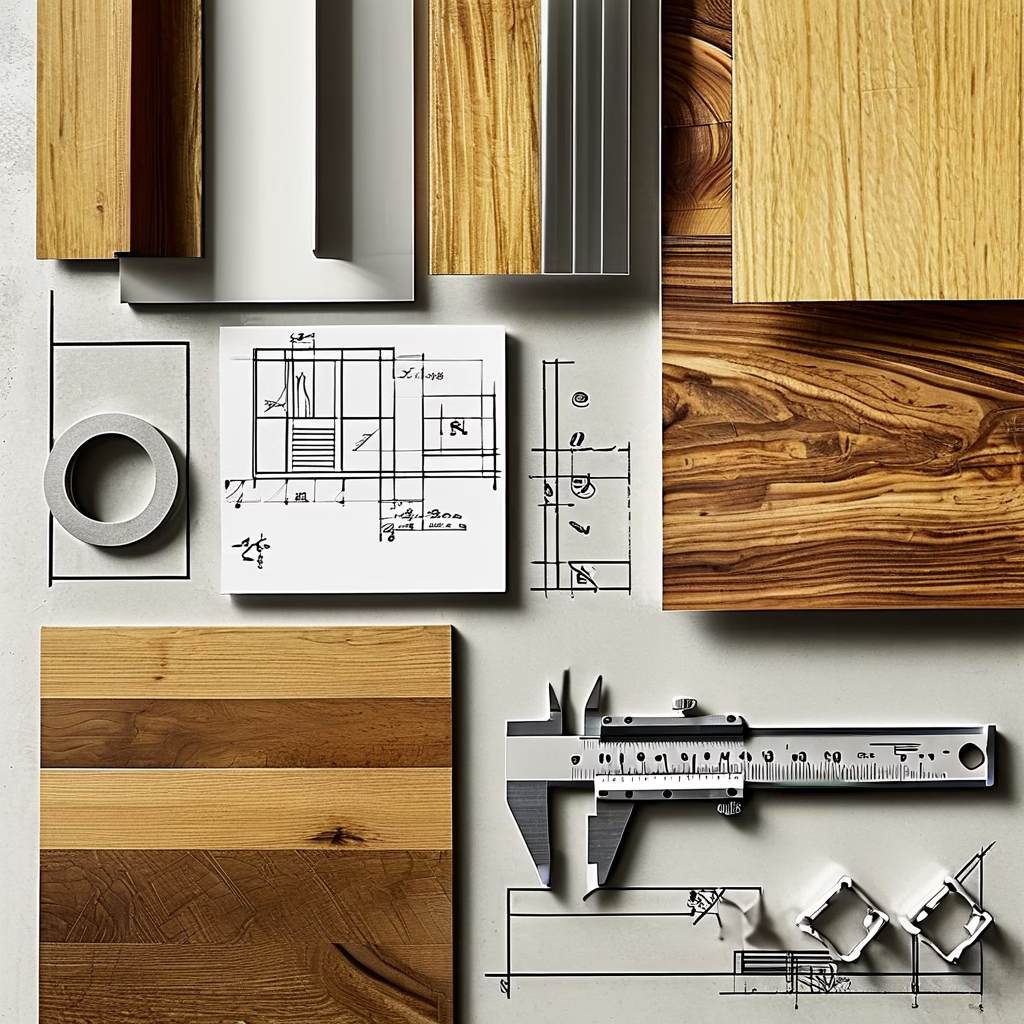
Specifying wood grain aluminum cladding gets much easier when material, finish, test data, and fixing details are settled early. A clear brief keeps the timber-look design practical, controls cost, and helps installers avoid nasty surprises on site.
Selecting Your Material: Wood Grain Aluminum Cladding vs. Powder Coated Composite Panel
Choose wood grain aluminum cladding or a powder coated composite panel by matching the panel to real project demands.
-
Material priorities
-
Solid aluminum offers good durability, forming flexibility, and weather resistance for an exterior timber-look facade.
-
Metal composite material can reduce weight and cost, while rigidity and fire performance depend on core type and panel build-up.
-
-
Project fit
- Check curves, panel size, fire rules, and budget before approving the architectural panel. Aluminum Curtain Wall can also align samples with facade drawings.
Defining Finish Requirements with Sublimation Transfer Printing or Anti-Scratch Anodizing
Finish specs should say more than “wood effect.” For wood grain aluminum cladding, pin down appearance and service life.
-
Visual target
- Define wood grain pattern, color, gloss, and texture.
-
Exposure target
-
State required UV resistance, color retention, and protective coating performance.
-
Compare sublimation transfer printing, PVDF or electrostatic coating, and anti-scratch anodizing against the required surface finish.
-
Verifying Technical Standards: AAMA 2605 Compliance and Wind Load Resistance Test
Paperwork matters here, big time.
-
Coating evidence
- Verify applicable AAMA 2605 compliance, technical standard, weatherability, and certification.
-
Building performance
-
Review the wind load resistance test, fire classification, rigidity, and structural integrity against the project performance specification.
-
Confirm manufacturer records and ISO 9001 quality procedures.
-
Coordinating Accessories: Concealed Fastening Clips, Aluminum Sub-Framing System, and Sealants
Good-looking wood grain metal still depends on what sits behind it.
-
Support
- Coordinate concealed fastening clips, aluminum sub-framing system, galvanized brackets, framing profile, and expansion anchors.
-
Weatherproofing
-
Match sealants and each joint seal to movement and exposure.
-
Finalize installation accessories and mounting hardware through CAD details, engineering checks, and approved shop drawings before wood grain aluminum cladding fabrication.
-
How Durable Is Wood Grain Aluminum Cladding?
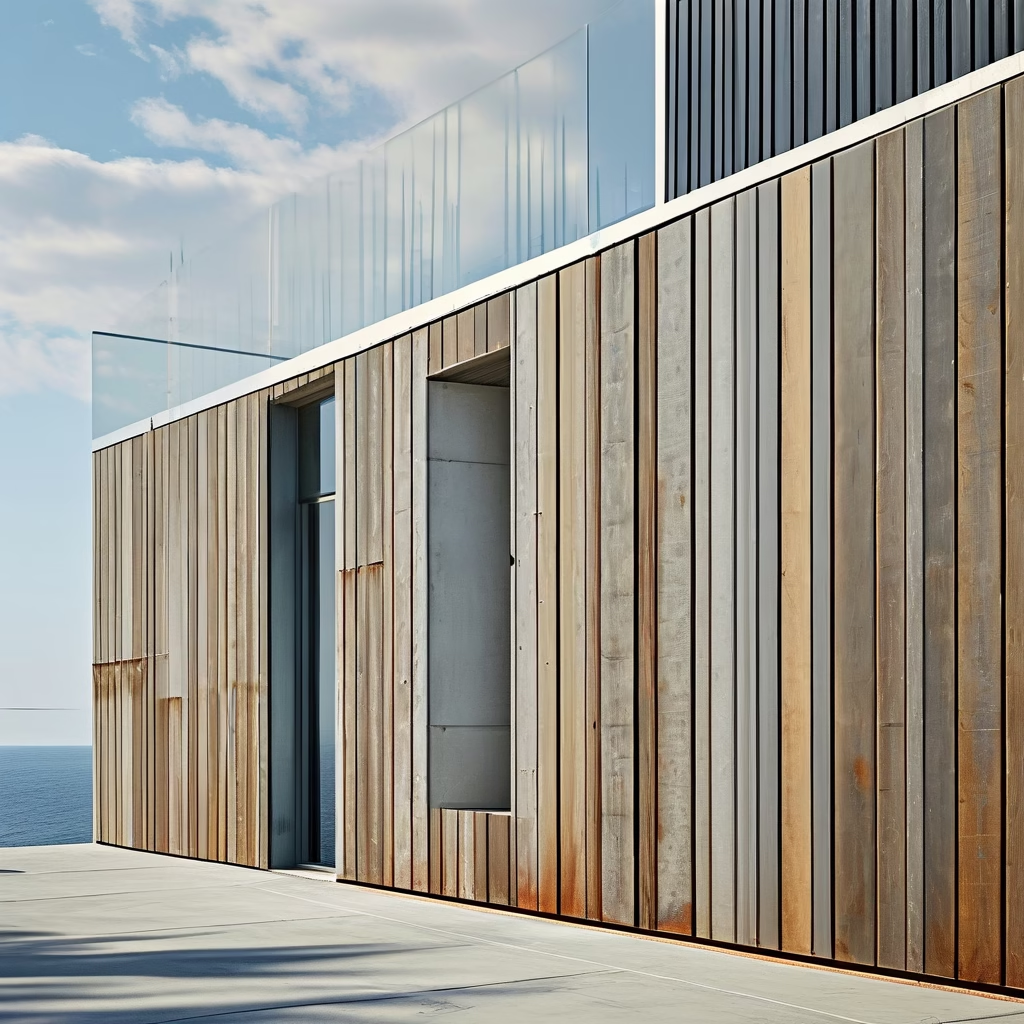
Good wood grain aluminum cladding can keep its timber-style look for years, but durability is not just skin deep. Fire design, coating chemistry, local weather, and routine care all count. For Aluminum Curtain Wall projects, checking the full facade specification before purchase helps avoid nasty surprises later.
Assessing Fire Retardant Grade A2 Performance
A Grade A2 claim should match the tested assembly and local building regulations, not merely the visible aluminum sheet.
-
Check documented fire retardant classification.
-
Confirm the core material and substrate.
-
Match thermal insulation, sub-frame, fixings, and joints to the tested configuration.
-
-
Verify applicable safety standards.
- A changed component can affect the assembly result.
Even when aluminum is non-combustible, wood grain aluminum cladding should be judged as a complete facade system.
Weatherability and UV Resistance in Coastal and Mountain Environments
Coastal salt and high-altitude sun are pretty tough on exterior finishes. Specify strong UV resistance, color retention, and proven weatherability.
For a coastal environment, suitable aluminum pretreatment and salt spray testing support corrosion control. In a mountain climate, a quality fluoropolymer coating can better handle intense sunlight and temperature swings. Durable wood grain aluminum cladding also needs moisture-ready detailing.
Impact of Electrostatic Spraying on Scratch and Corrosion Resistance
Proper electrostatic spraying helps coating reach the aluminum evenly.
-
Prepare the metal.
- Quality metal pretreatment improves adhesion and corrosion resistance.
-
Control application.
-
Consistent film thickness reduces weak spots.
-
Well-specified powder coating supports surface hardness and scratch resistance.
-
Still, coated wood-grain aluminum can be damaged by sharp tools, so careful handling on site matters.
Maintenance Needs for Commercial Skyscraper Facades and Residential Balconies
Maintenance requirements differ by access and exposure. A skyscraper facade needs planned washing and periodic inspection for joints, coatings, and fixings; good pollution resistance makes that job easier.
Residential balcony screens are simpler: wash away grime, inspect fasteners and sealants, and repair early surface degradation. Even a self-cleaning finish still needs checks to keep timber-look aluminum looking sharp.

 English
  Français
  Bahasa Indonesia
  Deutsch
  Italiano
  Español
  العربية
  Español de México
  Nederlands
  香港中文
香港中文