
A Perforated Aluminum Curtain Wall can make or break a facade, balancing glare, airflow, and structural stress under real-world pressure.
Pick the wrong hole pattern or thickness, and costs climb while performance quietly slips out the door.
Aluminum delivers natural strength-to-weight efficiency, which is exactly what guides engineers when they balance perforation and panel thickness.
Reading Notes on Perforated Aluminum Curtain Wall Harmony
➔ Strength-to-Weight Ratio: Leverage aluminum’s high efficiency to minimize sub-structure loads while ensuring wind-load resilience.
➔ Perforation Patterns: Select circular, slotted, or custom laser-cut layouts to balance light transmission, shading, privacy, and acoustics.
➔ Weather and UV Resistance: Apply anodizing or PVDF coating on corrosion-resistant alloys and optimal thickness to maintain performance and appearance.
3 Key Factors In Perforated Aluminum Curtain Wall
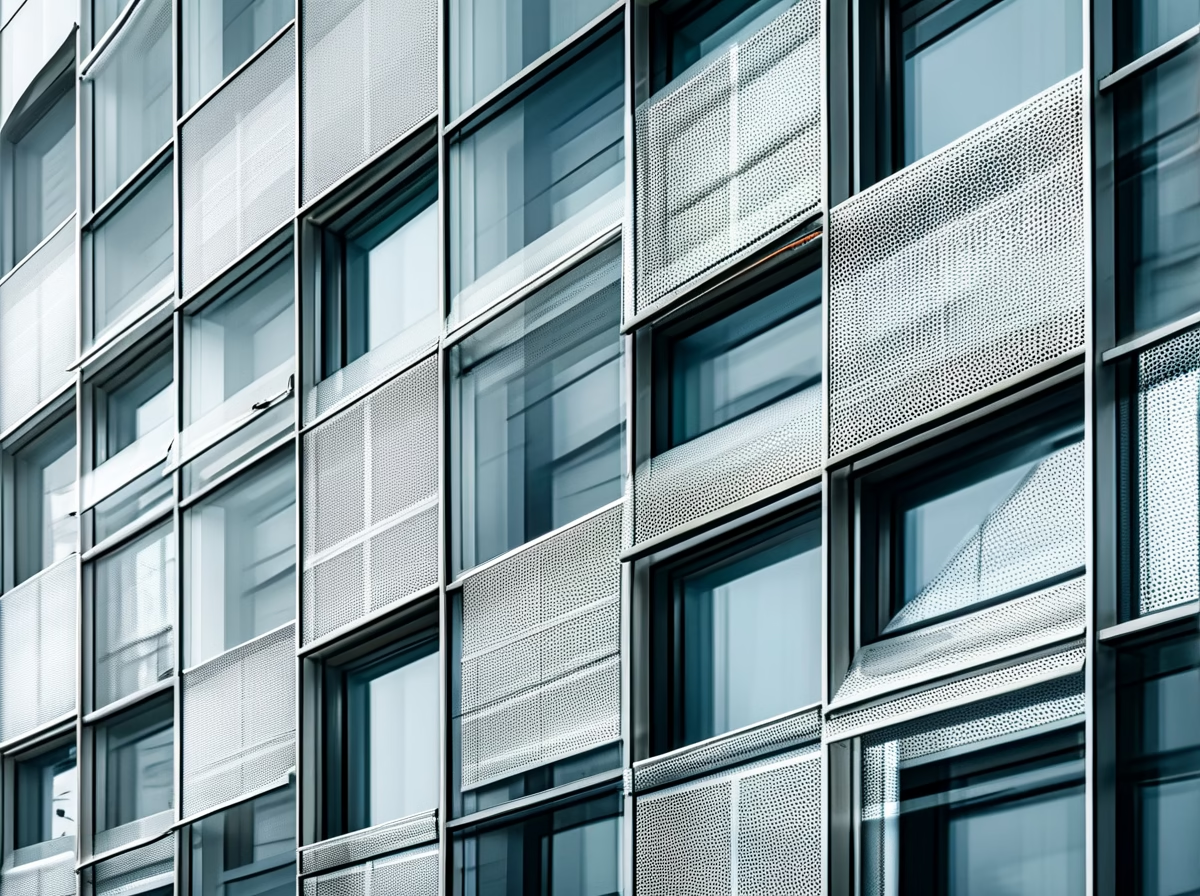
A Perforated Aluminum Curtain Wall isn’t just about looks; it’s a balancing act of strength, light, and durability. Get these three dialed in, and your perforated aluminum facade performs as good as it looks.
Strength-to-Weight Ratio and Structural Integrity
When working with a perforated aluminum curtain wall, strength comes from smart material use, not bulk. The sweet spot sits between panel thickness, perforation size, and hole spacing, all tied to structural load and wind pressure.
-
Core factors shaping performance:
-
aluminum alloy selection affects tensile strength and material density
-
thinner panels reduce weight but must still resist deformation
-
tighter hole spacing increases rigidity but changes airflow and light
-
-
Start with wind conditions → define structural load
-
Adjust panel thickness → meet safety margins
-
Fine-tune perforation size → keep integrity without overloading
With Aluminum Curtain Wall systems, you get lighter panels that still hold their own under stress, cutting down on heavy support framing.
Aesthetics vs. Light Transmission Balance
Design here isn’t random—it’s controlled through the hole pattern and perforation percentage. A Perforated Aluminum Curtain Wall can shift from bold exterior identity to soft interior daylighting just by tweaking geometry.
-
What shapes the outcome:
-
natural light vs glare control
-
visual appeal vs privacy level
-
alignment with overall design intent
-
Short takes:
Small holes = subtle light, higher privacy
Large perforations = brighter interiors, stronger visual punch
Balanced layouts = better daylighting without discomfort
A well-designed perforated aluminum facade makes the building feel alive throughout the day, not washed out or overly dark.
Weather Resistance and UV Stability
Durability is where coatings step in, and it’s non-negotiable. A Perforated Aluminum Curtain Wall faces constant environmental exposure, so protection layers matter.
-
Protection system breakdown:
-
Surface treatment
-
anodization boosts corrosion resistance
-
powder coating adds thickness and texture
-
PVDF improves UV degradation resistance
-
-
Performance outcomes
-
stable color stability over time
-
extended material durability
-
reduced maintenance cycles
-
-
Think of it like armor: without a proper protective coating, even high-grade aluminum won’t age well. Aluminum Curtain Wall solutions that combine finish quality with smart design keep façades looking sharp for years, not just at handover.
Types Of Perforated Aluminum Curtain Wall Patterns
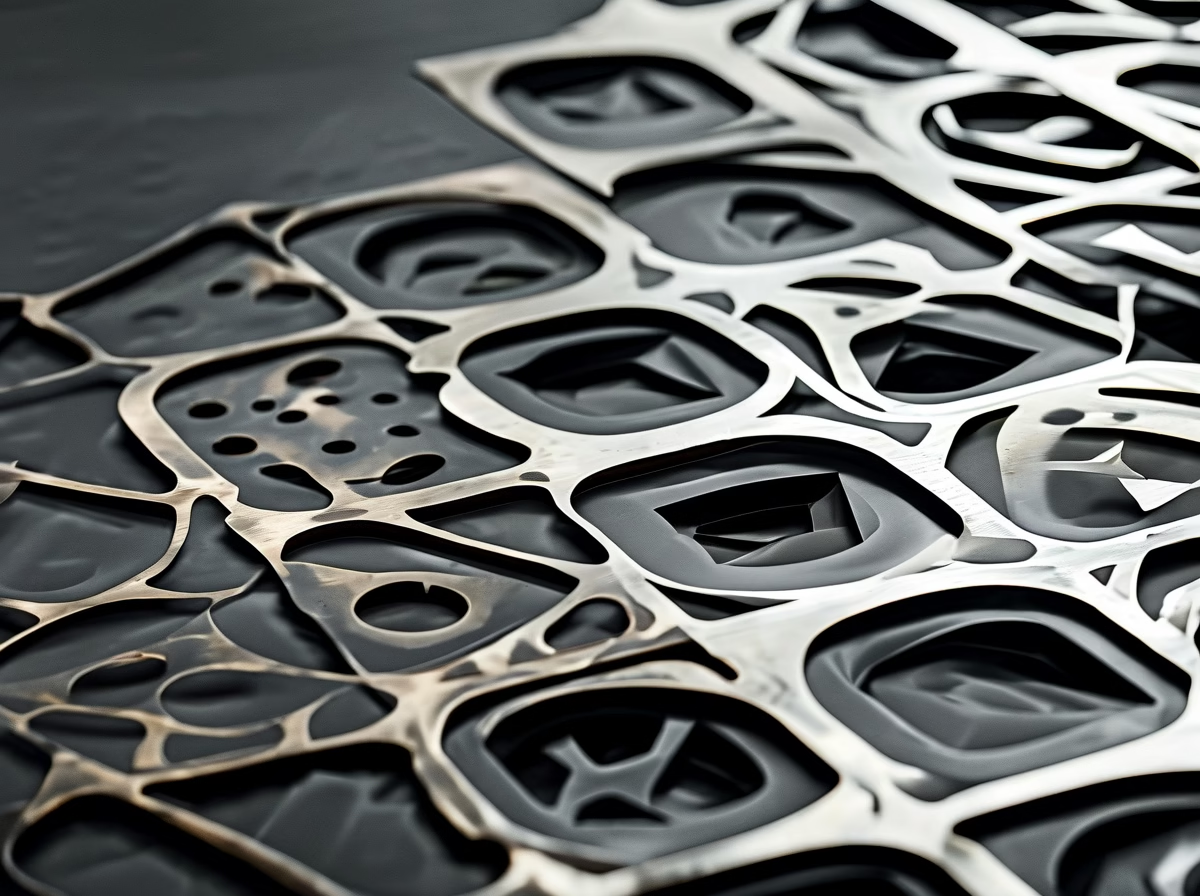
A Perforated Aluminum Curtain Wall isn’t just a skin—it shapes light, airflow, and vibe. Break the keyword down—perforated / aluminum / curtain wall—and you get a system that balances structure with style. From clean circular grids to fine acoustic skins, each pattern tweaks performance while keeping that crisp aluminum facade look.
Circular Perforation via CNC Punching
-
Core setup
-
Material: aluminum sheet
-
Process: CNC punching with a calibrated punching machine
-
-
Geometry control
-
hole diameter + pitch → defines open area
-
tighter pitch = softer daylight, stronger panel
-
-
Outcome layers
-
Visual: uniform circular holes read clean at distance
-
Performance: predictable light transmission, easy fabrication
-
-
Practical note
- For a Perforated Aluminum Curtain Wall, this is the cost-smart baseline many teams start with, including projects by Aluminum Curtain Wall.
Slotted Patterns for Ventilation and Shading
You’ll see slotted holes doing double duty—moving air while cutting glare. Think rectangular holes tuned by slot width and slot length so airflow stays active and sun control feels intentional.
1) Wider slots boost cross-ventilation.
2) Longer runs emphasize rhythm across the aluminum curtain wall.
3) Staggered layouts reduce heat gain without killing views.
It’s a go-to variation of perforated aluminum facade design when climate response matters.
Custom Geometric Designs with Laser Cutting
Step flow for tailored panels on a Perforated Aluminum Curtain Wall:
-
Sketch custom designs → map geometric patterns.
-
Prototype panels; validate scale and sightlines.
-
Execute laser cutting for intricate shapes with precision cutting.
-
Install on aluminum panels with mock-up checks for alignment.
-
Iterate for design flexibility across elevations.
Acoustic Micro-Perforation for Sound Attenuation
-
System intent
- Tiny micro-perforation fields manage sound attenuation
-
Design stack
-
Face: aluminum skin with controlled perforation size
-
Cavity: backing layer to enhance sound absorption
-
-
Measured guide
| perforation size (mm) | open area (%) | noise reduction (NRC) |
|---|---|---|
| 0.5 | 8 | 0.55 |
| 0.8 | 12 | 0.65 |
| 1.0 | 15 | 0.72 |
| 1.2 | 18 | 0.78 |
Used right, this Perforated Aluminum Curtain Wall doubles as an acoustic shield, not just a façade.
Circular Vs. Slotted Holes: Which Wins?
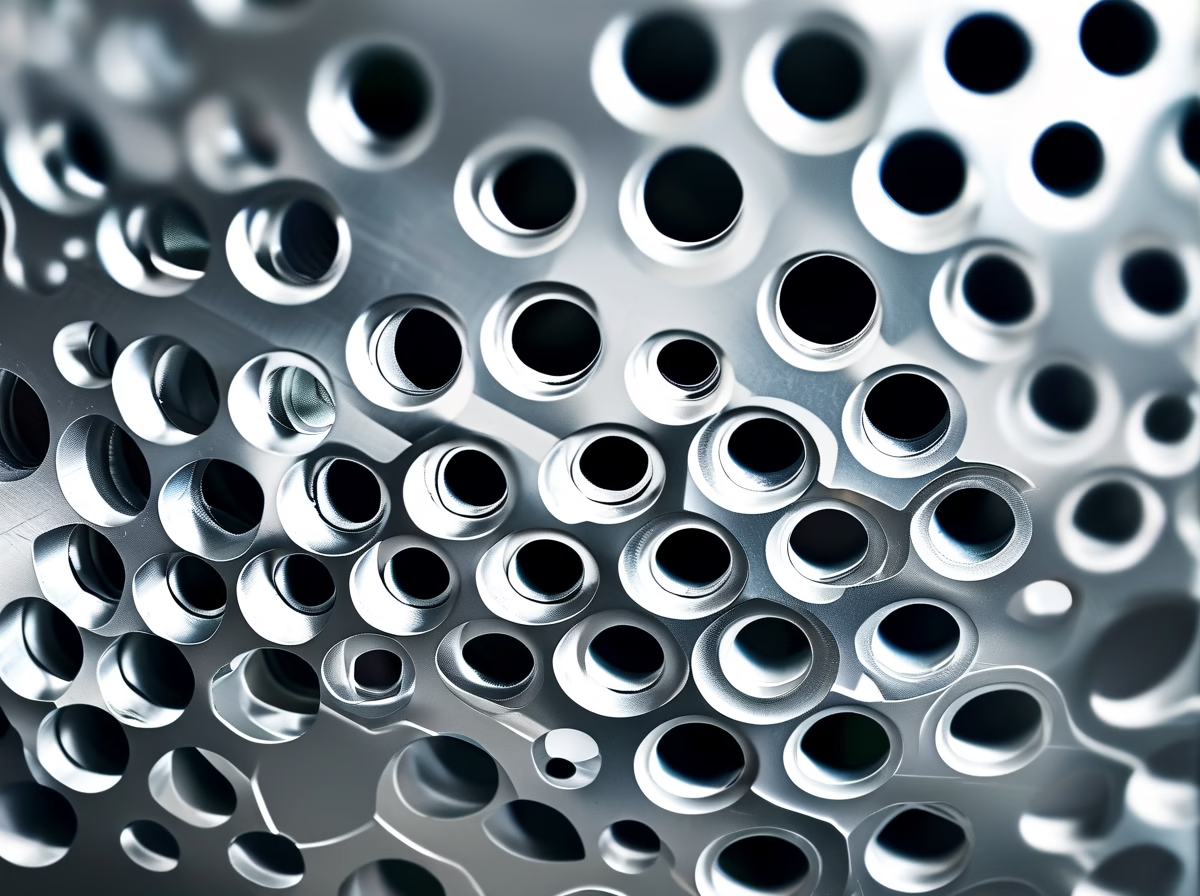
Perforation choices shape how a Perforated Aluminum Curtain Wall performs in real life—looks, airflow, even sound. From aluminum curtain wall panels to perforated facade systems, small geometry shifts make a big difference. Here’s a clear, down-to-earth look at how circular and slotted options behave when used in modern Aluminum Curtain Wall designs.
Circular Holes
Circular openings keep things balanced, both visually and structurally, which is why a perforated aluminum curtain wall often defaults to this pattern in high-traffic builds.
-
Performance fundamentals
-
Structural behavior
-
Even stress flow improves structural stability
-
Lower risk of crack propagation under load
-
-
Environmental response
-
Soft light diffusion reduces glare
-
Moderate air permeability without overexposure
-
-
-
Design and fabrication
-
Pattern logic
- Repeating perforation pattern creates clean visual effect
-
Production
-
High manufacturing efficiency with CNC punching
-
Consistent hole geometry lowers error rates
-
-
-
Functional impact
-
Interior comfort
- Balanced acoustic performance in offices or transit hubs
-
Brand-ready façade
- Aluminum Curtain Wall systems using circular holes feel tidy, neutral, and widely adaptable
-
Scientific comparison snapshot:
| Hole Type | Open Area % | Stress Distribution | Fabrication Speed |
|---|---|---|---|
| Circular | 10–45% | Uniform | Fast |
| Circular | 45–60% | Moderate | Fast |
| Circular | 60–75% | Reduced strength | Medium |
| Circular | 75%+ | Weak | Slower |
Across most perforated aluminum facade setups, circular holes stay the safe, go-to choice.
Slotted Holes
Slotted designs push performance in a more directional way. A perforated aluminum curtain wall using slots feels more dynamic but needs tighter engineering control.
-
Key advantages
• Higher ventilation capacity along slot direction
• Improved drainage efficiency in rain-exposed façades
• Strong design versatility for bold exterior looks
1) Structural considerations
-
Long cuts reduce load-bearing capacity if unsupported
-
Extra framing helps manage thermal movement
2) Fabrication reality
-
Increased fabrication complexity compared to round punching
-
Alignment precision matters more in aluminum curtain wall panels
3) Practical use cases
-
Sun control façades (directional shading works great)
-
Industrial or transport hubs needing airflow
In Aluminum Curtain Wall projects, slotted patterns shine when airflow and shading take priority over pure strength. For a Perforated Aluminum Curtain Wall that needs personality and performance, slots bring attitude—just with a bit more engineering homework.
Why Thickness Matters In Aluminum Cladding?
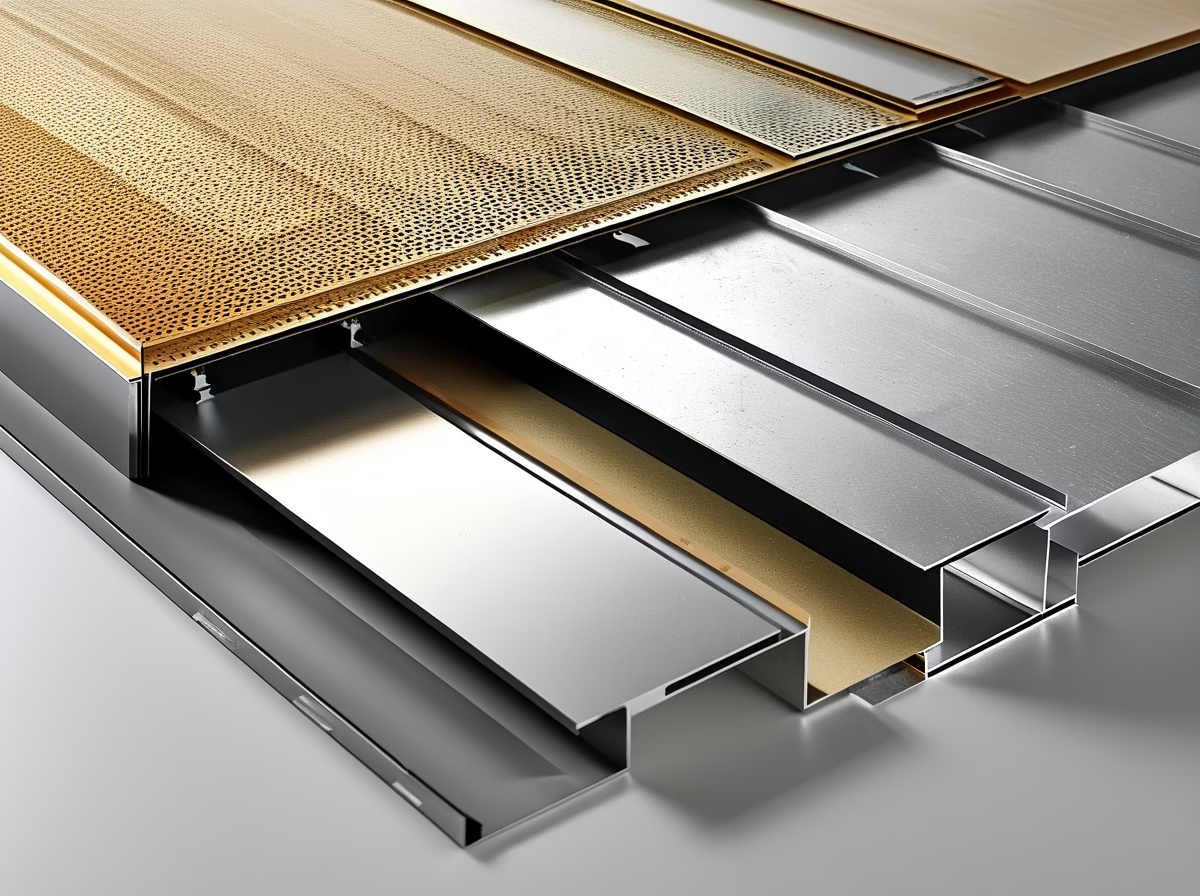
Thickness sounds like a dry spec, but it quietly decides how a facade behaves day to day. With Perforated Aluminum Curtain Wall systems, even small changes shift heat flow, wind response, and installation load. In real projects, the sweet spot balances comfort, safety, and cost while keeping that clean aluminum curtain wall look people want.
Thermal Insulation and Energy Efficiency Trade-offs
-
Thin panels speed up heat transfer, raising energy consumption if the insulation material isn’t tuned.
-
Thicker skins lower thermal conductivity impact, helping the building envelope hit better U-value and R-value targets.
1) Pair Perforated Aluminum Curtain Wall panels with backing insulation.
2) Adjust cavity depth to manage airflow and heat gain.
3) Verify U-value against local targets before fabrication.
Short takes:
-
Perforated aluminum lets light and air pass; thickness decides how much heat tags along.
-
In an Aluminum Curtain Wall setup, the panel is one layer—don’t ignore the stack.
Wind Load Resistance and Structural Integrity
-
✓ Higher thickness boosts panel rigidity and cuts deflection.
-
✓ Better grip for fasteners, improving load bearing safety under wind pressure.
Multi-step flow:
-
Read site wind maps and building codes.
-
Size panels to limit span.
-
Increase thickness where corners amplify pressure.
-
Test fixings for pull-out and fatigue.
Nested choices:
-
Design targets
-
Serviceability → deflection limits
-
Safety → structural stability margins
-
-
System parts
-
Panels → thickness, perforation rate
-
Sub-frame → bracket spacing
-
A well-tuned Perforated Curtain Wall avoids oil-canning and keeps lines crisp.
Weight Management and Strength-to-Weight Ratio
-
Material side: material density, tensile strength, yield strength define how far you can go without bulk.
-
Build side: lighter panels cut structural load and speed installation efficiency.
Balanced approach:
1) Start with required strength.
2) Trim thickness until deflection approaches limits.
3) Recheck anchors and transport constraints.
Quick notes:
-
Aluminum Wall Panels stay light, but too thin invites dents.
-
A calibrated Perforated Aluminum Curtain Wall hits durability without overloading the frame.
Tired Of Corrosion? Choose Proper Alloy & Thickness
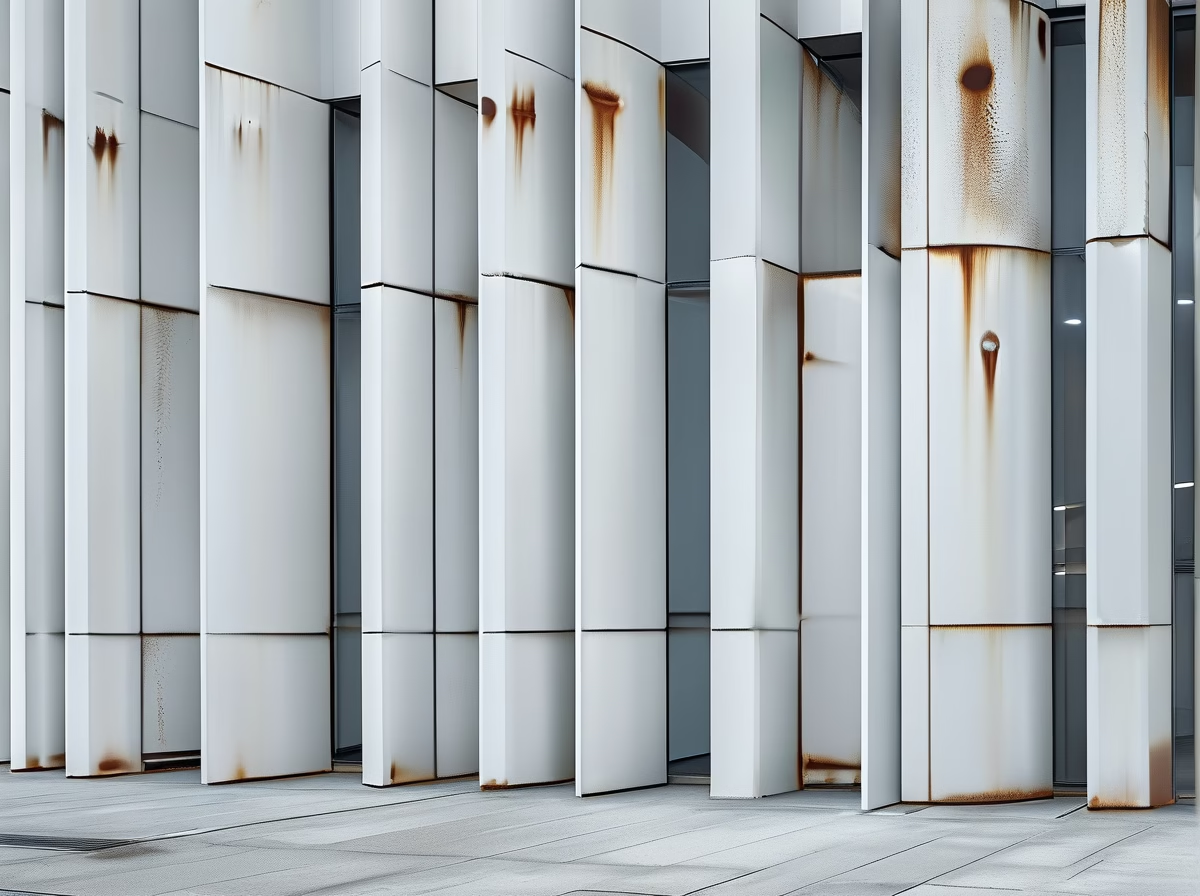
Picking the right metal isn’t just a spec-sheet move—it’s what keeps a Perforated Aluminum Curtain Wall looking sharp instead of chalky and tired. From salty air to factory fumes, the combo of alloy and thickness quietly decides lifespan, upkeep, and how well your perforated aluminum wall holds its finish.
High-Corrosion-Resistance Aluminum Alloys Explained
When a Perforated Aluminum Curtain Wall faces harsh weather, the alloy choice does the heavy lifting.
-
Core selection logic
-
aluminum alloys
-
3003: strong corrosion resistance, great for humid zones
-
5005: stable finish quality, ideal for architectural grades
-
-
temper designations
-
H14/H24: balance between formability and strength
-
H32: improved durability for industrial applications
-
-
-
Environment matching
-
Coastal builds
- prioritize alloys suited for marine environments
-
Urban pollution zones
- coatings + alloy pairing improve material properties
-
-
Surface protection pairing
-
anodizing deepens oxide layer
-
powder coating seals exposure points
-
A well-matched alloy keeps a perforated curtain wall aluminum system from pitting early, especially when paired with smart finishing. That’s why Aluminum Curtain Wall solutions often lean toward 5005 for visible façades—it just ages better.
Optimal Panel Thickness for Long-Term Durability
Thickness isn’t just about feel—it defines how a Perforated Aluminum Curtain Wall resists bending, vibration, and time.
-
Performance hierarchy
-
panel thickness vs function
-
1.5–2.0 mm: light façades, low load bearing
-
2.5–3.0 mm: balanced structural integrity
-
3.0 mm+: high wind zones, max rigidity
-
-
-
Mechanical impact chain
-
material strength → reduced flex
-
gauge → affects fastening reliability
-
lifespan → thicker panels slow fatigue
-
-
Practical selection flow
-
Step 1: assess wind load + span
-
Step 2: match thickness to support system
-
Step 3: confirm coating compatibility
-
| Thickness (mm) | Typical Use Case | Expected Lifespan (years) | Rigidity Level |
|---|---|---|---|
| 1.5 | Interior / low exposure | 10–15 | Low |
| 2.0 | Standard façades | 15–20 | Medium |
| 2.5 | Mid-rise exterior panels | 20–25 | High |
| 3.0 | High-rise / harsh climates | 25+ | Very High |
Dialing in thickness ensures a perforated aluminum wall doesn’t warp or buzz under stress. Done right, a Perforated Aluminum Curtain Wall keeps its shape, finish, and clean lines for decades.
Office Buildings: Enhancing Daylight With Perforation
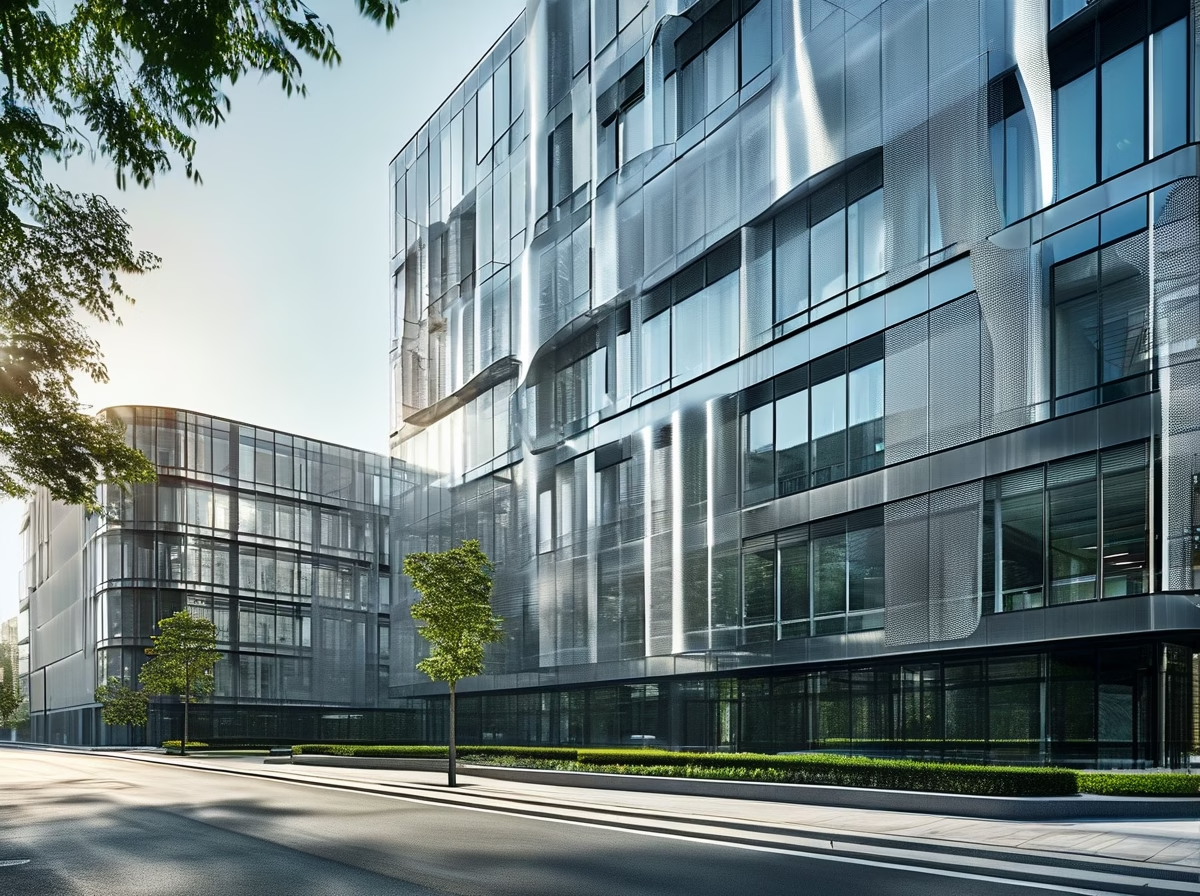
Office façades today chase a tricky balance—daylight, comfort, and privacy—without blowing up energy bills. A well-tuned Perforated Aluminum Curtain Wall makes that balance feel easy, letting light in while keeping distractions out. Done right, the skin works hard so interiors can stay calm, bright, and efficient.
Maximizing Light Transmission and Visual Privacy
A smart perforation pattern in cladding design can push light transmission while guarding visual privacy.
-
Quick wins
-
Smaller holes at eye level cut direct sightlines
-
Gradients near the sill boost daylight bounce
-
Angled apertures steer views upward
-
1) Set target daylight (lux) by zone
2) Tune open area ratio per façade orientation
3) Mock up panels to test pattern density against glare and views
Nested approach that teams actually follow:
-
Geometry
-
Macro grid sets rhythm
-
Micro perforation size refines transmission
-
-
Optics
-
Reflectance of backing surfaces lifts indoor light
-
Finish choice avoids mirror-like hotspots
-
-
Privacy
- Sightline studies confirm visual screening from adjacent buildings
With Perforated Aluminum Curtain Wall, the same panel can read opaque from outside yet feel airy inside.
Balancing Glare Control with Shading Performance
Dialing glare control against shading performance is about sun, angle, and thickness.
-
• South façades: tighter pattern at the upper third
-
• East/West: deeper thickness or micro-louvers to tame low sun
Steps that keep it grounded:
1) Map hourly sun paths
2) Adjust open area and thickness
3) Validate with on-site luminance readings
Short notes:
-
High light isn’t the goal; usable light is
-
Over-shading kills views; under-shading spikes glare
A refined Perforated Aluminum Curtain Wall can trim cooling loads while keeping desks comfortably lit.
Integrating Support Frames and Sealants for Weather Resistance
Performance hinges on integration of support frames, sealants, and the cladding during installation.
-
System stack
-
Primary frames align loads
-
Secondary rails hold panels
-
Gaskets and sealants close joints
-
Sequence:
1) Set out frames with drainage paths
2) Install panels with controlled tolerances
3) Apply compatible sealants for long-term weather resistance
Multiple short notes:
-
Continuous weeps prevent trapped water
-
Thermal breaks protect interior comfort
-
Access zones ease maintenance over time
Across these layers, Perforated Aluminum Curtain Wall systems keep wind-driven rain out while preserving the crisp, breathable façade.
 English
  Français
  Bahasa Indonesia
  Deutsch
  Italiano
  Español
  العربية
  Español de México
  Nederlands
  香港中文
香港中文