
Aluminum curtain wall panels are a core material choice for modern commercial façades, high-rise buildings, shopping centers, office towers, hotels, airports, and public architecture. They shape the exterior appearance of a project while also influencing weather resistance, thermal performance, installation efficiency, and long-term maintenance cost.
For architects, contractors, developers, and façade buyers, choosing the right panel is not only a design decision. It is a project-performance decision. The panel material, coating system, thickness, structure, supplier capability, and quality-control process can all affect the final building envelope.
This guide explains the major material options, key performance factors, surface finishes, specification points, and buying tips for aluminum curtain wall panels, helping B2B buyers make clearer and safer sourcing decisions.
What Are Aluminum Curtain Wall Panels?
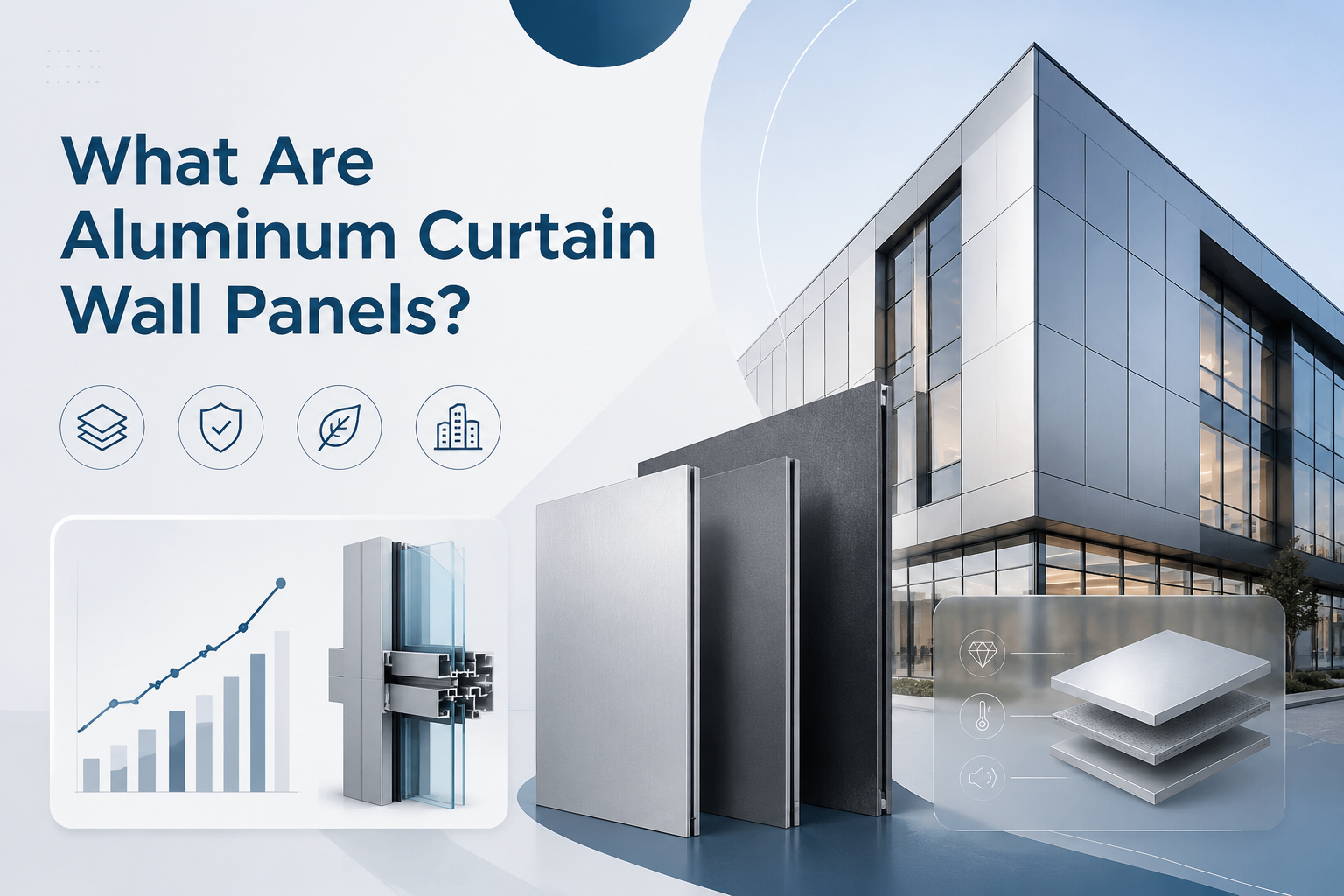
Aluminum curtain wall panels are non-load-bearing exterior panels used as part of a building envelope or façade system. They are usually connected to a supporting frame instead of carrying the structural weight of the building. Their purpose is to protect the structure from weather, improve appearance, and support architectural performance.
In commercial construction, these panels are commonly used with glass, stone, metal frames, insulation layers, brackets, sealants, and supporting profiles. A complete curtain wall system must balance aesthetics, wind-load resistance, drainage, thermal insulation, and durability.
Compared with traditional masonry or heavy cladding materials, aluminum panels offer lighter weight, flexible fabrication, clean modern lines, and strong design adaptability. This makes them especially popular in large commercial projects where visual consistency and façade precision matter.
Main Material Options for Aluminum Curtain Wall Panels
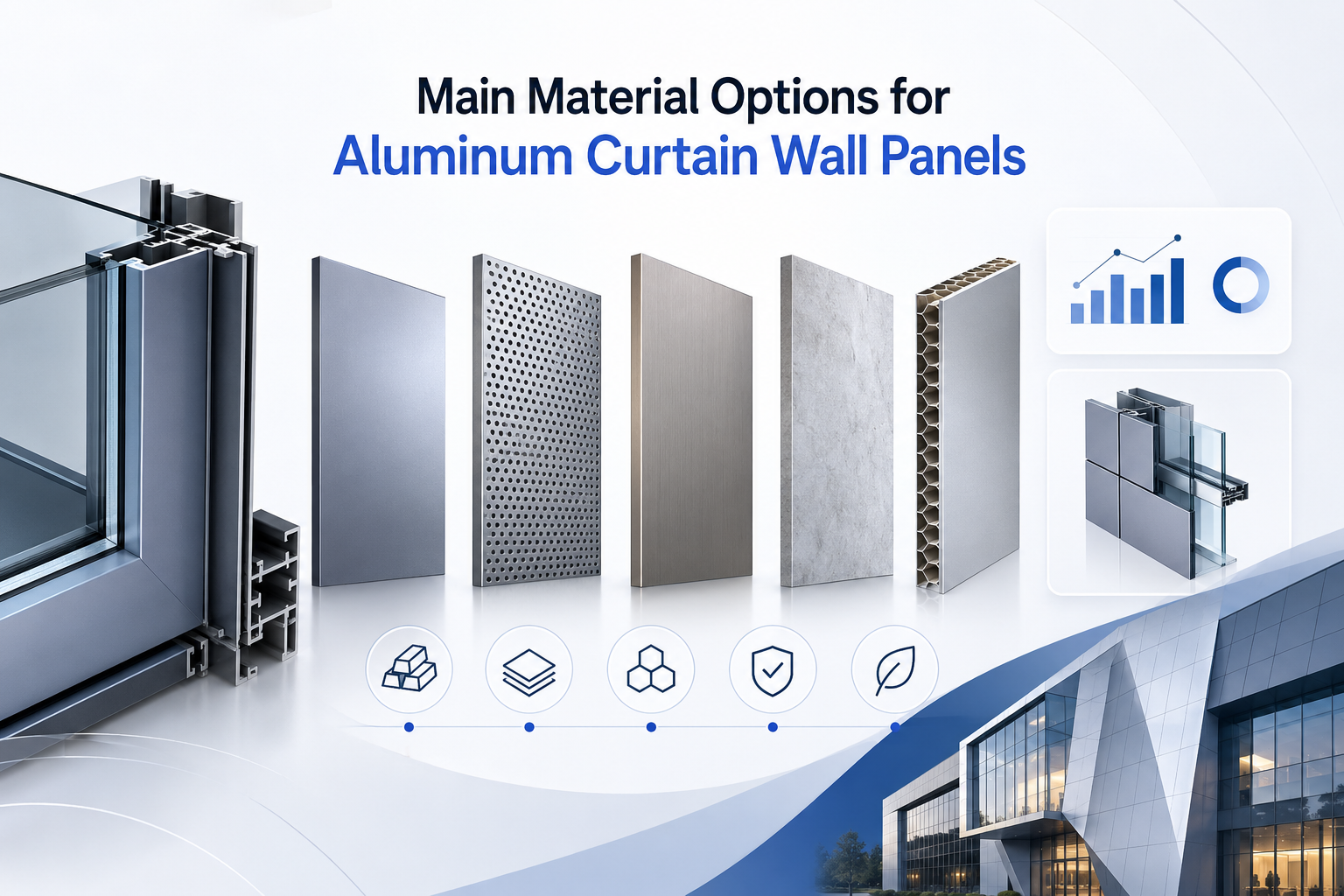
Different projects require different panel structures. The most common options include solid aluminum panels, aluminum composite panels, honeycomb aluminum panels, and perforated aluminum panels.
Solid aluminum panels are made from single aluminum sheets and are valued for strength, stability, and premium façade appearance. They are suitable for projects that need customized shapes, long service life, and high resistance to deformation.
Aluminum composite panels use two thin aluminum skins bonded to a core material. They are lightweight, cost-efficient, and easy to process, making them popular for commercial cladding and signage-related façade areas.
Honeycomb aluminum panels use a honeycomb core between aluminum layers. They offer excellent flatness, high rigidity, and reduced weight, which is useful for large-format panels and premium architectural façades.
Perforated aluminum panels add ventilation, shading, and decorative effects. They are often used for sunshade screens, parking façades, cultural buildings, and projects needing both airflow and visual identity.
Surface Finishes and Coating Systems to Consider
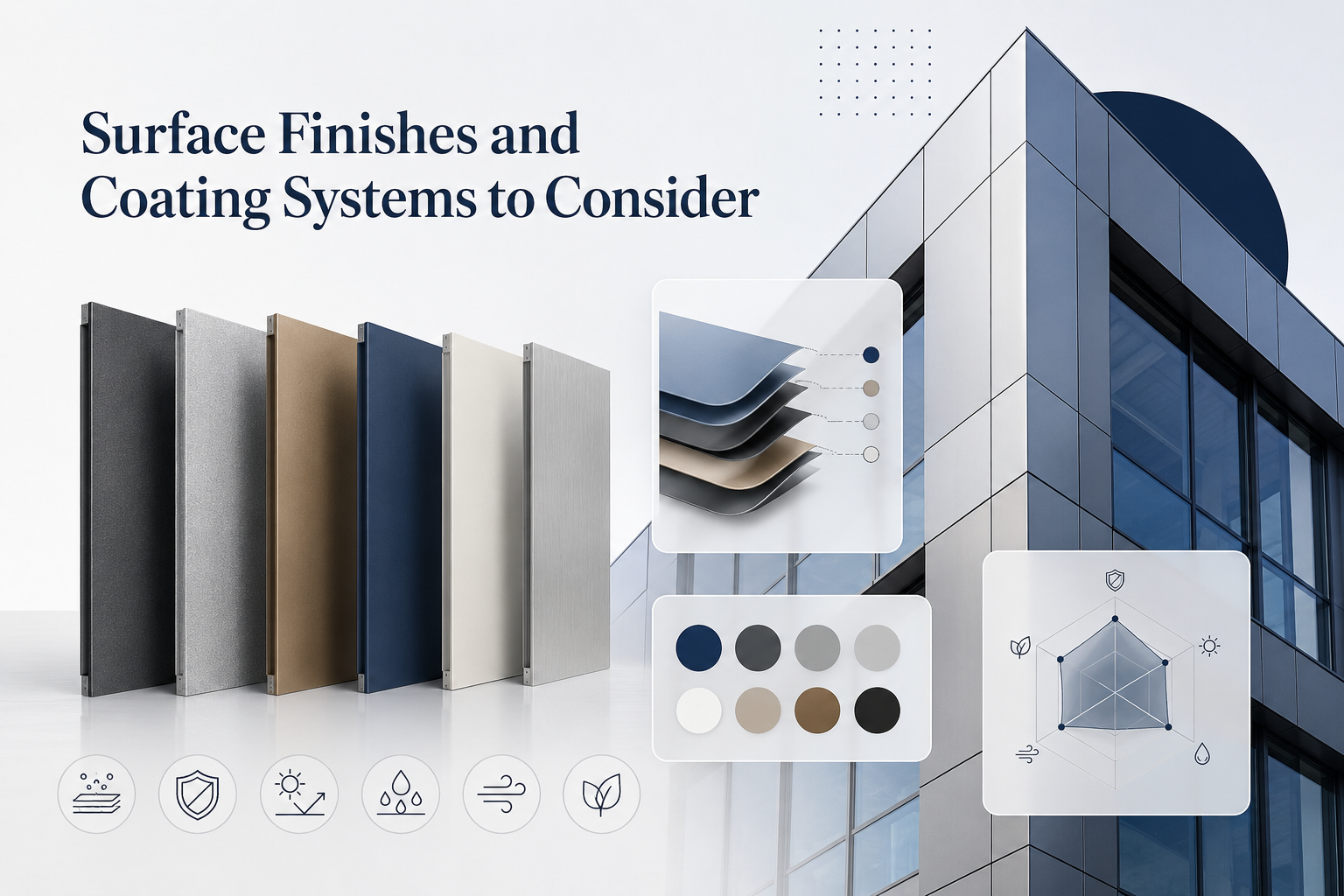
The surface finish of aluminum curtain wall panels determines not only the visual effect but also weather resistance, color stability, and maintenance performance. Common finish options include PVDF coating, powder coating, anodizing, wood-grain finishes, stone-look finishes, and brushed metallic effects.
PVDF coating is widely used for exterior façades because it offers excellent UV resistance, weather resistance, and color retention. For high-rise and coastal projects, PVDF is often preferred because the façade must withstand sunlight, rain, humidity, and pollution over many years.
Powder coating is another common choice, especially when projects need diverse colors, textured finishes, or cost control. Anodized aluminum provides a metallic appearance with strong surface hardness and corrosion resistance.
Buyers should compare coating thickness, color tolerance, gloss consistency, adhesion, salt-spray resistance, and supplier testing standards before placing large orders. A beautiful sample is not enough; the finish must remain consistent across production batches.
Key Performance Factors for Building Façade Projects
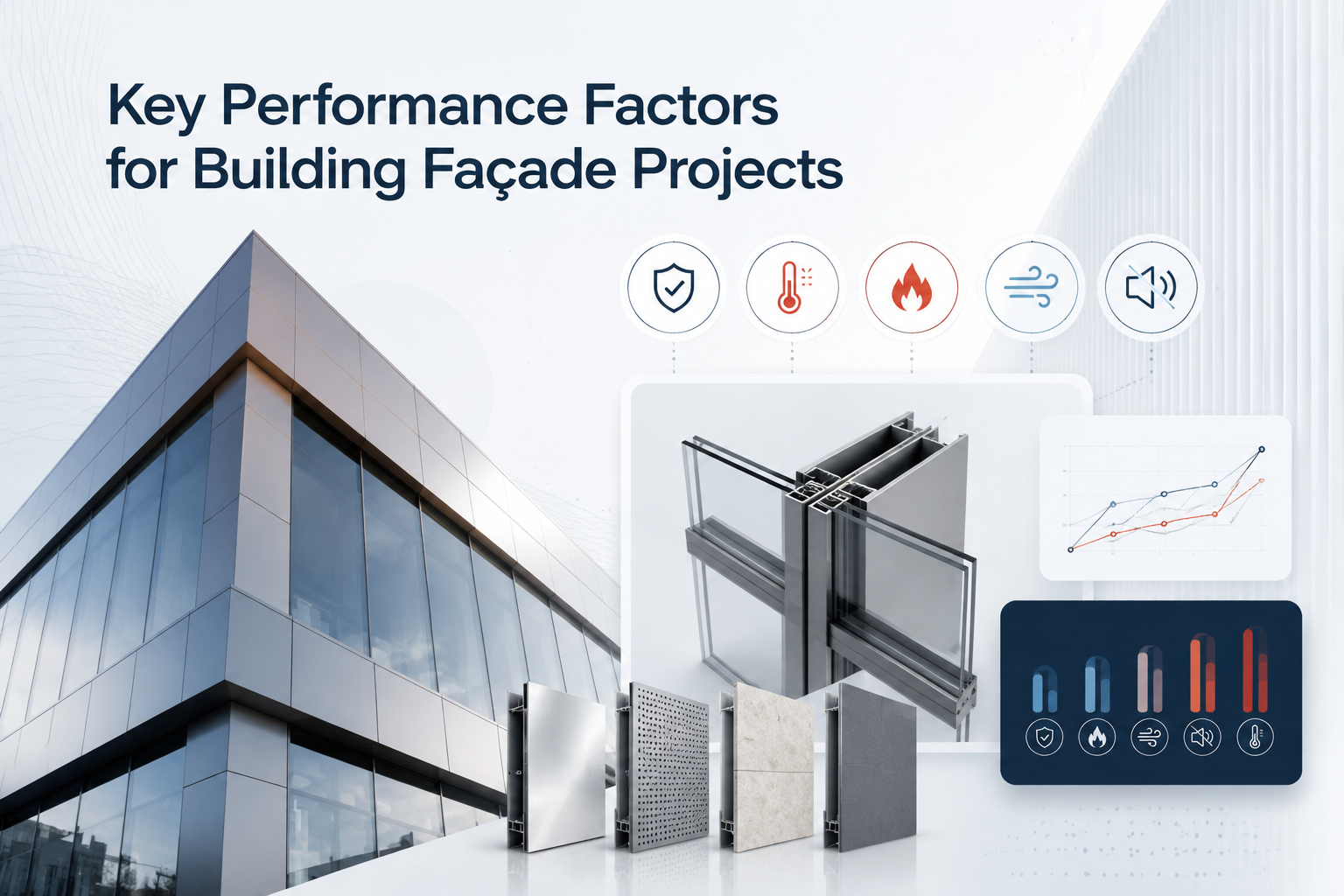
Performance is one of the most important reasons to choose aluminum curtain wall panels carefully. A good façade panel should support structural stability, weather protection, safety, and long-term appearance.
Important performance factors include wind-load resistance, impact resistance, fire performance, corrosion resistance, water drainage, thermal movement, acoustic behavior, and panel flatness. For exterior curtain walls, wind pressure and thermal expansion are especially important because large façades face constant environmental stress.
Panel thickness and reinforcement design also matter. Thicker panels may improve rigidity, while proper stiffeners and mounting systems help prevent oil-canning, vibration, and deformation. For coastal or industrial environments, corrosion protection and coating quality should receive extra attention.
Fire performance should be reviewed according to local building codes. Buyers working on public buildings, high-rise projects, or transportation hubs should confirm the required fire classification and core material standards before purchasing.
How to Compare Aluminum Curtain Wall Panel Quality
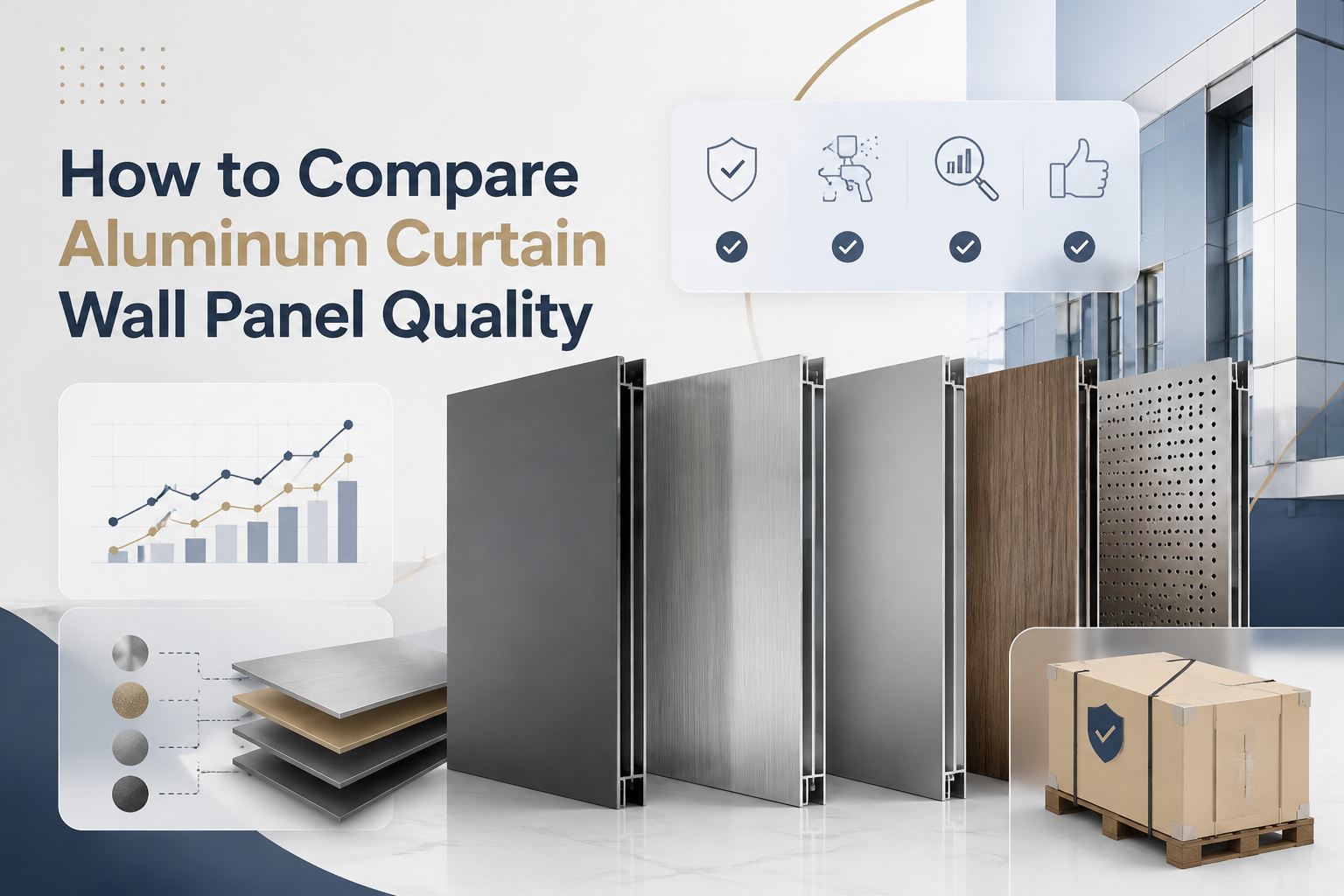
Quality comparison should go beyond price per square meter. Buyers should review raw material grade, panel thickness, dimensional tolerance, surface flatness, coating quality, edge processing, welding quality, reinforcement details, and packaging protection.
A professional supplier should be able to provide technical drawings, sample panels, coating certificates, test reports, production photos, packaging details, and project references. These documents help buyers confirm whether the supplier can meet architectural and engineering requirements.
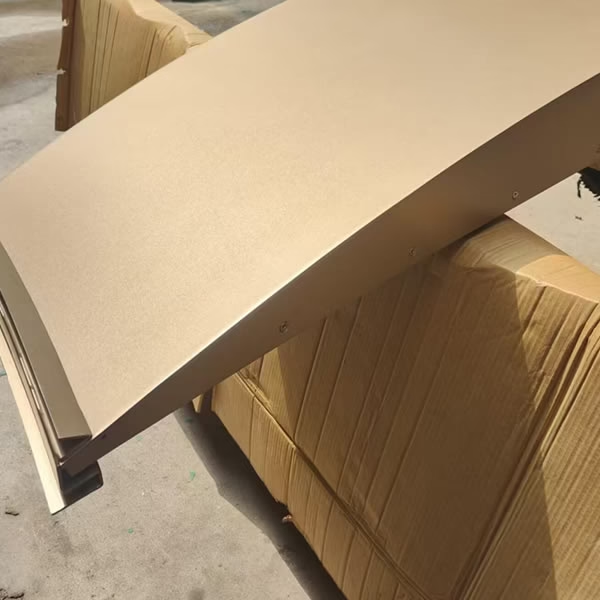
Visual inspection is also important. Look for color inconsistency, surface waves, scratches, coating defects, poor corner finishing, and inaccurate perforation patterns. For large projects, even small inconsistencies can become highly visible after installation.
Before mass production, buyers should confirm approved samples, tolerance standards, color codes, coating brands, installation drawings, and packaging methods. Clear pre-production confirmation reduces risk and avoids costly disputes later.
Buying Tips for Contractors, Developers, and Façade Buyers

When sourcing aluminum curtain wall panels, buyers should start with project requirements rather than only comparing the lowest quotation. The correct panel depends on building type, façade height, location, climate, design intent, budget, and local regulations.
Ask suppliers about material grade, coating system, fire requirements, lead time, MOQ, fabrication capacity, quality-control process, and export packaging. If the project requires customized shapes, perforation, curved panels, or special colors, confirm whether the factory has matching production capability.
For international buyers, communication speed and technical support are also important. A reliable supplier should respond clearly, understand drawings, support sample confirmation, and provide stable documentation for shipping and project approval.
Finally, consider total project value rather than only unit price. A slightly higher-quality panel can reduce rework, improve façade appearance, extend service life, and protect project reputation.
Why Work with a Professional Aluminum Curtain Wall Panel Supplier?
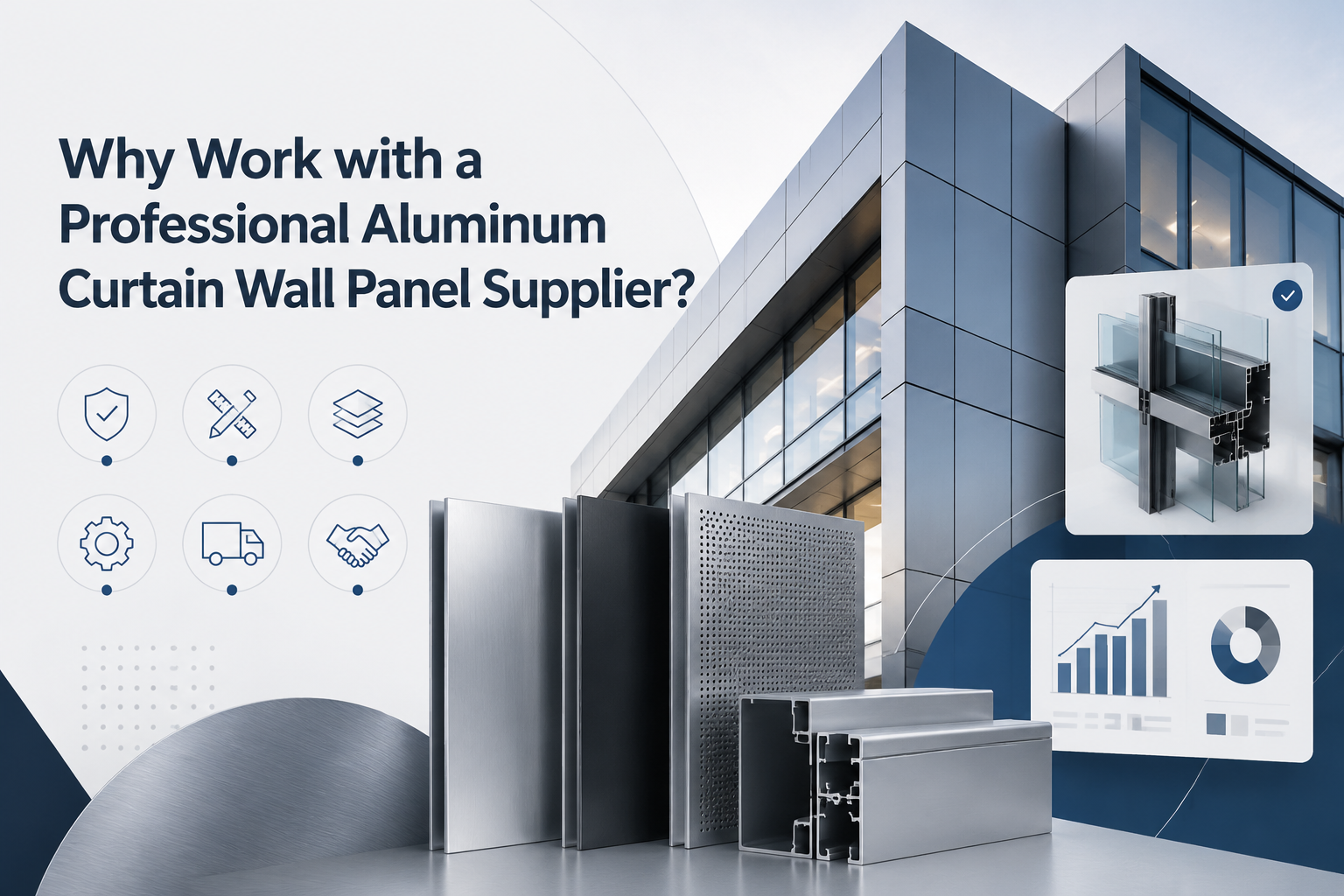
A professional aluminum curtain wall panel supplier can help buyers turn architectural intent into manufacturable products. This includes material selection, finish recommendation, drawing review, sample production, panel fabrication, packaging planning, and export coordination.
For commercial façade projects, supplier experience matters because every detail affects the final result. Accurate fabrication, consistent coating, strong packaging, and reliable delivery can reduce site problems and help the project stay on schedule.
Wallnova supports aluminum curtain wall panel buyers with project-oriented material options, surface finish guidance, fabrication support, and quality-focused production. Whether the project needs solid aluminum panels, composite panels, perforated panels, or custom façade solutions, working with the right supplier helps create a cleaner, safer, and more durable building envelope.
Final Thoughts on Aluminum Curtain Wall Panels
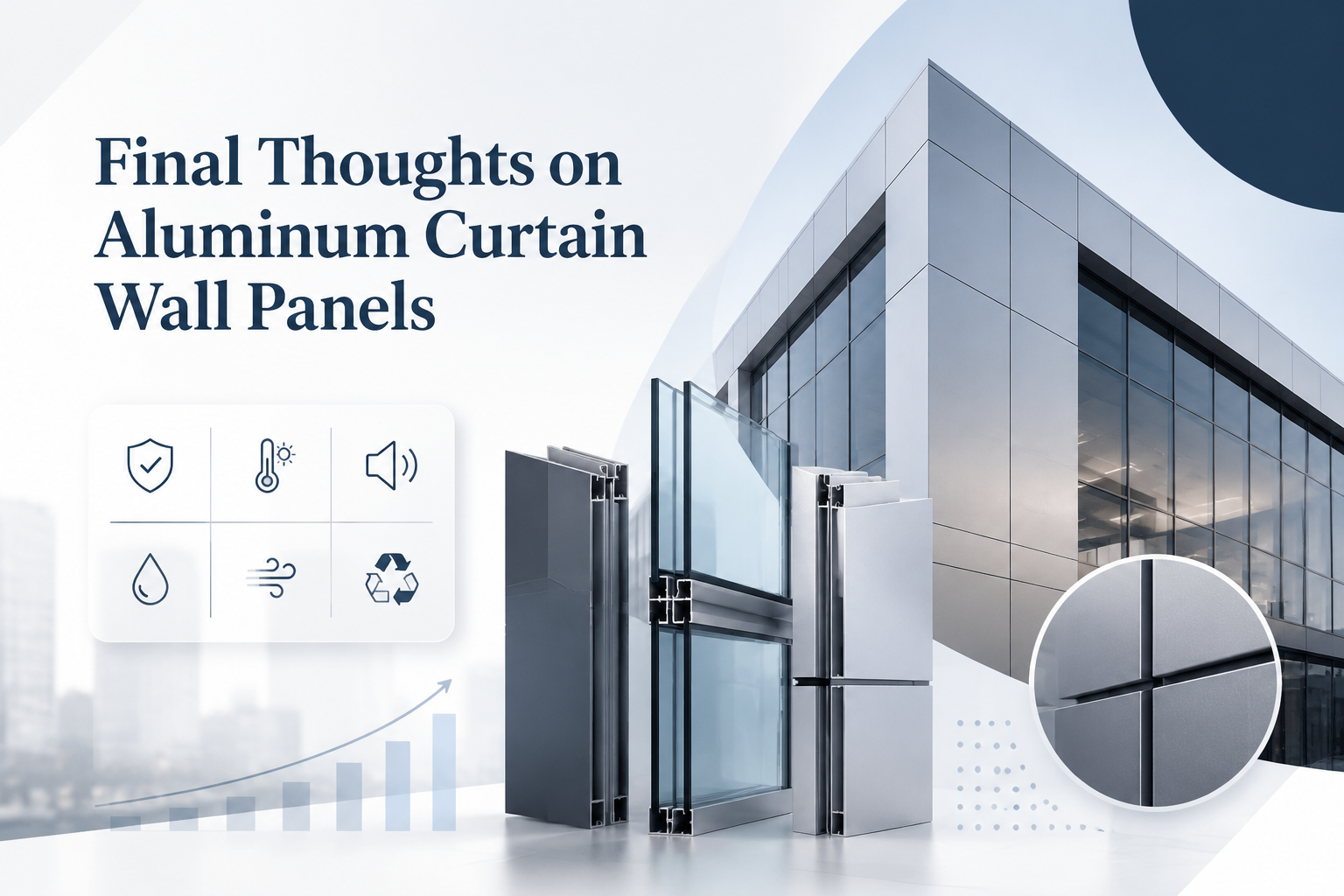
Aluminum curtain wall panels combine architectural flexibility, lightweight performance, weather resistance, and modern visual appeal. The best choice depends on material structure, coating system, project performance requirements, and supplier capability.
For buyers, the smartest approach is to evaluate panels as part of a complete façade solution. Compare material options, confirm performance needs, check quality documentation, review samples carefully, and choose a supplier who understands both design and construction requirements.
With the right aluminum curtain wall panels, a building façade can achieve a stronger visual identity, better long-term durability, and more reliable project performance.
 English
  Français
  Bahasa Indonesia
  Deutsch
  Italiano
  Español
  العربية
  Español de México
  Nederlands
  香港中文
香港中文