Comprehensive Guide to Cleaning and Maintaining Aluminum Panel Curtain Walls
cizchu|March 19, 2025|4 min read
Verified by Wallnova Tech Team
I. Introduction
Application Value & Importance of Aluminum Panel Curtain Walls
Aesthetic & Functional Dominance: Aluminum panels offer sleek, modern facades with high durability and corrosion resistance, critical for landmark buildings and high-rise structures.
Versatility in Design: Adaptable to curves, perforations, and custom finishes (e.g., PVDF coatings, anodized surfaces).
Sustainability: Recyclable material with low embodied energy, aligning with LEED v4 and BREEAM standards.
Role of Regular Cleaning & Maintenance in Lifespan Extension
Corrosion Prevention: Urban pollutants (acid rain, salt spray) degrade aluminum’s protective oxide layer over time.
Structural Integrity: Clogged drainage systems lead to water infiltration, risking substrate rot and fastener corrosion.
Consequences of Improper Maintenance
Surface Damage: Abrasive cleaners scratch anodized/painted finishes, exposing bare metal to oxidation.
Coating Delamination: High-pressure washing (>1500 psi) can peel PVDF coatings.
Safety Hazards: Neglected panels may detach due to corrosion-weakened fasteners.
II. Maintenance Framework Overview
This guide outlines a 4-tier strategy:
Routine Inspections: Quarterly visual checks for cracks, loose panels, and sealant failure.
Preventive Cleaning: Semi-annual washing with pH-neutral detergents.
Corrective Actions: Immediate repair of damaged panels/fasteners.
Sustainability Integration: Use of recycled water and eco-friendly cleaners.
III. Technical Specifications & Compliance
Adherence to ASTM D7802 (cleaning aluminum finishes), ISO 12944-6 (corrosion protection), and local building codes ensures long-term performance. For historic structures, consult preservation boards to avoid damaging patina or heritage finishes.
IV. Sources of Contamination on Aluminum Panel Curtain Walls
A. Natural Environmental Factors
Acid Rain Erosion
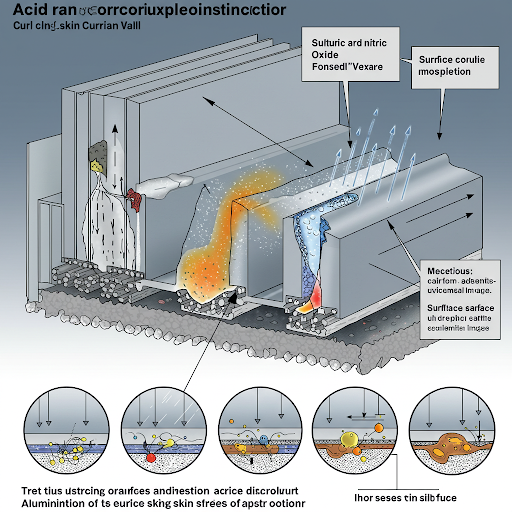
Chemical Mechanism: Sulfur dioxide (SO₂) and nitrogen oxides (NOₓ) from industrial emissions react with atmospheric moisture to form sulfuric (H₂SO₄) and nitric (HNO₃) acids.
Material Impact: pH <5.6 rainfall etches aluminum surfaces, dissolving the protective oxide layer (Al₂O₃) and promoting intergranular corrosion.
Abrasive Damage: Quartz particles in windblown dust (Mohs hardness 7) scratch PVDF coatings (≥2H pencil hardness) over time.
Microclimate Effects: Dust layers trap moisture, accelerating galvanic corrosion between aluminum and dissimilar metals (e.g., steel fasteners).
UV Degradation & Thermal Cycling
Photo-Oxidation: UV-B radiation (290-320nm) cleaves polymer chains in fluorocarbon coatings, reducing gloss retention and color fastness.
Thermal Shock: Diurnal temperature swings (e.g., -20°C to +60°C) cause coating microcracks, particularly in dark-colored panels absorbing higher IR energy.
Particulate Matter (PM2.5/PM10): Diesel exhaust contains polycyclic aromatic hydrocarbons (PAHs) that adhere to hydrophobic coatings via van der Waals forces.
Heavy Metal Deposition: Lead (exhaust) and copper (brake pads) ions catalyze redox reactions on aluminum surfaces.
Human-Induced Staining
Sebaceous Oils: Fingerprints contain triglycerides and free fatty acids that degrade acrylic clearcoats.
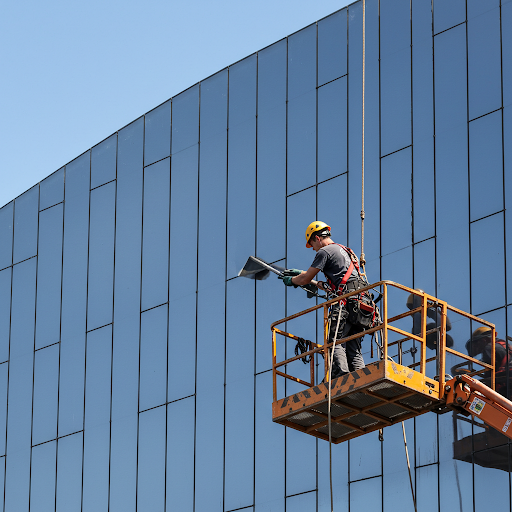
Use articulated boom lifts for localized repairs below 60m.
D. Maintenance Frequency Decision Matrix
Environmental Factor
Cleaning Interval
Inspection Frequency
Sulfurous Pollutants
3-4 months
Quarterly
Salt Spray (km from coast)
<1km: 2 months
Bi-monthly
UV Index >7
4-5 months
Semi-annual
Traffic Pollution (PM2.5)
>35μg/m³: 3 months
Quarterly
VIII. Common Mistakes in Cleaning and Maintenance of Aluminum Curtain Wall Panels
Proper cleaning and maintenance are crucial for preserving the aesthetic appeal and structural integrity of aluminum curtain wall panels. However, several common mistakes can compromise their longevity and performance. This article highlights these pitfalls and provides guidance on avoiding them.
Using Strong Acidic or Alkaline Cleaners, Damaging the Surface Oxide Layer
Issue: Harsh cleaners (pH <6 or >8) can corrode the aluminum oxide layer, leading to surface roughness, discoloration, and reduced corrosion resistance.
Solution: Opt for neutral cleaners (pH 6-8) specifically formulated for aluminum surfaces. Avoid chlorine-based agents, which can trigger pitting corrosion.
Employing Abrasive Tools Like Steel Wool or Stiff Brushes
Problem: Abrasive materials scratch the panel surface, creating micro-cracks that accelerate corrosion and degrade the protective coating.
Recommendation: Use soft-bristle brushes, non-abrasive sponges, or low-pressure water jets (<1500 psi) to prevent physical damage.
Overlooking Safety Measures During High-Altitude Operations
Risk: Neglecting fall protection, improper equipment use, or unqualified personnel can result in fatal accidents or material damage.
Best Practice: Adhere to IRATA or local safety standards. Engage certified teams equipped with dual-rope systems, harnesses, and specialized access equipment (e.g., boom lifts).
Inadequate Rinsing After Cleaning, Leaving Chemical Residues
Consequence: Residual cleaners containing surfactants or acids/alkalis promote electrochemical corrosion, especially in coastal or high-humidity environments.
Correct Approach: Thoroughly rinse panels with deionized water post-cleaning. Use pH test strips to verify neutral residue levels.
Focusing Solely on Surface Cleaning, Neglecting Sealants and Fasteners
Overlooked Areas: Sealants degrade due to UV exposure and thermal cycling, leading to water infiltration. Loose or corroded fasteners compromise structural stability.
Preventive Action: Include sealant adhesion tests (e.g., ASTM C794) and fastener torque checks in maintenance schedules. Replace damaged components promptly.
Appendices
A. Glossary of Terms
Term
Definition
KYNAR 500®
A fluoropolymer resin-based coating offering superior UV resistance and color retention for aluminum surfaces.
AAMA Standards
Specifications developed by the American Architectural Manufacturers Association for fenestration products, including curtain walls.
ASTM Standards
Testing and material standards published by ASTM International, widely referenced in the U.S. construction industry.
GB Standards
Mandatory national standards in China, regulating product quality, safety, and performance across industries.
Anodizing
An electrochemical process creating a durable oxide layer on aluminum for corrosion protection.
Electrostatic Powder Coating
A method applying dry powder paint to aluminum via electrostatic charge, cured in ovens for a uniform finish.
Silicone Sealant
A flexible, weather-resistant material used to seal joints and gaps in curtain wall systems.
B. Cleaner Compatibility Chart
Cleaner Type
Compatibility with Aluminum Surfaces
Notes
Neutral pH (6-8)
✓ Compatible
Safe for anodized/coated panels.
Acidic (pH <6)
✗ Avoid
Risks corrosion; use only for heavy oxidation removal under professional supervision.
Alkaline (pH >8)
✗ Avoid
May damage protective coatings; test in inconspicuous areas first.
Chlorine-Based
✗ Strictly Avoid
Causes pitting corrosion; never use.
Solvent-Based
! Use with Caution
May degrade coatings; wear gloves/respirators.
Biodegradable
✓ Preferred
Eco-friendly options often neutral pH; check manufacturer specs.
C. Global Curtain Wall Code Index
Region
Standard/Code
Key Requirements
China
GB/T 21086-2007, GB 50210-2018
Mandates structural safety, thermal performance, and weather resistance.
USA
ASTM E283, ASTM E330
Tests for structural performance and water penetration resistance.
EU
EN 13830, EN 13501
Focuses on fire safety, thermal insulation, and air permeability.
Australia
AS/NZS 4284
Specifies wind load resistance and watertightness for high-rise buildings.
Singapore
SS 552
Regulates curtain wall design, materials, and installation for tropical climates.
D. Typical Failure Case Atlas
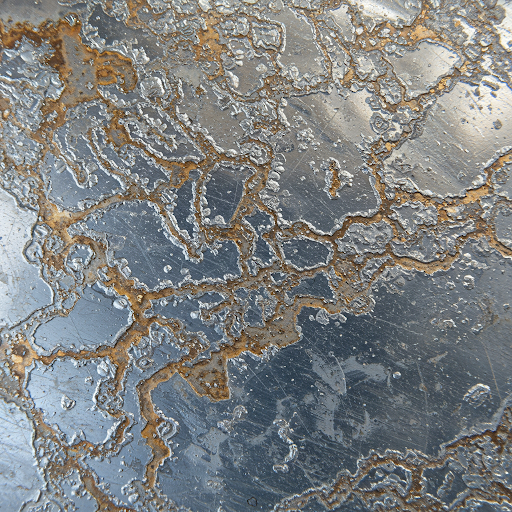
Case 1: Corrosion from Acidic Cleaner
Description: Surface etched by hydrochloric acid cleaner, exposing bare metal to oxidation.
Solution: Replace affected panels; use neutral cleaners (pH 7-8) henceforth.
Case 2: Sealant Degradation
Description: UV-induced hardening of sealant led to water leakage into building envelope.
Solution: Remove old sealant, apply new silicone compliant with ASTM C920.
Case 3: Fastener Corrosion
Case 4: Coating Delamination
Description: Pressure washing at >2000 psi damaged powder coating adhesion.
Solution: Repaint after surface preparation; limit pressure to <1500 psi.







 English
  Français
  Bahasa Indonesia
  Deutsch
  Italiano
  Español
  العربية
  Español de México
  Nederlands
  香港中文
香港中文