


Pick the wrong spec and your facade acts up fast. This aluminum facade panel thickness guide cuts straight to cost, compliance, and panels misbehaving on site.
Thickness isn’t a detail; it drives span, wind load, fire ratings, and installers wrestle panels into place without headaches.
Key Points in the Aluminum Facade Panel Thickness Guide
→ Span & Load: Match material gauge to panel span and wind load requirements, reducing intermediate supports and ensuring structural integrity.
→ Standards & Codes: Adhere to ASTM/EN nominal thickness tolerances, minimum/maximum limits, and NFPA fire rating criteria for safe, compliant facades.
→ Thermal & Deflection: Balance skin and core thickness to control thermal bridging, optimize U-value, and meet deflection limits in stick-built or unitized systems.
→ On-Site Verification: Use calipers for quick thickness checks, inspect anodized skin uniformity, and adjust fastening methods for tolerance compliance.
5 Key Factors In Panel Thickness Selection
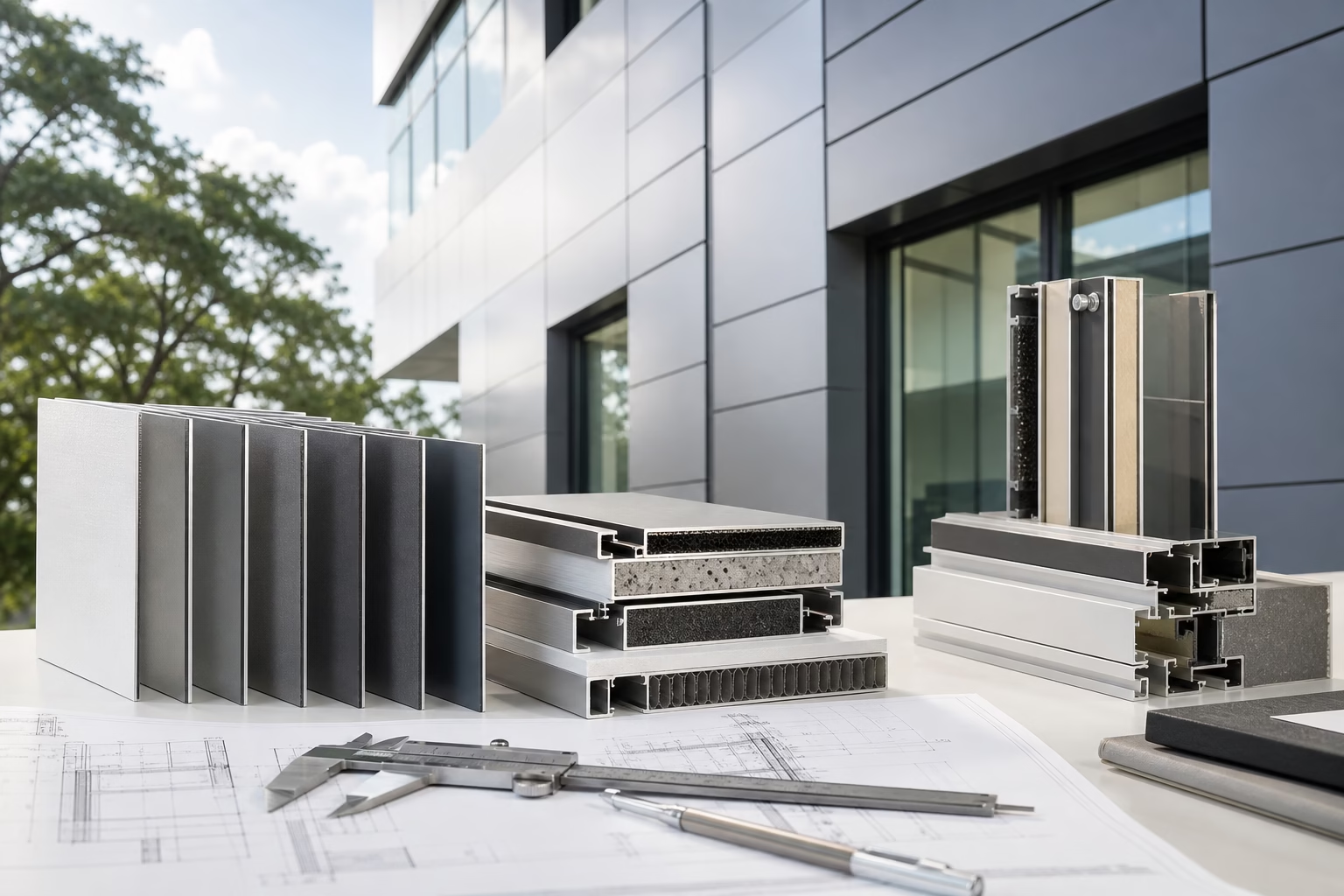
Picking the right aluminum facade panel thickness guide isn’t rocket science, but it can get messy fast when wind load, spans, thermal goals, and shop tolerances collide. This aluminum facade panel thickness guide keeps it practical—so your aluminum facade panel thickness guide decisions don’t turn into last-minute patchwork.
Material Gauge and Span Capability
In any aluminum facade panel thickness guide, Thickness and Gauge set the tone for how far a panel can reach before it starts feeling “floppy.” Bigger spans ask for stiffer skins, and that comes down to Aluminum and its material properties.
-
Design checks that usually drive the call
-
Structural design basics
-
Span capability target (clear distance between supports)
-
Support layout (how often you want brackets)
-
-
Facade panel behavior
-
Oil-canning risk increases as skins get thinner
-
Edge returns and stiffeners can “fake” thickness, but only so much
-
-
A solid aluminum facade panel thickness guide also flags the trade: thicker gauge buys capacity, but it adds weight and cost, so the clean move is matching gauge to span instead of guessing.
Wind Load Resistance vs. Core Thickness
This aluminum facade panel thickness guide point is simple: Core thickness is your stiffness engine in ACM or honeycomb builds, and stiffness is what fights Pressure from gusts. For towers and open corners, Wind load isn’t polite.
-
What changes when the core grows
-
Resistance and structural performance
-
Higher panel bending stiffness
-
Less mid-panel “drum” under suction
-
-
Facade system stability
-
Fewer reinforcement ribs
-
Cleaner cassette geometry, better panel stability
-
-
| Panel build concept | Core thickness (mm) | Reference wind pressure (kPa) | Relative stiffness index |
|---|---|---|---|
| Thin core ACM | 3 | 1.2 | 1.0 |
| Mid core ACM | 4 | 1.8 | 1.4 |
| Thick core ACM | 6 | 2.4 | 2.0 |
| Honeycomb thick core | 10 | 3.0 | 3.0 |
Use this aluminum facade panel thickness guide table as a sanity check, not a spec—final sizing still rides on your engineer’s calcs.
Thermal Performance: Skin Thickness Impacts
A good aluminum facade panel thickness guide doesn’t pretend thermal performance is only about insulation; skin choices matter. With metal, thicker skins can mean more path for heat transfer, nudging your U-value the wrong way, even if the build feels tougher.
-
Where thickness shows up thermally
-
Facade envelope details
-
Clip and rail layouts can dominate thermal bridging
-
Break pads help, but only if continuous
-
-
Skin choice
-
Thinner skins can reduce bridging a bit
-
Thicker skins win on dent resistance and long-term durability
-
-
If you’re writing an aluminum facade panel thickness guide for a project chasing energy targets, treat skin thickness like a dial—turn it carefully, then validate with the full assembly model.
Deflection Limits in Stick-Built vs. Unitized Facade Systems
This aluminum facade panel thickness guide item is about control. Unitized systems tend to hit deflection limits more cleanly because the factory-built frames lock in geometry; stick-built systems can wander as site conditions stack up.
-
Where deflection “gets real”
-
Facade design constraints
-
Span between anchors, mullion depth, panel stiffness
-
panel movement allowances at joints
-
-
System behavior
-
Unitized systems: repeatable module tolerances, tighter fit-up
-
Stick-built systems: more field variability, often needs thicker skins or local stiffening to protect structural integrity and the building envelope
-
-
For a quick rule of thumb in an aluminum facade panel thickness guide: stick-built asks you to plan for surprises; unitized lets you plan for precision.
Tolerance Requirements for CNC Fabrication
If your aluminum facade panel thickness guide ignores machining reality, the shop will remind you fast. CNC fabrication depends on stable stock; inconsistent thickness throws off bend deductions, corner closures, and reveal alignment.
-
What tight tolerance really means day-to-day
-
Manufacturing precision drivers
-
Consistent sheet thickness so bend radius lands right
-
Tooling repeatability across batches
-
-
Fit-up outcomes
-
panel dimensions that match the model
-
Joint lines that don’t “snake”
-
Cleaner quality control sign-off
-
-
Practical takeaway for a facade thickness guide
- Lock a thickness early, then keep the supplier honest with incoming checks
-
Wallnova typically pushes this discipline upstream—material certs, inspection routines, and fabrication notes—so the installed finish doesn’t look like it had a rough morning.
Minimum Vs. Maximum Thickness Standards
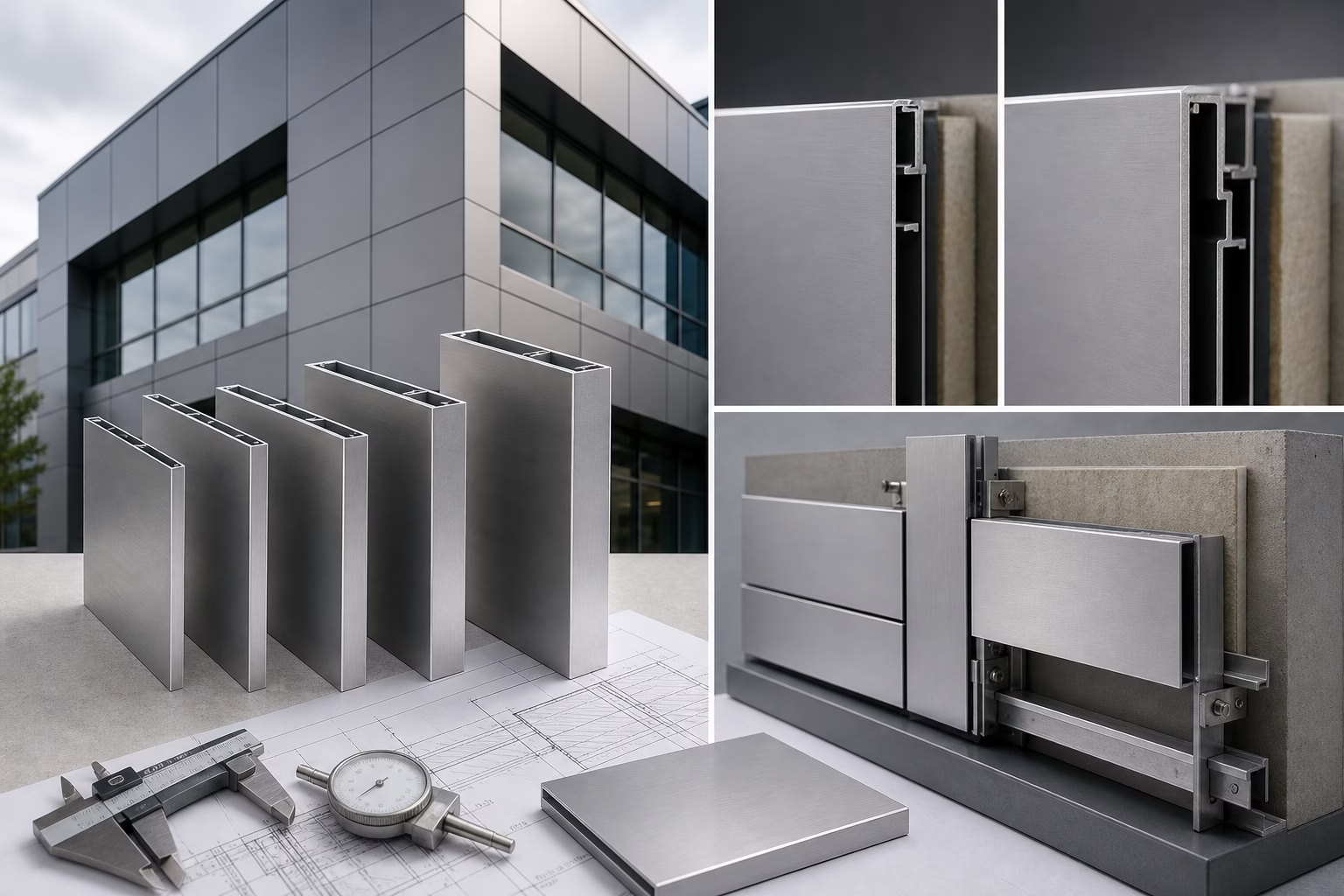
Choosing the right aluminum facade panel thickness guide isn’t just technical talk—it shapes safety, cost, and long-term performance. From aluminum facade panel specs to real-world install limits, thickness decisions affect everything from structural integrity to curb appeal. Let’s break it down clearly and practically.
Minimum Thickness Standards
Minimum requirements in any aluminum facade panel thickness guide are rooted in building codes and tested against safety requirements. Go too thin, and problems show up fast.
• Building codes define baseline millimeter values for exterior cladding.
• Material strength ratings determine resistance to bending.
• Design specifications tie thickness to facade span and fixing method.
1) Confirm local building codes.
2) Calculate wind load pressure.
3) Check panel stability across support spacing.
Here’s how it usually plays out in real projects:
-
Code compliance
-
Fire rating
-
Impact resistance
-
-
Structural checks
-
Wind load tolerance
-
Frame deflection limits
-
-
Performance validation
-
Lab-tested material strength
-
Site-based inspection
-
Too thin? You risk oil-canning. Too thick below minimum standards? That’s rare—but under-spec panels can compromise structural integrity fast.
In many aluminum facade thickness guide discussions, the sweet spot often starts at commonly accepted architectural grades, adjusted by span and exposure. Wallnova aligns its aluminum facade panel systems with strict ASTM and EN benchmarks, keeping design specifications tight and practical.
Maximum Thickness Standards
Maximum limits are less about safety failure and more about practicality. An aluminum facade panel thickness guide also caps thickness based on weight and installation logic.
• Excess panel weight strains anchors.
• Fabrication limits affect bending accuracy.
• Higher material consumption increases cost.
1) Evaluate structural support capacity.
2) Review fastening design.
3) Confirm crane and handling limits.
Look at it in layers:
-
Installation impact
-
Lifting equipment strain
-
Crew fatigue
-
-
Performance balance
-
Improved thermal performance up to a point
-
Reduced design flexibility when too thick
-
-
Aesthetic control
-
Edge detailing constraints
-
Bulkier visual lines
-
Thicker isn’t always better. Beyond certain millimeters, installation challenges spike, and anchoring hardware must scale up. That adds load back to the subframe.
A smart aluminum facade panel thickness guide weighs panel weight, structural support, and long-term durability together. Wallnova engineers keep thickness within tested system ranges, ensuring the facade feels solid without overloading the structure. It’s about balance—strong, stable, and install-ready without going overboard.
Aluminum Facade Panel Thickness Guide: Regulatory Requirements

This aluminum facade panel thickness guide breaks down how rules actually land on job sites. No stiff code talk. Just clear links between thickness numbers, safety checks, and what inspectors expect. If you’re scanning specs or tweaking drawings, this aluminum facade panel thickness guide keeps you on track without headaches.
ASTM and EN Standards for Nominal Thickness
In most aluminum facade panel thickness guide discussions, ASTM standards and EN standards set the baseline for nominal thickness on aluminum panels. The logic runs deeper than a single number.
-
Core references
-
International standards define target thickness
-
Material specifications explain alloy and temper
-
-
Tolerance control
-
Thickness tolerances handle mill variation
-
ASTM focuses on production realism
-
EN leans tighter for facade-grade sheets
-
-
A quick snapshot helps during reviews:
| Standard | Nominal Thickness (mm) | Allowed Tolerance |
|---|---|---|
| ASTM B209 | 3.0 | ±0.20 |
| EN 485-4 | 3.0 | ±0.15 |
| EN 573 | 4.0 | ±0.18 |
Short version: these numbers protect consistency, not style. This aluminum facade panel thickness guide treats them as guardrails, not guesses.
Building Codes Governing Overall Panel Dimensions
Building codes don’t stop at thickness. Panel dimensions tie directly to architectural regulations and real-world facade design habits.
-
Common checks show up as:
-
Maximum module width for wind load
-
Edge distances tied to anchors
-
Joint gaps for movement
-
Then come the softer rules. Dimensional requirements from construction standards nudge layouts toward safer spans. Code compliance often depends on how panels meet curtain wall grids, not just what they’re made of. This aluminum facade panel thickness guide flags that early so redesigns don’t sneak up later.
NFPA Fire Rating Criteria by Sheet Thickness
Fire review flips the script. NFPA standards link sheet thickness with core behavior, shaping the final fire rating.
-
Evaluation path
-
Fire safety criteria start with material makeup
-
Thicker skins slow heat transfer
-
Core choice drives smoke output
-
-
-
Test results
-
Flame spread index and fire resistance testing decide approval
- High-rise triggers stricter limits under building fire codes
-
Bottom line: thickness alone won’t save a facade, but thin skins almost always raise flags. This aluminum facade panel thickness guide keeps that balance clear, practical, and inspection-ready.
Selecting Thickness For Thermal Performance
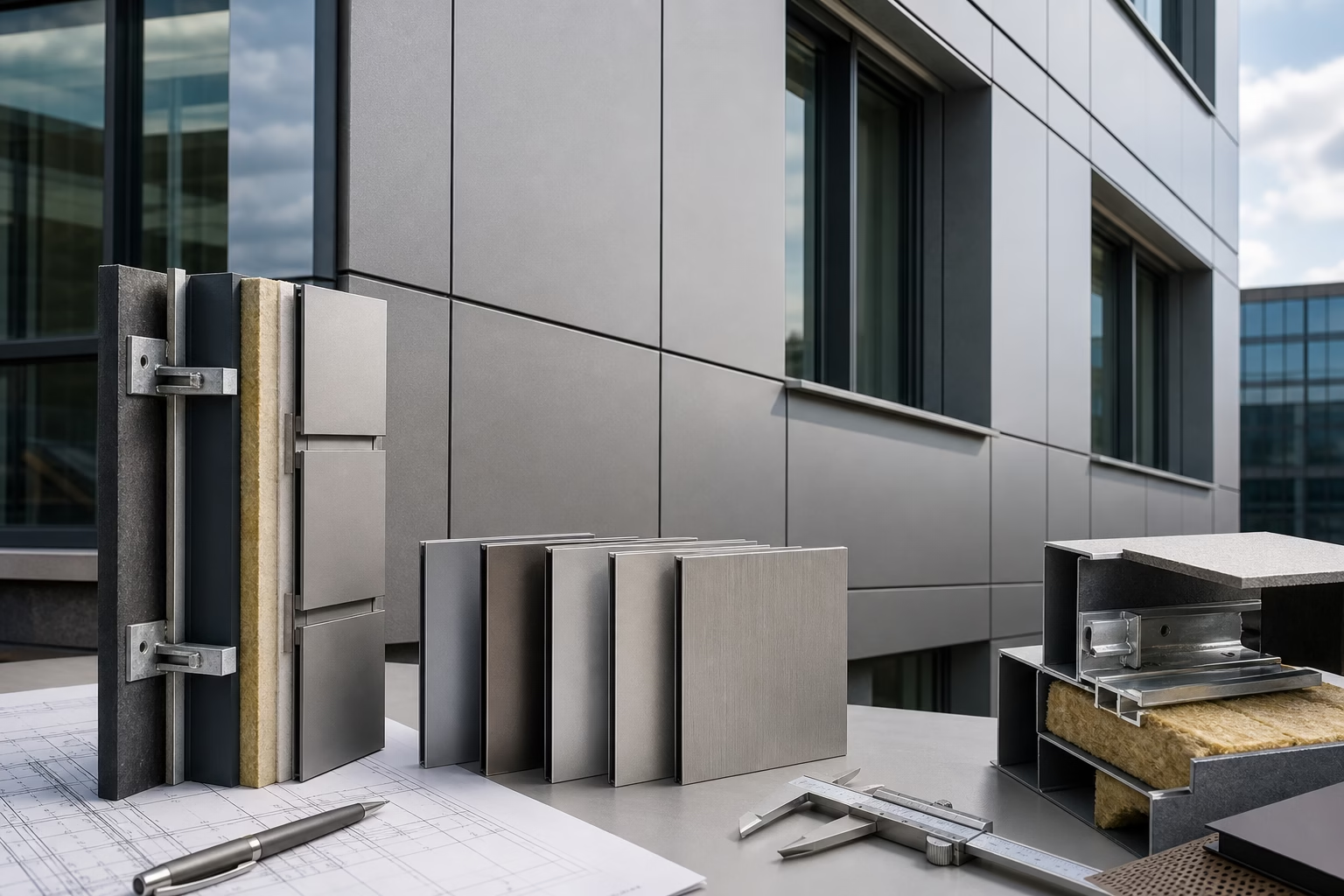
Modern facade design juggles comfort, code pressure, and cost. This aluminum facade panel thickness guide breaks down how thickness choices affect heat flow, moisture, and compliance, without turning the process into homework.
Insulation Needs in Rainscreen and Ventilated Facade Systems
In a rainscreen or ventilated facade, thickness decisions live alongside insulation strategy, not apart from it. This aluminum facade panel thickness guide often starts with the wall build-up.
-
Thermal performance and airflow
-
Air gap depth works with panel thickness to slow heat movement.
-
Smart spacing reduces thermal bridging at anchors.
-
-
Moisture behavior
-
Panel gauge must align with vapor barrier placement.
-
Better thickness pairing improves moisture management during seasonal swings.
-
-
Energy performance goals
- Local energy performance targets push designers toward balanced skins rather than brute thickness.
Designers using Wallnova systems often treat aluminum facade panel thickness guide rules as guardrails, not shortcuts. Thin panels can work, if insulation and airflow are doing their share.
Core Thickness Optimization for Heat Transfer
Core decisions sit at the heart of any aluminum facade panel thickness guide. The core material controls heat transfer more than the metal skins.
-
Thin core, high thermal conductivity: fast heat loss.
-
Thicker core, better thermal resistance: slower heat flow.
-
Added panel thickness also boosts stiffness, which helps long spans.
Short version? You’re balancing U-value against weight and handling. Push too far and installation gets messy. Stay too thin and the R-value won’t impress inspectors. Wallnova projects often land in the middle, where optimization feels boring but works.
This aluminum facade panel thickness guide mindset keeps decisions grounded.
Engineering Calculations of U-Value and Material Gauge
Engineering checks turn guesses into approvals. Any aluminum facade panel thickness guide leans on engineering calculations tied to material gauge.
-
Inputs typically reviewed
-
Thermal transmittance targets from building codes
-
Expected heat loss across assemblies
-
-
Gauge selection logic
-
Thicker skins improve durability, not always thermal performance
-
Core properties often drive the final U-value
-
-
Compliance layer
- Regional standards set upper U-value limits
A reliable aluminum facade panel thickness guide treats math as a safety net, not a hurdle. When numbers line up early, revisions stay minimal, and approvals move faster.
Quick Thickness Check: On-Site Tips

Getting the aluminum facade panel thickness guide right on-site saves time, money, and awkward rework. This quick read breaks down how to verify aluminum facade panel thickness, inspect coating layers, and tweak fastening details. If you’ve been flipping through an aluminum facade thickness guide, this keeps it practical and real.
Using Calipers for Sheet Thickness Verification
For any aluminum facade panel thickness guide, field checks start with solid calipers and clean measurement habits.
-
Tool prep
-
Inspect calipers for jaw wear
-
Zero the gauge before each verification
-
-
Measuring the sheet
-
Place jaws square to the sheet edge
-
Apply light, even pressure
-
Record thickness to required accuracy
-
-
Cross-check routine
-
▪ Measure three random spots
-
▪ Compare with specified aluminum facade panel thickness
-
▪ Flag deviations beyond tolerance
-
This simple flow keeps your aluminum facade thickness guide grounded in real measurement data, not guesswork.
Visual Inspection of Anodized Aluminum Skin Thickness
A sharp visual check still matters. Look at the anodized aluminum surface under natural light and at an angle. Uneven tone may hint at inconsistent coating or skin thickness.
• Check color consistency
• Scan for streaks or patchy reflection
• Note edge build-up or thin corners
That insight lines up with every serious aluminum facade panel thickness guide in the market.
Fastening Method Adjustments for Tolerance Requirements
When panel thickness shifts, your fastening method cannot stay rigid.
-
Minor variance: adjust washer stack or slot allowance.
-
Moderate deviation: revise connection spacing.
-
Tight tolerance requirements: re-check anchor embedment before installation.
On-site teams working with Wallnova systems often fine-tune clip height and torque to match the aluminum facade panel thickness guide. Small adjustments prevent stress points and keep the façade clean, aligned, and ready for inspection.

 English
  Français
  Bahasa Indonesia
  Deutsch
  Italiano
  Español
  العربية
  Español de México
  Nederlands
  香港中文
香港中文