
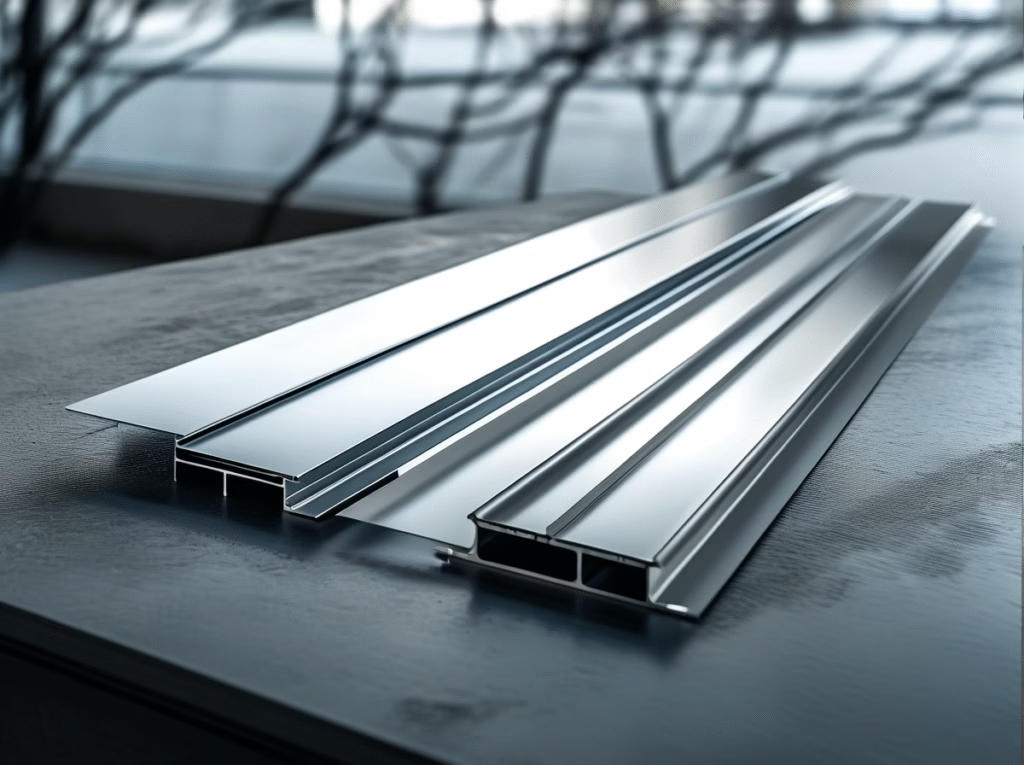
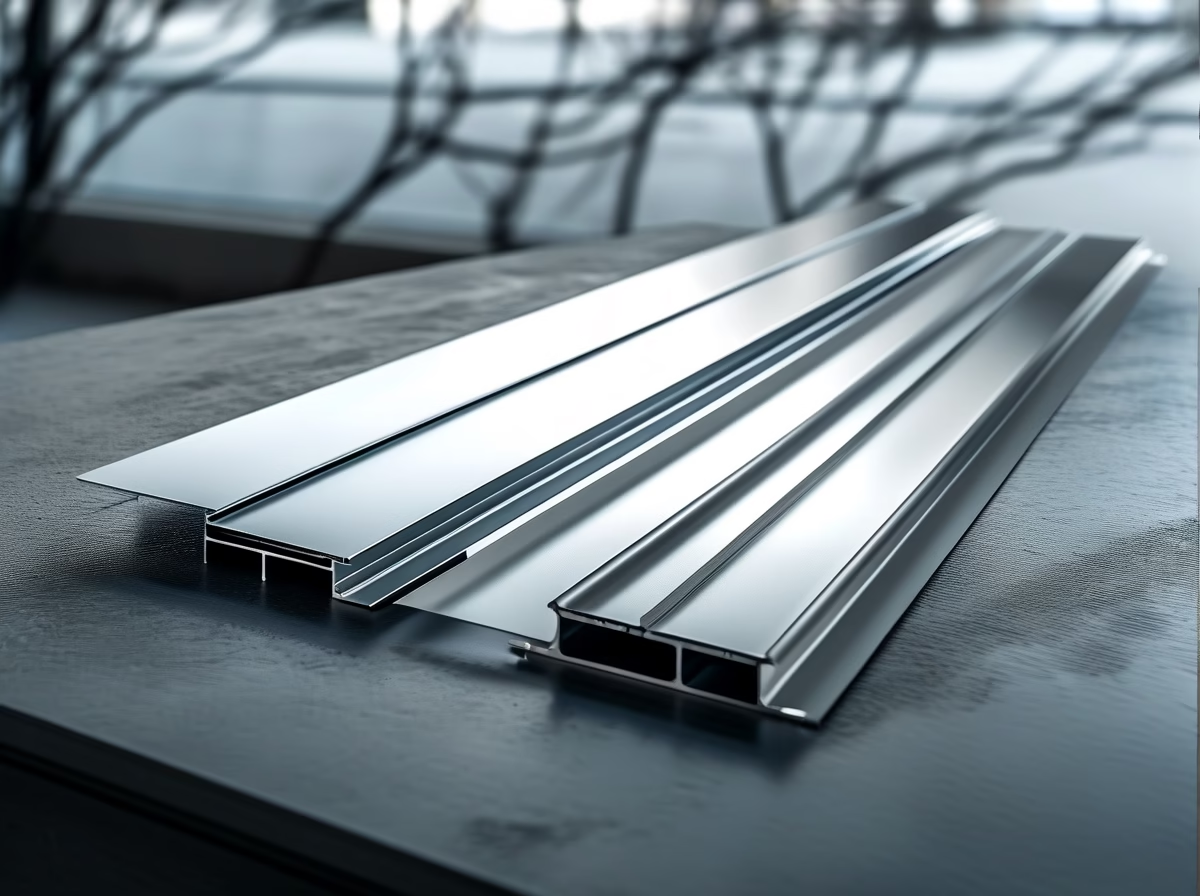
The 2.5mm vs 3.0mm aluminum panel choice isn’t a tiny tweak; it’s the line between a facade that holds its shape and one that starts to wave under pressure. Pick wrong, and costs creep, callbacks stack, and inspectors raise eyebrows.
Weight, wind, and warranties collide; the thickness keeps projects calm, compliant, and profitable.
Quick Insights: 2.5mm vs 3.0mm aluminum panel
➔ Higher Rigidity: 3.0mm panels resist deflection and vibration, ideal for high-rise curtain walls; 2.5mm suits low-rise facades.
➔ Wind Load Performance: Thicker panels withstand stronger wind pressures, reducing long-term fatigue and deformation risks.
➔ Maintenance & Durability: 3.0mm combined with PVDF or anodized finishes lowers corrosion and upkeep; 2.5mm may need more frequent inspections.
➔ Installation & Weight: 2.5mm panels ease handling and lighten subframes; 3.0mm demands robust anchoring but boosts structural reliability.
➔ Design Flexibility: 3.0mm supports complex geometries and crisp visual flatness, while 2.5mm is cost-effective for straightforward layouts.
Why Thickness Matters: 2.5mm Vs 3.0mm Aluminum Panel
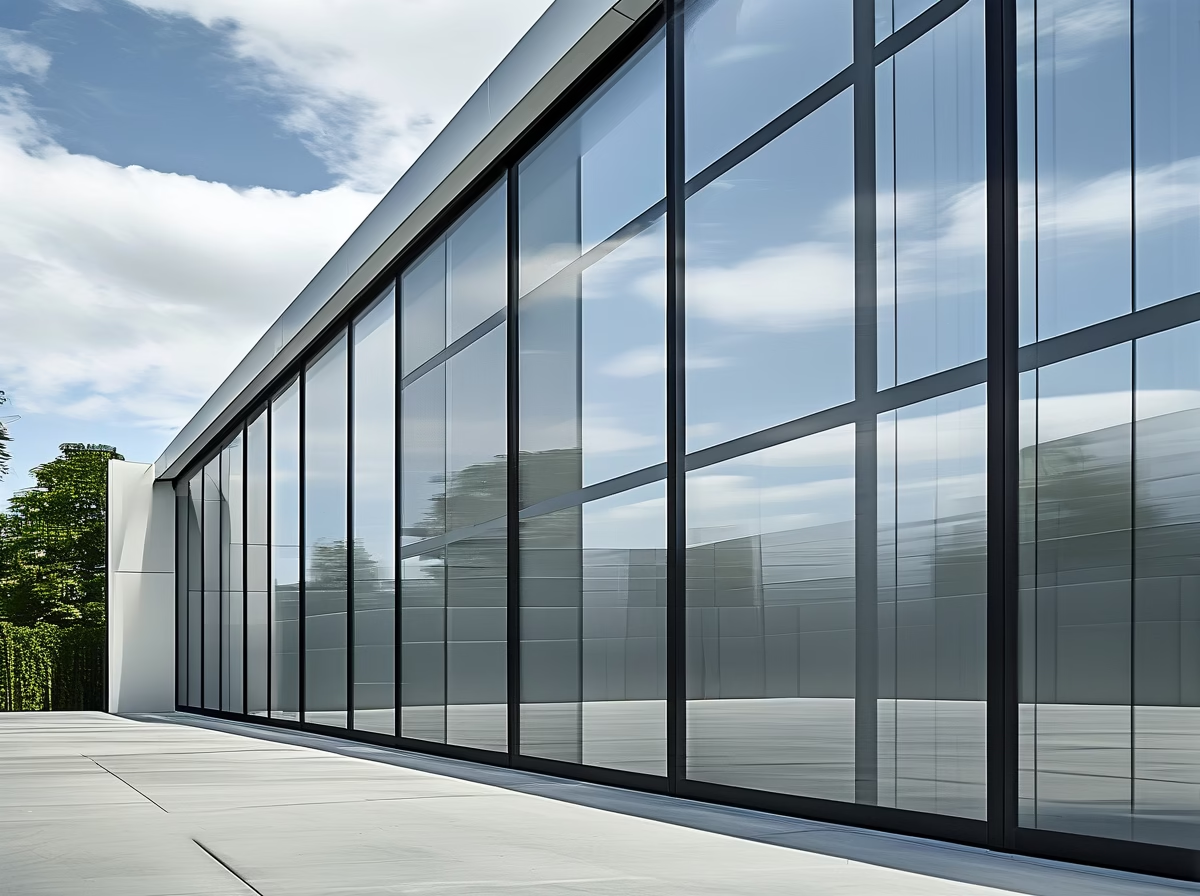
When clients ask about 2.5mm vs 3.0mm aluminum panel, the real talk isn’t just about numbers. It’s about strength, wind, heat, and material grade. In facade work, small thickness shifts can change performance. Let’s break down how 2.5mm and 3.0mm aluminum panels truly compare in daily building use.
Panel Rigidity and Structural Integrity
In the debate around 2.5mm vs 3.0mm aluminum panel, rigidity is usually the deal‑breaker.
-
Higher rigidity means less visible waviness
-
Better structural integrity supports wider spans
-
Reduced deflection under load
-
Thickness increases stiffness
-
Greater bending moment capacity
-
Improved long-term panel stability
At a technical level:
-
Thickness impacts:
-
➤ Resistance to deformation
-
➤ Distribution of stress across the aluminum sheet
-
-
Structural performance depends on:
-
Material properties
-
Thickness
-
Alloy composition
-
-
Load conditions
-
Dead load
-
Live load
-
Wind pressure
-
-
For large curtain walls, 3.0mm panels simply feel steadier. Less flex. Less movement. When comparing aluminum panel thickness options, contractors often choose thicker boards for peace of mind.
Wind Load Resistance Across Thicknesses
Wind doesn’t play nice with facades. In 2.5mm vs 3.0mm aluminum panel comparisons, wind load behavior tells a clear story.
-
Resistance to positive pressure
-
Response to negative suction
-
Stability of the building envelope
Under strong dynamic forces, 3.0mm performs better because:
-
Increased thickness
-
Reduces vibration
-
Limits surface distortion
-
-
Stronger section modulus
-
Handles higher pressure
-
Minimizes permanent set
-
For mid-rise projects, 2.5mm aluminum panel thickness can work fine. For high-rise zones with heavy wind exposure, thicker panels reduce risk and callbacks.
Thermal Performance: Insulation Differences
When people compare 2.5mm vs 3.0mm aluminum panel, they often expect major insulation gaps. Truth is, metal thickness only slightly shifts thermal performance.
-
Minor changes in heat transfer
-
Small variation in conductivity
-
Limited impact on R-value
Real energy efficiency depends more on:
-
Back insulation
-
Air cavity design
-
Control of thermal bridging
In rainscreen systems, the insulation layer drives the U-value. Thickness alone won’t transform building energy bills. Still, in aluminum panel comparison discussions, engineers check every layer, including metal gauge, to fine‑tune performance.
Aluminum Alloy Grades and Tensile Strength
Thickness works hand in hand with aluminum alloy selection. In the 2.5mm vs 3.0mm aluminum panel choice, material grade matters just as much.
-
Core mechanical factors:
-
Tensile strength
-
Yield strength
-
Ductility
-
Overall mechanical properties
-
-
Alloy decisions include:
-
Material grade
-
3003 series
-
5000 series
-
-
Temper condition
-
H14
-
H24
-
-
A thinner high-grade panel can outperform a thicker low-grade sheet in lab tests. Still, 3.0mm panels maximize strength potential by adding section depth. That’s why brands like Wallnova recommend balancing alloy temper and thickness together, not picking one blindly.
In real projects, the 2.5mm and 3.0mm aluminum panel decision comes down to load demand, facade scale, and budget. Wallnova often advises reviewing both structural calculations and alloy specs before locking in a final call.
Strength Vs Weight: 2.5mm Vs 3.0mm Debate
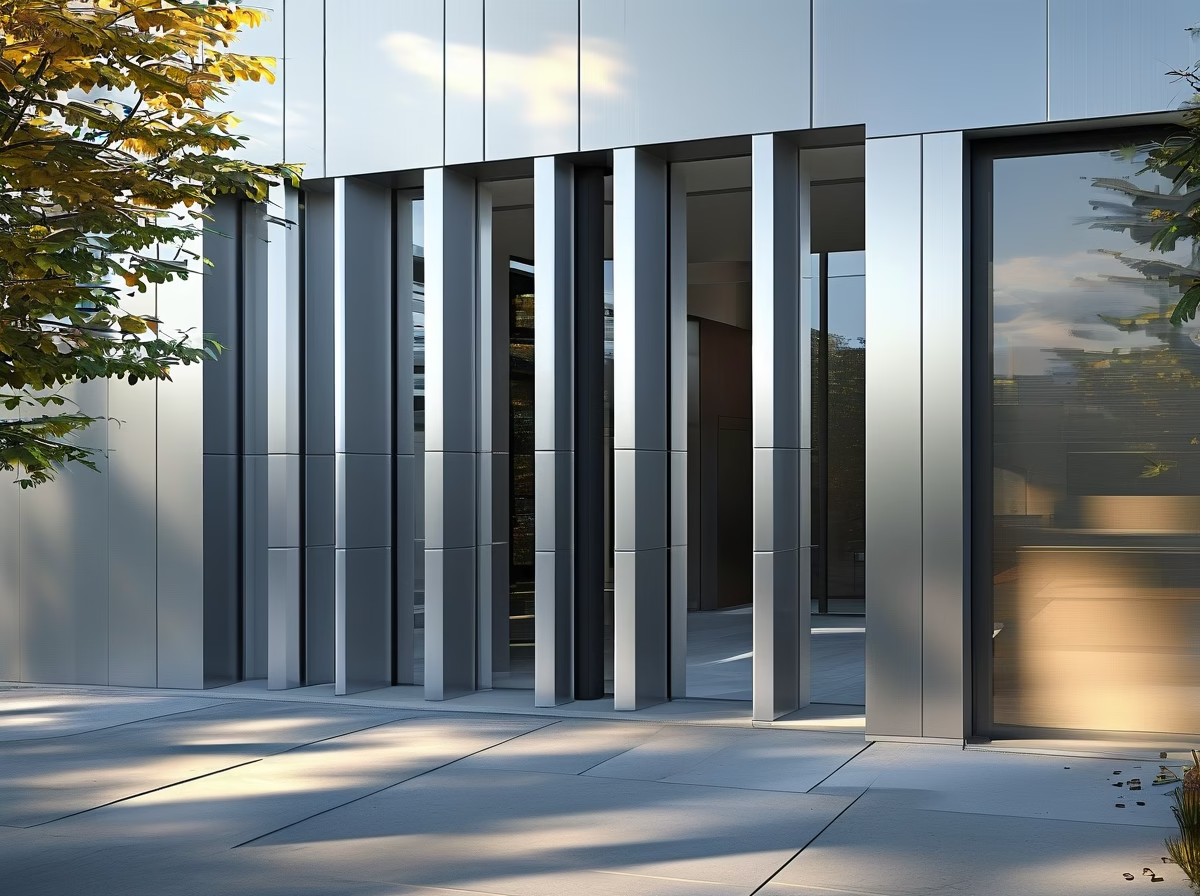
When clients ask about 2.5mm vs 3.0mm aluminum panel, the real talk always comes down to load, lifespan, and budget. This thickness debate isn’t hype—it shapes how your exterior facades perform for years.
2.5mm Solid Aluminum Panel
When comparing 2.5mm vs 3.0mm aluminum panel, the 2.5mm thickness often wins projects where reduced weight matters more than extreme strength.
-
Structural Behavior
1.1 Load Adaptability
-
Lower dead load on subframe
-
Reduced anchor stress
-
Better tolerance for minor building movement due to panel flexibility
1.2 Wind Considerations
-
Suitable for low-rise exterior facades
-
Moderate wind load regions perform reliably
-
-
Installation Dynamics
2.1 Handling
-
Easier lifting during installation
-
Lower labor fatigue
2.2 System Impact
- Lighter aluminum panel reduces bracket reinforcement needs
-
-
Performance Snapshot
-
Balanced strength-to-weight ratio
-
Clean flat appearance
-
Budget-friendly logistics
-
For retail blocks, schools, and mid-sized offices, the thinner aluminum option often keeps structural demands reasonable without sacrificing visible quality. Many architects exploring 2.5mm vs 3.0mm aluminum panel decisions prefer 2.5mm when the building height stays modest.
Wallnova recommends this option for projects where subframe cost control is just as critical as surface durability.
3.0mm Solid Aluminum Panel
The 3.0mm thickness shifts the conversation in the 2.5mm vs 3.0mm aluminum panel comparison toward higher strength, added rigidity, and stronger wind load resistance.
Key advantages include:
-
Increased structural strength
-
Reduced deflection under pressure
-
Improved long-term flatness
Performance Comparison Table
| Thickness | Avg Weight (kg/m²) | Relative Rigidity | Recommended Building Height |
|---|---|---|---|
| 2.5mm | 6.8 | Moderate | ≤ 6 floors |
| 3.0mm | 8.1 | High | 6–20 floors |
| 2.5mm (reinforced) | 7.2 | Medium-High | ≤ 8 floors |
| 3.0mm (marine grade) | 8.4 | Very High | Coastal high-rise |
“High-rise façade demand continues to favor thicker aluminum panels due to increased wind compliance standards and durability expectations.”
That lines up with real-world engineering logic. In harsh climates or tall curtain wall systems, the 3.0mm aluminum panel clearly handles higher stress cycles.
Still stuck on 2.5mm vs 3.0mm aluminum panel? If the project climbs higher or faces strong coastal winds, 3.0mm is the safer bet. Wallnova fabricates both options with strict thickness tolerance control, ensuring each panel meets façade engineering requirements without guesswork.
Which Cladding Thickness Minimizes Maintenance Costs?
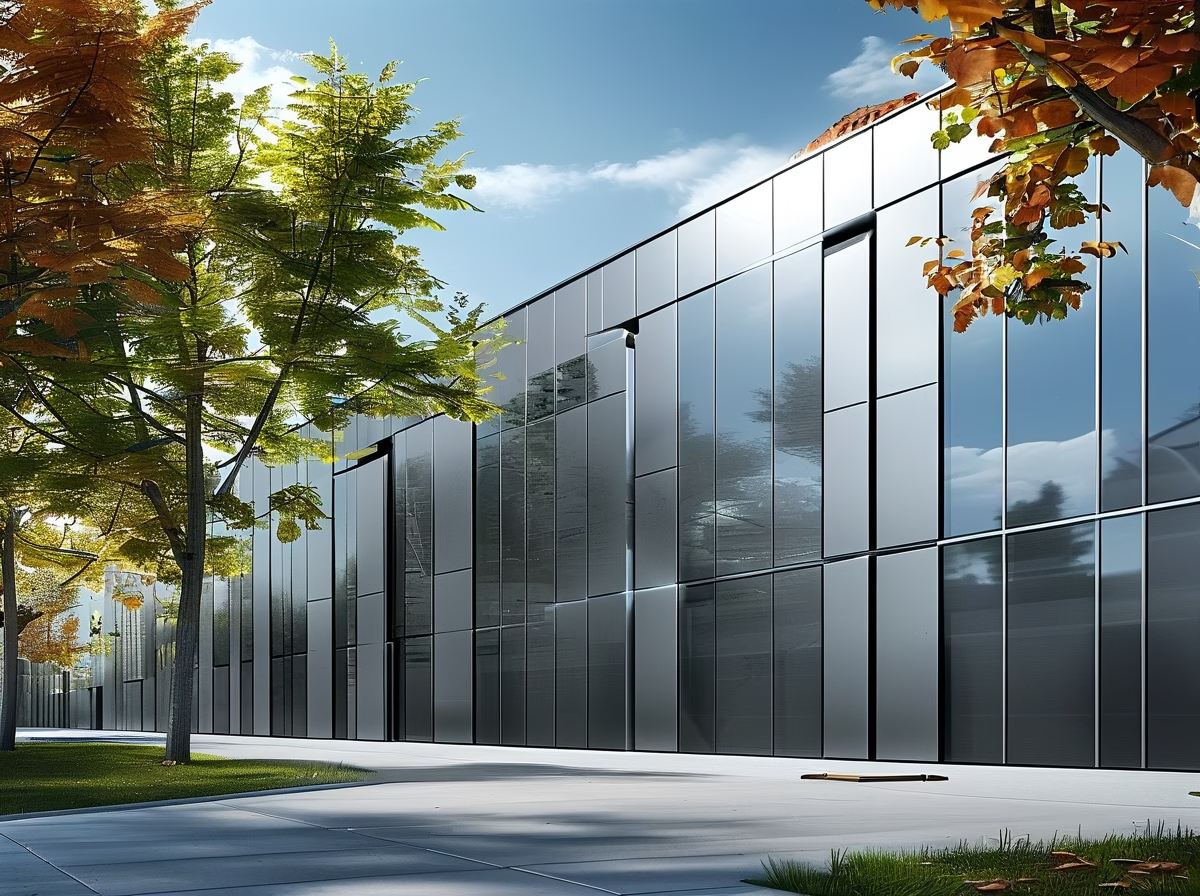
When comparing 2.5mm vs 3.0mm aluminum panel, maintenance isn’t just about price tags—it’s about how the material behaves over years of rain, sun, and wind. Let’s break down how thickness choices influence long-term upkeep.
Weather Resistance and Durability Factors
The debate around 2.5mm vs 3.0mm aluminum panel usually starts with durability. Thickness affects weathering, corrosion, and resistance to UV degradation—all of which quietly drive maintenance bills.
-
Thicker panels mean higher material strength.
-
Better resistance to temperature fluctuations reduces distortion.
-
Improved wind resistance protects panel integrity.
In coastal or high-UV regions, 3.0mm panels hold shape under stress. That extra 0.5mm helps reduce oil-canning and surface fatigue. By contrast, 2.5mm aluminum panel systems can perform well in moderate climates but may require earlier inspection cycles.
“Material durability remains the primary cost-control factor in façade lifecycle performance, particularly in high-exposure urban and coastal zones.”
When clients compare 2.5mm vs 3.0mm aluminum panel, the thicker option often reduces repainting, realignment, and structural correction over time.
Surface Finish and Coating Type Impacts
Thickness alone won’t save you. The real game-changer in 2.5mm vs 3.0mm aluminum panel decisions is the surface finish and coating type.
-
PVDF coatings boost color stability and gloss retention.
-
Anodized finish improves scratch resistance.
-
Proper curing strengthens resistance to surface wear.
Here’s how it plays out:
-
For 2.5mm aluminum panel:
- High-grade PVDF is essential in high-UV regions.
-
For 3.0mm aluminum panel:
- Thicker substrate + premium coating = slower surface degradation.
A thicker core supports coating adhesion, reducing micro-cracks. That’s why many architects weighing 2.5mm vs 3.0mm aluminum panel pair 3.0mm sheets with long-warranty coatings for fewer touch-ups.
Sealant Application and Joint Details
Maintenance headaches often start at the joints, not the panel face.
When reviewing 2.5mm vs 3.0mm aluminum panel, focus on:
-
Sealant type compatibility
-
Accurate joint design
-
Correct application method
If joints allow moisture ingress, repairs follow quickly. Thicker panels better control thermal expansion, helping maintain tight tolerances and stronger adhesion at connection points.
A simplified breakdown:
-
Material Layer
-
Panel thickness
-
2.5mm: Higher flex under heat
-
3.0mm: Greater dimensional stability
-
-
Sealant bond
-
Sensitive to movement
-
Protected by reduced panel shift
-
-
For contractors working with Wallnova systems, the 2.5mm vs 3.0mm aluminum panel decision often comes down to lifecycle math. In aggressive climates, 3.0mm paired with proper waterproofing detail simply means fewer callbacks. In low-risk zones, 2.5mm may keep budgets lean without spiking maintenance.
That’s the real balance—cost today versus service years tomorrow.
5 Benefits Of 3.0mm Solid Aluminum Panels
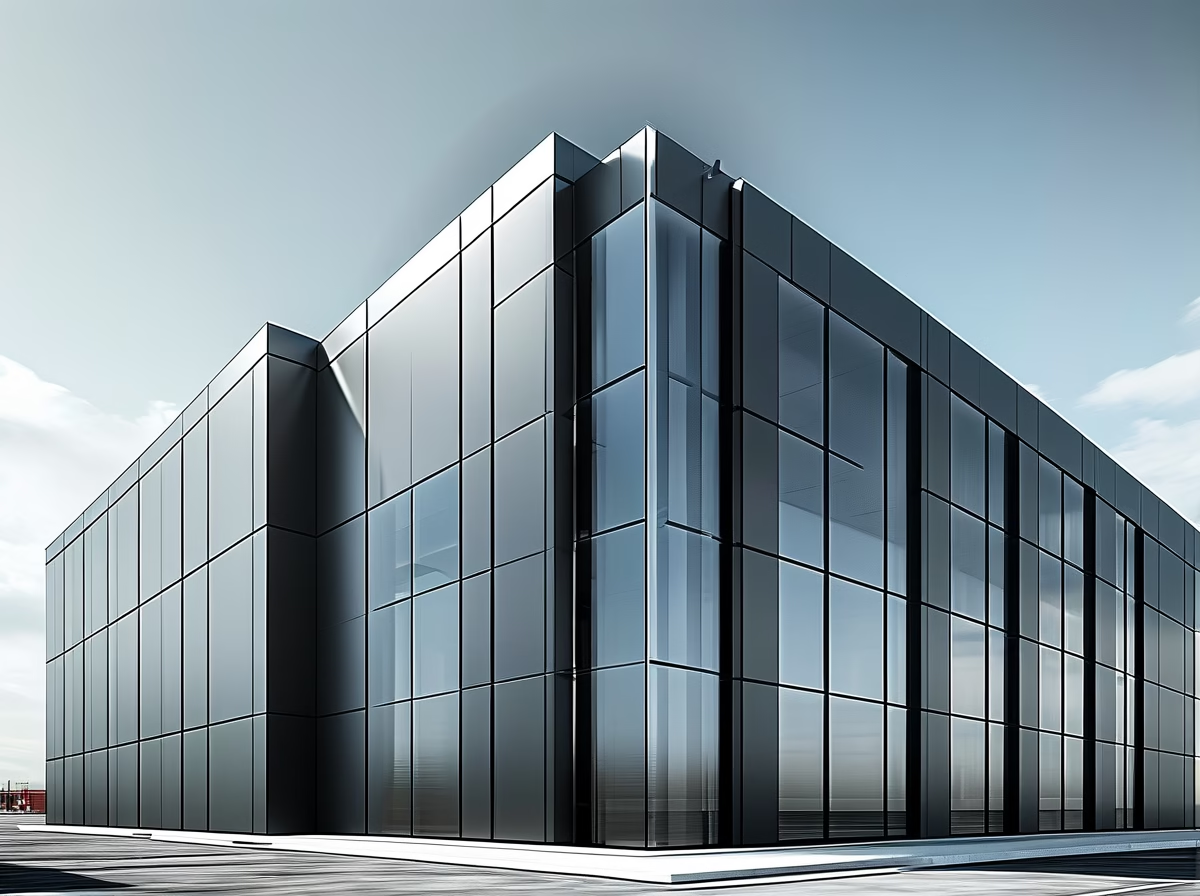
When comparing 2.5mm vs 3.0mm aluminum panel, the difference goes far beyond thickness. It touches structural strength, long-term cost, and how a facade system performs in real life. Let’s break down how 3.0mm panels stand apart—and why brands like Wallnova often recommend them for demanding projects.
Enhanced Structural Integrity for High-Rise Facades
In the debate of 2.5mm vs 3.0mm aluminum panel, structural performance often becomes the deal-breaker for high-rise buildings.
-
Core Structural Performance
1.1 Load Distribution
-
Thicker aluminum panels improve stress dispersion across the building structure.
-
Increased panel thickness reduces mid-span deflection.
-
Better anchoring within the facade system.
1.2 Frame Interaction
-
Stronger connection with brackets and sub-frames.
-
Lower risk of panel distortion under vertical load.
-
-
Code Compliance & Safety
2.1 Building Regulations
-
Meets stricter wind and impact codes for towers above 20 floors.
-
Supports large-format panels in modern architectural design.
2.2 Risk Reduction
-
Minimizes long-term fatigue stress.
-
Enhances overall structural strength.
-
-
Real-World Impact
-
Less vibration during storms.
-
Improved occupant comfort.
-
Stable facade lines over time.
-
When contractors compare aluminum panel 2.5mm vs 3.0mm, stability is where 3.0mm quietly wins.
Superior Wind Load Resistance in Curtain Wall Systems
Wind pressure is no joke in tall urban cores. In curtain walls, the jump from 2.5mm to 3.0mm changes panel performance in measurable ways.
| Panel Thickness | Max Wind Pressure (kPa) | Avg Deflection (mm) | Fatigue Cycles (Tested) |
|---|---|---|---|
| 2.5mm | 2.8 | 14.2 | 12,000 |
| 3.0mm | 3.6 | 9.1 | 18,500 |
| 2.5mm (Reinf.) | 3.1 | 11.8 | 14,000 |
| 3.0mm (PVDF) | 3.7 | 8.7 | 19,200 |
| 3.0mm (Premium) | 3.9 | 8.1 | 21,000 |
Key takeaways:
-
Higher wind resistance
-
Lower vibration in the building envelope
-
Improved structural stability
For projects engineered by Wallnova, 3.0mm panels are often selected when wind pressure calculations push the limits of thinner sheets.
Improved Durability Against Corrosion and Weathering
When discussing 2.5mm vs 3.0mm aluminum panel, durability matters just as much as load capacity. Thicker material offers extended corrosion protection, especially in coastal or industrial zones where environmental factors accelerate wear.
“Global facade materials are increasingly specified with higher thickness and advanced coatings to meet durability expectations exceeding 25 years,” noted a 2025 outlook by Grand View Research.
More thickness means slower material fatigue under extreme atmospheric conditions. Combined with advanced surface treatment, 3.0mm panels maintain panel longevity and overall material durability longer than thinner alternatives.
In simple terms? Less worry about premature replacements.
Greater Design Flexibility with Panel Geometry
Architects comparing aluminum panel 2.5mm vs 3.0mm often focus on design freedom.
-
Complex panel shapes become easier to fabricate.
-
CNC routing produces cleaner edges.
-
Large curved geometric forms maintain flatness.
Design advantages include:
1) Expanded design options
2) Improved material adaptability
3) Enhanced facade aesthetics
Short spans.
Bold angles.
Deep folds.
Thicker sheets handle custom fabrication without oil-canning effects. That’s why premium suppliers like Wallnova support expressive architectural design with 3.0mm stock—it simply behaves better during bending and forming.
Reduced Maintenance through PVDF Coating
The thickness debate doesn’t end at structure. Surface protection counts.
Step 1: Apply high-performance PVDF paint using advanced coating technology.
Step 2: Seal edges to create durable protective layers.
Step 3: Reduce long-term cleaning requirements and repaint cycles.
Benefits stack up:
-
Lower maintenance costs
-
Longer-lasting surface finish
-
Simplified panel upkeep
When clients ask about 2.5mm vs 3.0mm aluminum panel, lifecycle savings often tilt the decision. Over 15–25 years, fewer repairs and touch-ups mean real money saved.
And that’s the quiet advantage—3.0mm isn’t just thicker. It’s smarter for demanding facades.
Case Study: 3.0mm Panels In Coastal Buildings

Coastal builds are tough on materials. Salt, wind, and moisture never take a day off. When comparing 2.5mm vs 3.0mm aluminum panel, thickness shifts from a cost question to a survival question. In this case study, we break down corrosion control, fixing systems, and salt exposure results—while naturally weighing 2.5 mm and 3.0 mm aluminum panels in real seaside conditions.
Corrosion Protection via Anodizing Process
In coastal air, Corrosion creeps in fast. The defense starts with Anodizing, an Electrochemical process that strengthens the natural Oxide layer on Aluminum.
Key performance factors:
-
Increased Durability
-
Controlled Surface treatment
-
Effective pore Sealing
Test comparison in marine zones:
| Panel Type | Anodic Film Thickness (µm) | Salt Spray Hours | Visible Degradation | Maintenance Cycle (Years) |
|---|---|---|---|---|
| 2.5mm panel | 15 | 720 | Minor pitting | 5 |
| 3.0mm panel | 20 | 1000 | None visible | 8 |
| 2.5mm coated | 18 | 850 | Slight fade | 6 |
| 3.0mm coated | 22 | 1200 | None | 10 |
| 3.0mm marine-grade | 25 | 1500 | None | 12 |
When discussing 2.5mm vs 3.0mm aluminum panel, the thicker substrate plus deeper anodic layer clearly slows breakdown. In salty climates, that extra 0.5 mm matters.
Fastening Systems and Anchoring Methods Employed
Wind load near the shoreline pushes hard against façade Cladding. Proper Mounting to the Substructure keeps panels stable.
-
Structural Layer
1.1 Primary Anchors embedded in concrete
1.2 Adjustable brackets for alignment
-
Panel Interface
2.1 Stainless Fasteners
- Marine-grade **Screws**

- Sealed-head **Rivets**
2.2 Isolation pads preventing galvanic action
-
Load Transfer Path
3.1 Panel → bracket → anchor → structure
3.2 Wind suction resistance testing
Compared with 2.5 mm sheets, 3.0 mm aluminum panels reduce flex under gust pressure. Installers often say the thicker sheet “sits tighter.” That difference shows up fast during storm season. Wallnova projects along southern coastlines rely on calibrated anchor spacing to balance weight and wind demand.
Performance Testing Under Salt Spray Exposure
Marine validation focuses on Salt spray, controlled Exposure, and lab Testing aligned with ASTM standards.
Process flow:
-
Sample prep
-
5% saline mist cycle
-
Continuous 35°C chamber
-
Visual and tensile checks
Results focus on:
-
Corrosion resistance
-
Surface Degradation
-
Overall Panel integrity
In side-by-side 2.5mm vs 3.0mm aluminum panel trials, accelerated weathering showed slower edge creep on thicker material. The debate around 2.5mm vs 3.0mm aluminum panel often centers on budget, yet coastal exposure testing keeps pointing toward 3.0 mm aluminum panels for longer service life. Wallnova integrates these findings directly into façade recommendations, especially where salt air never really fades.
Optimize Facade Performance With Right Panel

When weighing 2.5mm vs 3.0mm aluminum panel, the choice is not just about thickness. It affects structural load, cost rhythm, visual feel, and long-term peace of mind on any commercial facade.
Balancing Panel Weight and Installation Tolerance
In the real debate of 2.5mm vs 3.0mm aluminum panel, contractors usually zoom in on three things:
-
panel weight
-
on-site installation speed
-
allowable tolerance
Here’s how the comparison typically plays out:
-
Material Layer
-
2.5mm
-
Lighter aluminum panels
-
Reduced lifting strain
-
-
3.0mm
-
Higher facade thickness
-
Better resistance to deflection
-
-
-
Structural Impact
-
Load transfer to frame
-
Anchor spacing adjustments
-
Overall structural load calculation
-
-
Handling & Alignment
-
2.5mm
-
Easier manual handling
-
Slightly tighter alignment control needed
-
-
3.0mm
-
More forgiving during fixing
-
Improved flatness across wide spans
-
-
When comparing aluminum panel 2.5mm vs 3.0mm, thinner sheets save weight, but thicker ones often reduce rework caused by warping. That trade-off matters on high-rise jobs.
Value Engineering Through Prefabrication Methods
Smart teams treat 2.5mm vs 3.0mm aluminum panel as a budgeting move, not just a spec line.
-
value engineering cuts waste
-
prefabrication improves repeatability
-
smart assembly protects the project timeline
Decision flow usually looks like this:
-
Design Phase
-
Confirm material specifications
-
Coordinate with CNC-based fabrication methods
-
-
Production Phase
-
Modular cutting for modular construction
-
Pre-drilled fixing points
-
-
Site Phase
-
Faster installation
-
Fewer alignment errors
-
Using 3.0mm in prefabricated grids can improve rigidity during transport. Meanwhile, 2.5mm may lower raw material cost. Brands like Wallnova often guide clients through this aluminum panel thickness comparison to keep cost efficiency tight without risking performance.
Achieving Visual Flatness and Color Selection
Facade designers care deeply about visual flatness and consistent surface finish.
Key factors:
-
aesthetic appeal across long elevations
-
stable coating adhesion
-
uniform facade appearance
Thickness influences:
-
Panel Stability
-
3.0mm
-
Reduced oil-canning
-
Better plane consistency
-
-
2.5mm
- Works well on smaller modules
-
-
Finish Performance
-
Color durability
-
Edge bending tolerance
-
-
Overall panel aesthetics
-
Reflection control
-
Shadow line clarity
-
In the everyday 2.5mm vs 3.0mm aluminum panel decision, thicker sheets usually win on wide-span retail or office facades where flatness is non-negotiable.
Adhering to Building Codes and Warranty Period Requirements
No project escapes building codes and legal requirements.
Compliance checklist:
-
Meet local safety standards
-
Align with defined material specifications
-
Secure long-term performance guarantees
Evaluation path:
-
Regulatory Review
-
Fire classification
-
Wind-load approval
-
-
Contract Stage
-
Defined warranty period
-
Written regulatory compliance terms
-
-
Long-Term Risk Control
-
Maintenance planning
-
Insurance alignment
-
Many developers lean toward 3.0mm for extended warranty coverage. Wallnova supports both options, but for projects demanding stronger compliance buffers, thicker panels often make the paperwork—and the sleep at night—a lot easier.

 English
  Français
  Bahasa Indonesia
  Deutsch
  Italiano
  Español
  العربية
  Español de México
  Nederlands
  香港中文
香港中文