
Material Comparison: Glass Curtain Wall vs. Aluminum Curtain Wall
Introduction
The design of building facades is a crucial part of modern architecture, determining not only the aesthetic appearance of a building but also its energy efficiency, comfort, and durability. Of the many building materials available, glass and aluminum curtain walls are the most common choices. Although they are similar in many ways, they each have unique characteristics in terms of material, performance, and application. This article will compare these two materials in detail to help you understand their advantages and disadvantages, and how to choose the right curtain wall material.
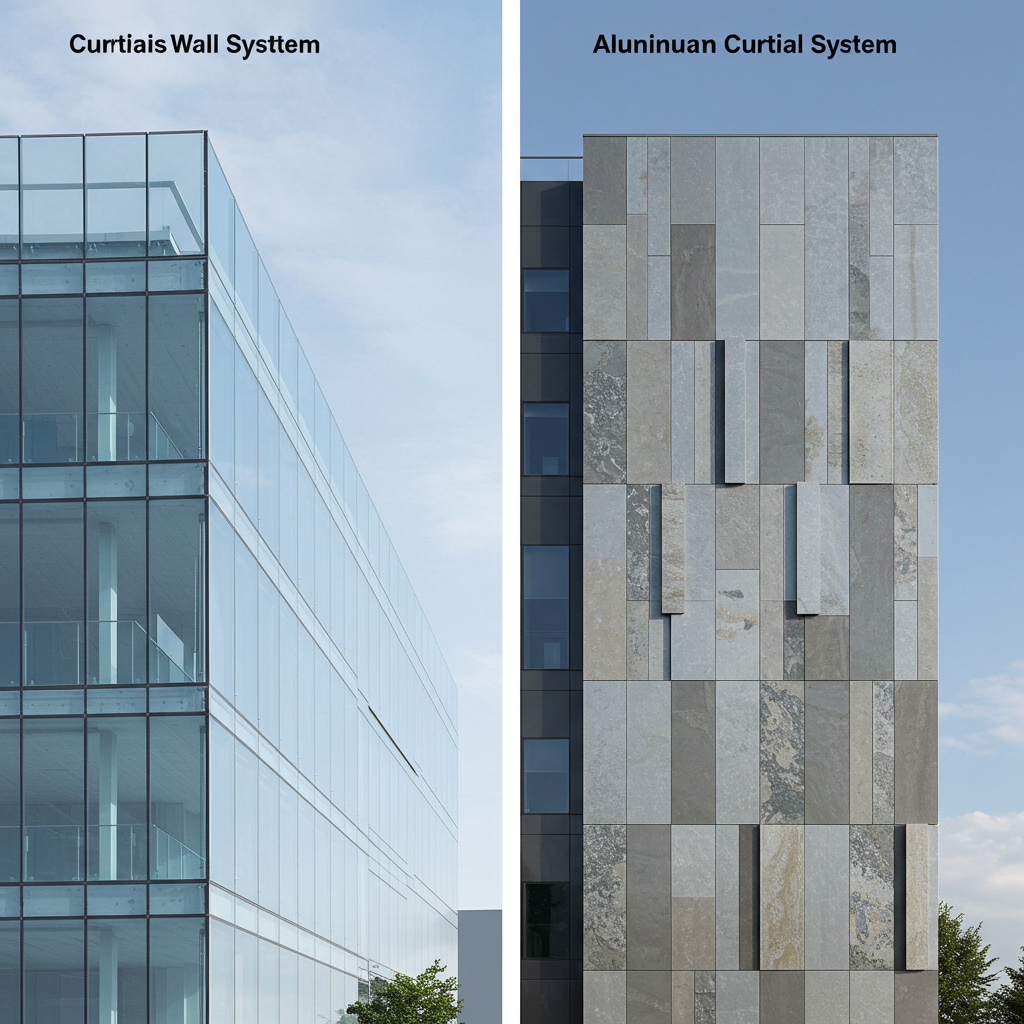
Glass Curtain Wall: Modern and Transparent Design Concepts
Glass curtain wall is widely used in modern buildings for its transparent and simple appearance. Its main components are large glass panels, which are usually mounted in a metal frame to form an external structure. The most significant advantage of glass curtain wall is its aesthetic effect. It can provide a modern, stylish look to a building, especially in high-rise buildings, where glass curtain walls are often used to express a transparent, open design concept. Large glass windows not only make the space inside the building appear more open but also maximize the use of natural light and reduce the reliance on artificial lighting, thus improving the energy efficiency of the building.
However, glass curtain walls present certain challenges in terms of thermal insulation. Traditional single-pane glass has poor thermal isolation properties, which means it can lead to unstable interior temperatures in cold or hot climates, increasing energy consumption. To address this issue, modern glass curtain walls often use technologies such as double glazing and Low-E glass to improve thermal isolation and effectively reduce energy consumption. Therefore, although a glass curtain wall is visually appealing, its thermal performance requires special attention in extreme climatic conditions.
In addition, the durability of glass curtain walls is also affected by climatic conditions. Despite the high strength of modern glass curtain walls, they are still susceptible to external factors such as wind and impact. Especially in adverse weather conditions, glass panels can become damaged, leading to increased maintenance and replacement costs.
Aluminum Curtain Wall: Strong and Flexible at the Same Time
Aluminum curtain walls use aluminum frames as the main material, together with a variety of filler materials (e.g., glass, metal panels, stone, etc.), which can be customized as needed. This design makes the aluminum curtain wall have higher flexibility in the presentation of the facade, which can meet the needs of different architectural styles and functions. The advantages of aluminum curtain wall lie in its sturdy structure and high durability, especially in high wind speeds or harsh environments, aluminum curtain wall can provide more stable and reliable protection.
Compared with glass curtain walls, aluminum curtain walls have better performance in terms of thermal insulation. Aluminum itself is more thermally conductive, but through the application of thermal break technology, aluminum curtain walls can effectively reduce heat conduction and provide better thermal insulation. This gives aluminum curtain walls a clear advantage in terms of thermal insulation and energy saving, especially for buildings in cold or extreme climates.
Aluminum curtain walls usually have a cleaner and more robust appearance, giving them a modern and sturdy feel. Aluminum itself is highly resistant to corrosion and is not susceptible to moisture and pollution, so aluminum curtain walls have lower maintenance costs and a longer lifespan. In addition, aluminum panel curtain walls can be paired with different filler materials to achieve different design effects. For example, you can choose glass panels with aluminum frames to achieve the transparent effect of a glass curtain wall; or use metal panels, stone, etc., to create a more solid, understated look.
Thermal Insulation and Energy Efficiency: Glass Curtain Wall vs. Aluminum Curtain Wall
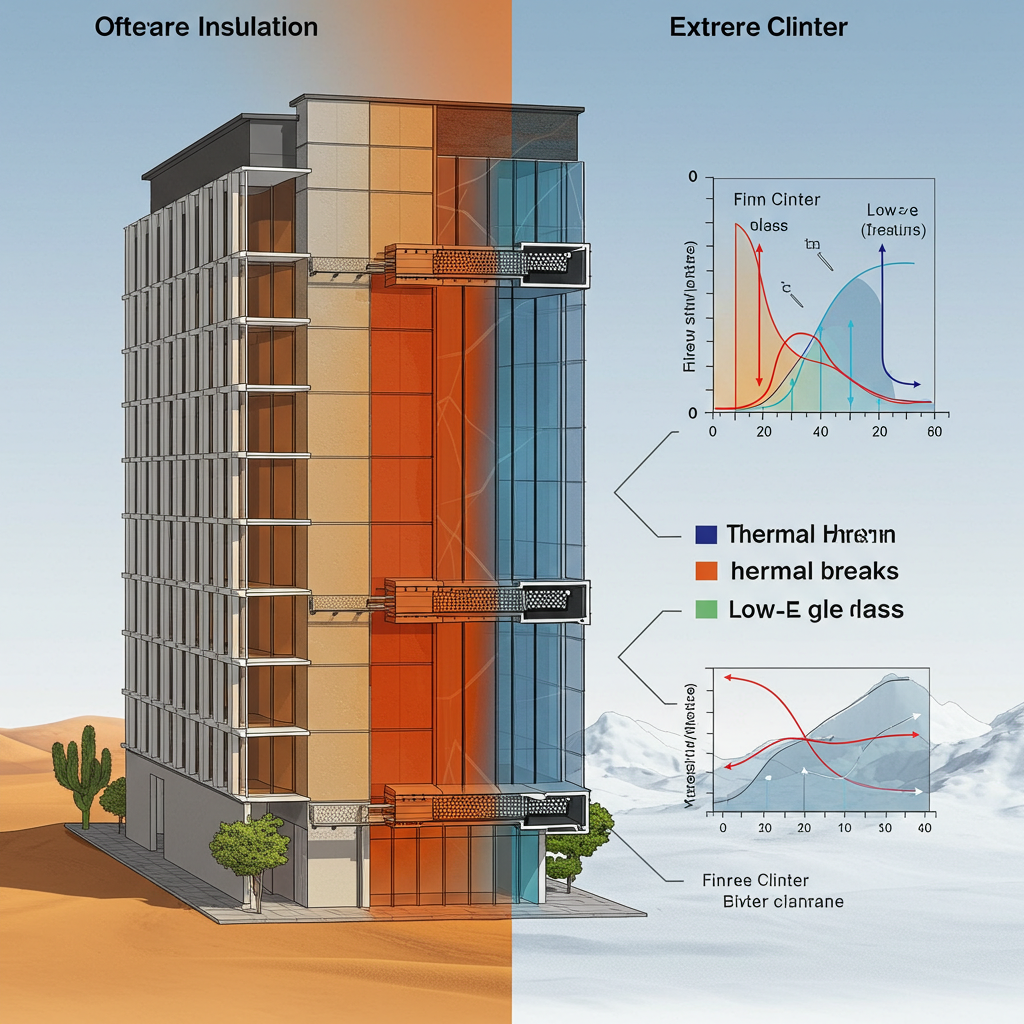
Glass Curtain Walls: The Challenge of Transparency
Glass curtain walls add style to modern buildings with their bright, transparent appearance, but their transparent nature also means that they present a natural challenge in terms of heat transfer. Glass itself has a high thermal conductivity, which can lead to heat loss from the interior in the winter, while in the summer it can easily allow heat from the outside to penetrate, resulting in unstable temperatures inside the building. This, in turn, increases the burden on air conditioning and heating systems and reduces energy efficiency.
Traditional single-glazed curtain walls are less effective in isolating heat, so modern glass curtain walls often use double-glazing (i.e., double-glazed structures) to improve their thermal performance. Double-glazed curtain walls form an air layer between the two layers of glass, and this air layer plays a better role in thermal isolation, which can effectively reduce indoor-outdoor heat exchange and keep the temperature inside the building stable. In addition, the application of Low-E glass further enhances the thermal insulation performance of the glass curtain wall. The surface of Low-E glass is covered with a micro-thin metal oxide film, which is capable of reflecting thermal radiation while allowing natural light to pass through, reducing heat conduction and maximizing the lighting effect.
Nevertheless, the energy performance of glass curtain walls is still limited by the characteristics of the glazing material, especially in extreme climatic conditions, and it is still necessary to supplement the thermal insulation performance by adding additional technological means (such as high-efficiency air conditioning systems or solar panels).
Aluminum Curtain Walls: Combining Thermal Breaks to Improve Energy Efficiency
Compared to glass curtain walls, aluminum curtain walls offer significant advantages in terms of thermal insulation. Aluminum is inherently strong and corrosion-resistant, but its high thermal conductivity means that aluminum frames alone do not provide excellent thermal insulation. However, through the application of thermal break technology, aluminum curtain walls can effectively solve this problem.
Thermal break technology separates the internal and external parts of the aluminum frame and adds an insulating material (e.g., polyurethane, polystyrene, etc.) between the two, thereby cutting off the heat conduction channels within the aluminum. This technology can effectively reduce the flow of heat, making the aluminum curtain wall have a better thermal isolation effect, especially in cold winters and hot summers, it can effectively maintain the temperature inside the building, reduce the burden on the air conditioning and heating system, and significantly improve the energy efficiency of the building.
In addition, the design flexibility of the aluminum curtain wall allows it to be paired with a variety of infill materials (e.g., glass, stone, etc.) to further improve thermal insulation. For example, the use of double glazing or Low-E glass as an infill material for aluminum curtain walls can further enhance thermal insulation and improve the energy efficiency of a building.
Aluminum curtain walls are particularly suitable for use in extreme climatic conditions, whether it is the cold northern region or the hot southern region, the thermal insulation performance of aluminum curtain walls can effectively improve the energy efficiency of the building. Compared to glass curtain walls, aluminum curtain walls have lower maintenance costs because they are more resistant to corrosion, which reduces maintenance issues due to weather changes.
Structural Strength and Durability: Glass vs. Aluminum Curtain Walls

Glass Curtain Walls: Providing Visual Transparency but Requiring Additional Support
Glass curtain walls are widely used in many high-rise buildings for their modern, transparent appearance, which maximizes natural light and opens up the view, providing an excellent visual effect. However, while glass is inherently strong, it is not always strong enough to support the loads on the building façade on its own, which can be a safety hazard, especially in the event of strong winds or impacts.
When designing a glass façade, additional support structures are often required to increase its wind and seismic resistance. Often, designers will use metal frames (e.g., aluminum alloy or steel frames) to support the glass panels, which can ensure that the glass curtain wall remains stable in the face of wind loads. Especially in large-area glass curtain wall applications, the weight and wind resistance of the glass must be precisely calculated to ensure the structural safety of the building.
In addition, glass curtain walls, although strong in their own right, may break on impact (e.g., from flying objects or in windy weather) due to their fragile nature. Therefore, glass curtain walls require special attention to safety design when in use to ensure that they comply with the relevant impact resistance standards. Modern glazing technologies, such as laminated glass and tempered glass, can improve the impact resistance of glass and reduce the risk of injury from broken fragments.
Aluminum Curtain Walls: More Wind and Corrosion Resistant
Compared to glass curtain walls, aluminum curtain walls offer greater wind and corrosion resistance, making them ideal for use in extreme climates. Aluminum panels as façade materials are lightweight, strong, and have better wind pressure resistance. In stormy weather or high wind speed environments, aluminum curtain walls are better able to resist wind and maintain the structural stability of the building.
In addition, aluminum’s corrosion resistance makes it excellent in wet or salt spray environments. Aluminum’s natural ability to resist corrosion means that even after prolonged exposure to humid climates, aluminum curtain walls maintain their appearance and functionality and are not prone to rust or corrosion. This makes aluminum cladding particularly suitable for use in coastal areas or other areas of high humidity, and can greatly extend the life of a building’s façade.
Aluminum curtain walls are not only durable but also provide greater stability during construction. Aluminum curtain walls are often modular in design, a design that makes it easier to install the material and reduces the potential for errors during construction. The flexibility of aluminum processing also allows the aluminum curtain wall to be adjusted in size and shape as needed, further enhancing its ability to adapt to different architectural designs.
Applicable Environments and Design Options
The differences in structural strength and durability between glass and aluminum curtain walls make them suitable for different environments. Glass curtain walls are mainly suitable for buildings that require a lot of natural light and visual transparency, especially in mild climates, where they can provide superior lighting and meet aesthetic design requirements. However, the use of glass curtain walls needs to take into account factors such as strong winds, vibrations, and impacts, and therefore requires additional support and safety design.
Aluminum curtain walls, on the other hand, are better suited for harsh climatic conditions or areas that require higher wind and corrosion resistance. Due to the unique properties of aluminum, aluminum curtain walls can not only withstand higher wind loads but also adapt to environmental factors such as humidity and salt spray, reducing the need for maintenance. In addition, the strength and stability of aluminum curtain walls make them ideal for high-rise buildings and commercial complexes.
Appearance and Aesthetics: Glass Curtain Walls vs. Aluminum Curtain Walls

Glass Curtain Wall: Transparency and Open View
Glass curtain wall is a very popular façade material in modern architecture, especially for buildings that require natural light and large views. The transparency of glass allows for a seamless connection between the inside and outside of the building, creating an airy effect and giving the building a more modern and stylish appearance. Through the extensive use of glass, buildings are able to maximize light, allowing for a brighter and more open interior environment.
Glass curtain walls are particularly common in high-rise buildings, especially in building types such as offices, hotels, and commercial buildings, where the use of glass can effectively enhance the modernity and visual impact of the building. Glass curtain walls not only provide aesthetic advantages but also increase the building’s natural lighting, reduce the need for artificial lighting, and achieve the effect of energy saving.
In addition, the development of modern glass technology makes the aesthetic function of glass curtain walls further improved. Through the use of different types of glass (such as Low-E glass, laminated glass, etc.), not only can the functionality of the glass be enhanced, but also can bring different visual effects, such as reflected light, refracted light, etc., to create a richer appearance of the level.
Aluminum Curtain Wall: Industrialized Appearance and Diversified Design
Compared with glass curtain walls, aluminum curtain walls have a more industrialized appearance, giving people a simple and stable feeling. The use of aluminum panels can add a modern touch to a building without requiring too much transparency. This makes aluminum curtain wall the material of choice for some commercial or industrial buildings, especially those that don’t require much light or have high privacy requirements.
The aesthetic advantage of aluminum curtain wall is its extreme design flexibility. Both the aluminum frame and the panels themselves can be combined with a number of different surface materials, such as stone, wood, and metal, to provide a greater variety of design options. Designers can customize different surface treatment technologies for aluminum panels, such as painting and anodizing, according to the style and functional needs of the building as well as the surrounding environment, so as to obtain different colors, textures, and texture effects.
In addition, the appearance design of aluminum curtain wall is not only limited to the flat effect, but also can form different levels and spatial sense through the design of concave and convex, and the change of lines. This variety of design options makes aluminum curtain wall widely used in different types of buildings, such as commercial buildings, public facilities, and residential buildings.
Applicable Building Types
The differences in appearance between glass and aluminum curtain walls make them suitable for different building types. The transparency and openness of glass curtain walls make them ideal for high-rise buildings, office buildings, hotels, and shopping malls that require good visual effects and natural lighting. Aluminum curtain walls, on the other hand, are more suitable for buildings that require a high degree of privacy and structural feeling, such as industrial plants, transportation hubs, and shopping mall facades.
Glass curtain wall provides a lighter and more transparent visual effect, in line with modern architectural trends, while aluminum curtain wall provides a stronger, more stable appearance for buildings that require a higher degree of practicality in building design.
Cost and Maintenance: Glass vs. Aluminum Curtain Walls
Glass Curtain Walls: High Cost and High Maintenance Requirements
Glass curtain walls typically have high initial construction costs due to their unique aesthetic effect and transparency. Glass, the primary material, requires precise customization and fabrication, especially in high-rise buildings, and may require additional support structures to withstand wind loads and other external pressures. As a result, installation and construction costs for glass curtain walls tend to be higher than those for aluminum curtain walls.
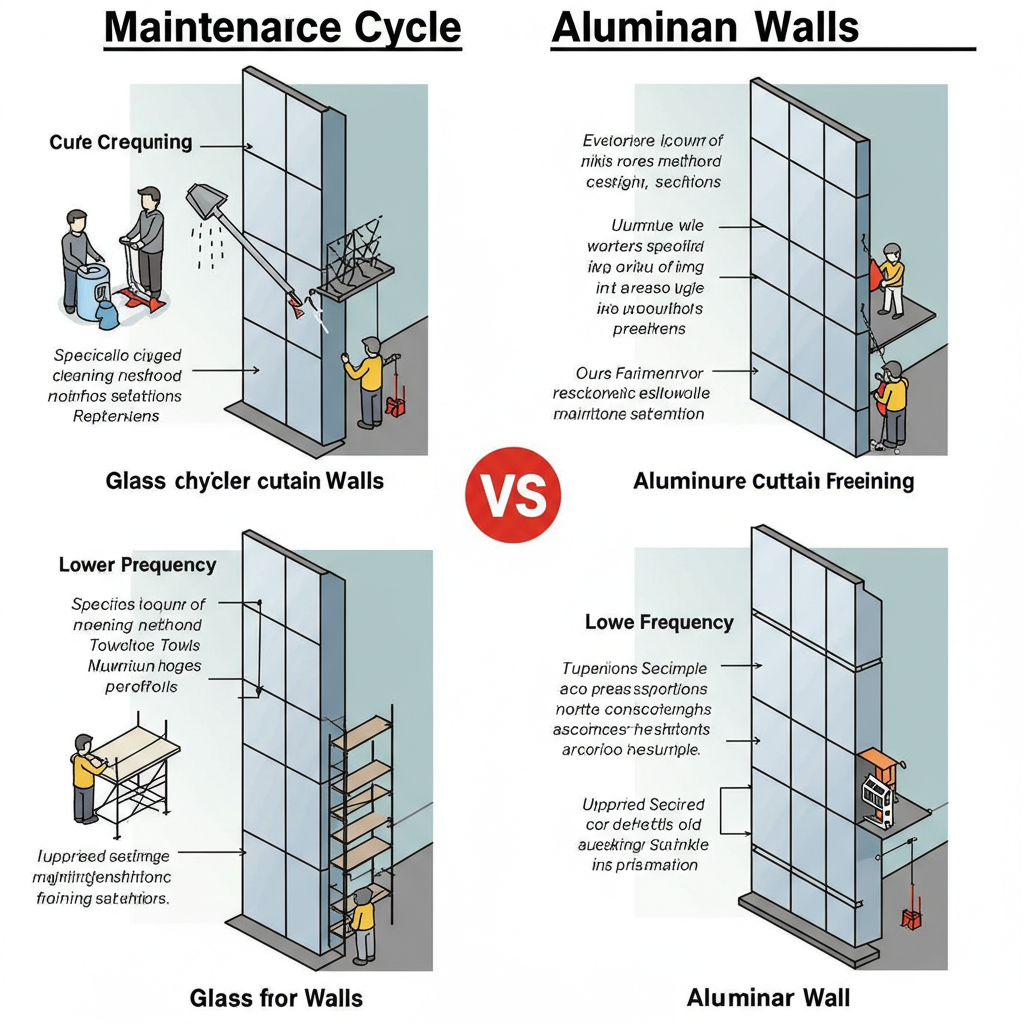
In addition, glass curtain walls have higher maintenance requirements. Although modern glass technology has made glass curtain walls somewhat resistant to dirt and water, the surface of the glass is susceptible to dust, pollution, and extreme weather conditions, especially in more polluted urban areas. Therefore, glass curtain walls need to be cleaned and inspected on a regular basis to maintain their neat appearance and long-term functionality. In extreme weather conditions, such as snow, ice, and storms, the glass surface may be damaged, requiring timely repair or replacement of parts of the glass.
Long-term maintenance costs for glass curtain walls are relatively high, especially for high-rise buildings, where specialized equipment and technical support are required for cleaning and repair work. This not only increases operating costs but may also affect the overall energy efficiency of the building, especially in older glass curtain wall systems, which may lead to heat loss and reduced insulation performance.
Aluminum Curtain Walls: Affordability and Low Maintenance Costs
Compared to glass curtain walls, aluminum curtain walls typically have lower initial costs. Aluminum itself is cheap and easy to work with, making aluminum curtain walls economical to install. In addition, the high structural strength of aluminum curtain walls reduces the additional costs associated with installation complexity and extra support.
In terms of maintenance, aluminum curtain wall has obvious advantages. Aluminum itself has excellent corrosion resistance and can effectively resist the erosion of rain, sand, and other external environmental factors. This makes aluminum curtain wall in the long-term use of the process, the need for maintenance is relatively small. Typically, the surface of an aluminum curtain wall only needs to be cleaned periodically to remove dust and contaminants. Since aluminum panels are not susceptible to rust or chemical attack, they are more durable and can withstand harsher environmental conditions such as high humidity and sea breezes.
In addition, aluminum curtain walls typically outperform glass curtain walls in extreme weather. Aluminum’s resistance to wind and corrosion allows it to maintain good structural stability in windy or wet environments. Over time, aluminum curtain walls are less prone to deformation or damage, which reduces long-term maintenance and replacement costs.
 English
  Français
  Bahasa Indonesia
  Deutsch
  Italiano
  Español
  العربية
  Español de México
  Nederlands
  香港中文
香港中文