
Construction Preparation
I. Tools and raw materials
- Construction drawings and layout drawings
- Curtain wall construction drawings: issued by the person in charge of the curtain wall project, as the main basis for construction.
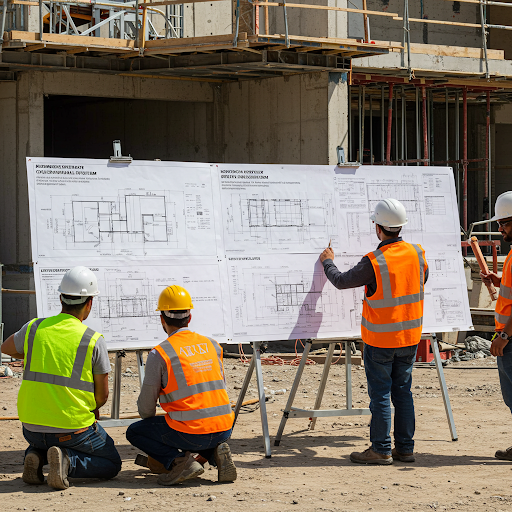
- Aluminum veneer layout: after the arrival of aluminum veneer, to aluminum veneer technicians, used to guide the installation of aluminum veneer location and split size.
- Keel making tools
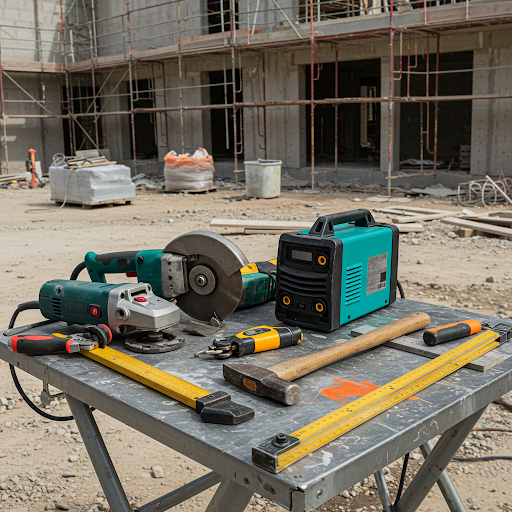
- Cutting machine: used to cut the keel material.
- Welding machine: used to weld the keel connectors.
- Hammer: for adjusting and fixing the keel.
- Ruler: Used for measuring and placing lines.
Aluminum veneer installation tools
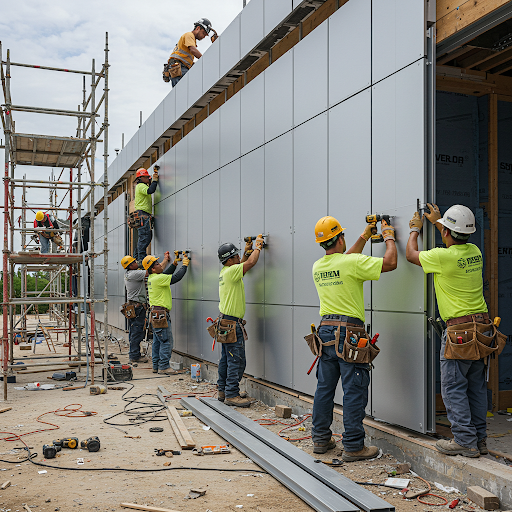
- Tool belt bag: used to carry small tools, easy to work at height.
- Power pliers: used to fix the aluminum veneer, adjust the position.
- Hand drill: for drilling and installing screws.
- White gloves: to protect the hand, to prevent scratches.
- Screwdriver: used to tighten the screws, usually provided by the construction personnel.
Consumables
- Big head pen: used to mark the aluminum veneer number, to avoid confusion during installation.
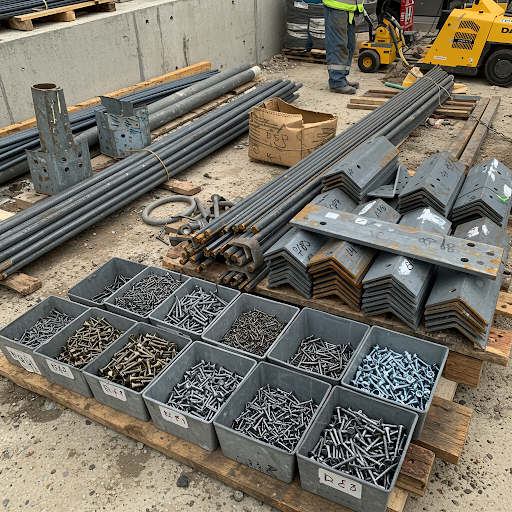
- Steel angle code: used to connect the keel and the main structure.
- Keel: as the support structure of aluminum veneer.
- Expansion screws: used to fix the keel and connectors.
- Self-tapping screws: used to fix the aluminum veneer.
- Welding rods: used to weld the keel and connectors.
Others
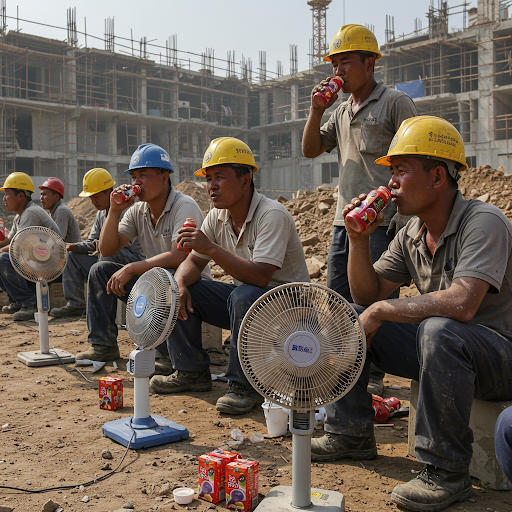
- Fan: used for cooling in summer construction.
- Sour plum soup: provided during construction in summer to help workers relieve summer heat.
Second, the material into the field before the preparation

- Designer’s work
- After the contract is signed, the designers will put forward the material schedule of the project in the shortest time according to the architectural drawings and curtain wall project program drawings.
- The material schedule should list the types, specifications and quantities of the required materials in detail, so as to ensure that the material procurement and processing can be based on the evidence.
- Project management department and production department cooperation
- Project Manager Department and Production Department make the processing plan of the project according to the construction schedule and the actual situation of the project site.
- Reasonable organization, arrangement of production, to ensure that aluminum veneer, keel and other materials can arrive in time to avoid material shortages affecting the construction progress.
Material acceptance
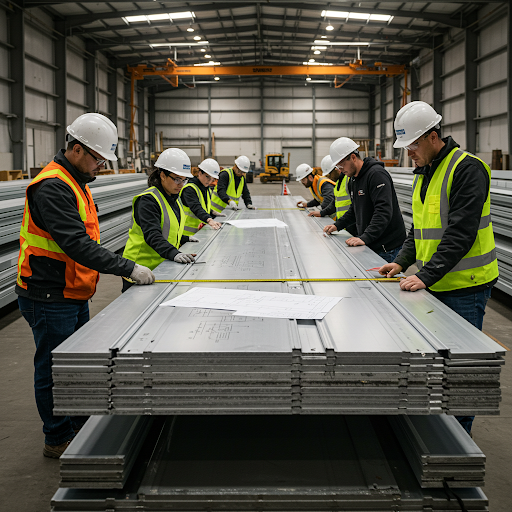
- After the arrival of materials, need to carry out acceptance, check the material specifications, quantity, quality is in line with the design requirements.
- Especially check the aluminum veneer color, number, size is correct, whether there is damage or error over the standard plate.
- aluminum veneer Construction site preparation
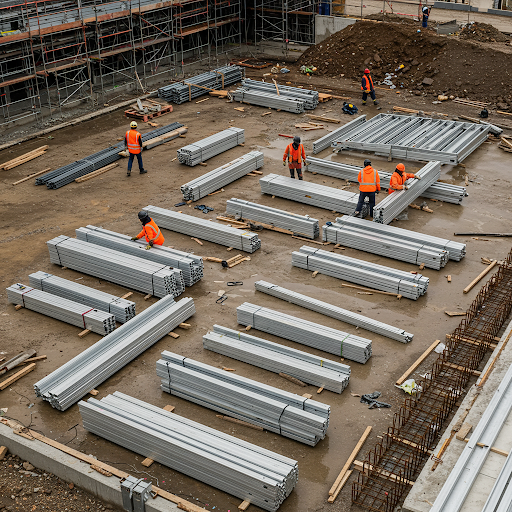
- Ensure that the construction site has enough space to store the materials and do a good job of categorizing and stacking the materials.
- Check whether the construction work surface has the installation conditions to ensure the smooth progress of construction.
Construction process
Placement line
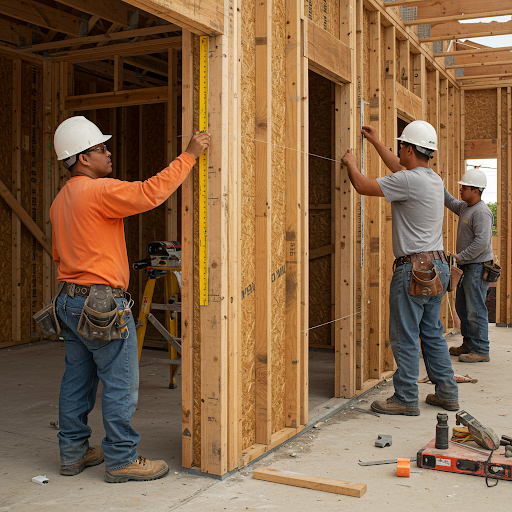
- Fix the skeleton
- According to the design drawings, use an inkwell and a ruler to pop the position of the skeleton onto the grassroots to ensure that the skeleton is installed in an accurate position.
- The skeleton is fixed on the main structure, and the quality of the main structure needs to be checked before placing the line to ensure that it meets the construction requirements.
- Check the quality of the main structure
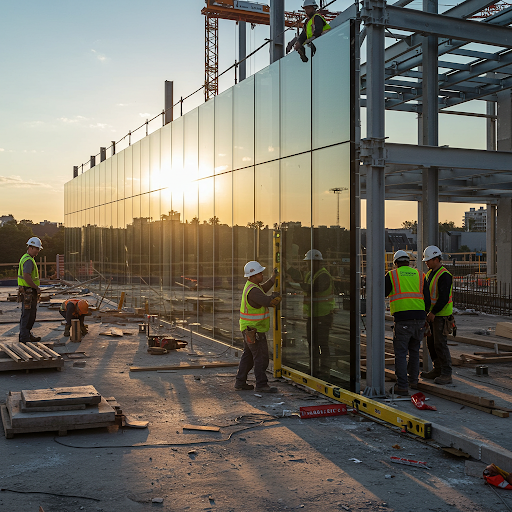
- Check the flatness, verticality and strength of the main structure to ensure that it can withstand the weight and external force of the curtain wall.
- Fixing skeleton connectors
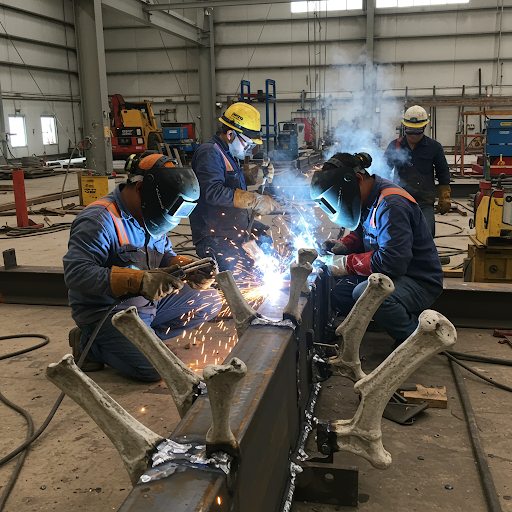
- Welding connectors
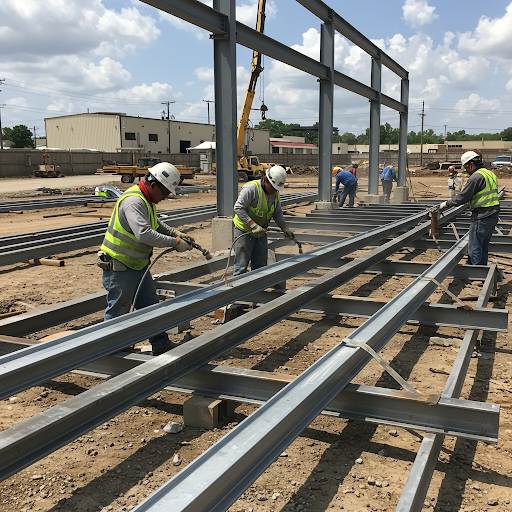
- Weld connectors on the columns of the main structure to fix the skeleton.
- When welding, it is necessary to ensure that the position of the connectors is accurate and firmly welded to avoid loosening later.
fixed skeleton
- Anti-corrosion treatment of the skeleton
- The skeleton needs to be anticorrosive treatment before installation, usually using antirust paint or galvanized treatment to extend the service life.
- Installation of skeleton
- Skeleton installation position needs to be accurate, combined with firm, to ensure that it can stably support the aluminum veneer.
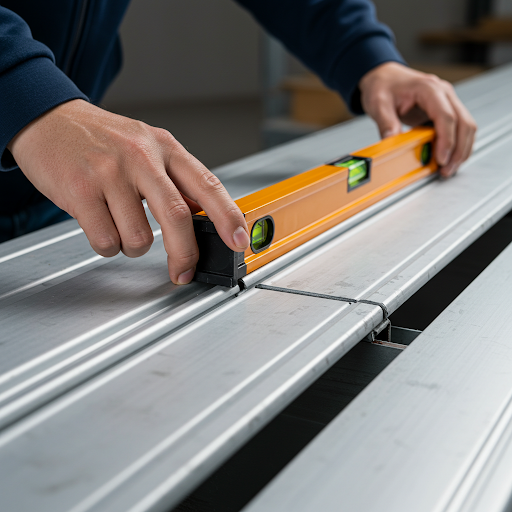
- Use the latitude and longitude meter to penetrate the beams and vertical frame bars to ensure the level and verticality of the skeleton.
- Handling special parts
- Deformation joints, settlement joints, variable cross-section and other special parts are properly handled to ensure that they meet the requirements for use.
aluminum veneer installation
- Determine the size of the finished surface and panel division
- Compare the construction drawings of the curtain wall with the size of the wall at the site to find out the gap value and ensure that the aluminum veneer installation size is accurate.
- Communicate with the person in charge of the project to confirm the actual size, split size (usually ≤ 1300mm), symmetrical treatment of the closing plate and node program.
- Simulate the problems found during construction, make timely adjustments and sign to confirm.
- Keel production
- Laying out the line: Use the inkwell and ruler to set out the keel position and wall bracket position.
- Preparation of keel specification size number table: according to the aluminum veneer finished surface size deduce the cutting size and number of keel.
- Material: cut the keel according to the number of size table, arc keel needs outsourcing processing.
- Assembly: first spot welding fixed, adjusted with full welding around to ensure accuracy.
- On the wall: according to the number of team and site requirements, assemble the keel and on the wall.
- Aluminum veneer installation
- Layout plan on-site control and counting: check the layout plan and the keel on-site, and communicate with each other in time when problems are found.
- Aluminum veneer unloading points and classification: mark the back of the aluminum veneer with a large pen number, according to the installation location of the classified placement.
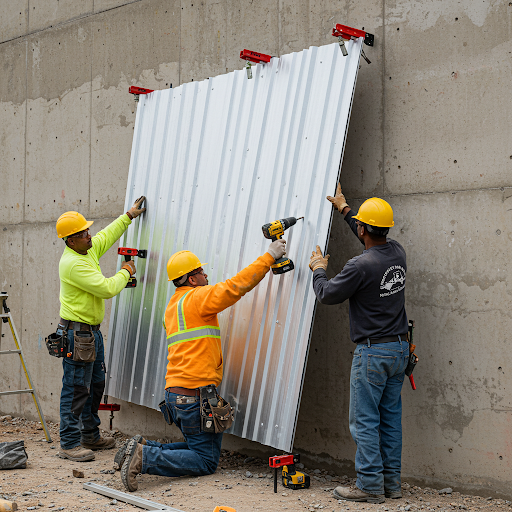
- Aluminum veneer installation: greater than 1 square meters of the board needs to be 3 people collaborate, first fixed with strong pliers to adjust the position, and then play the screws.
- Caulking: the use of foam strips plus weatherproof glue caulking, first paste the paper and then glue, tear off the paper in a timely manner.
Handling of joint construction
- Handle the junction
- Handle the joints between aluminum plate and wall, doors and windows to ensure that the joints are beautiful, waterproof and sealed.
- Use suitable closing materials, such as sealant, closing strips, etc., to ensure that there is no gap at the closing.
Inspection
- Check the installation quality
- Check the aluminum veneer installation of flatness, verticality, seam width, etc., to ensure that it meets the design requirements and standards.
- Use the level meter, vertical meter and other tools to measure to ensure the installation accuracy.
- Final Acceptance
- After all the installations are completed, carry out final acceptance to ensure the overall quality of the curtain wall and the
Construction Precautions
aluminum veneer material requirements
- Variety and quality
- Aluminum veneer varieties, quality should be in line with the design requirements to ensure that its strength, durability and appearance to meet the use of curtain wall requirements.
- Materials need to check the product certification when entering the field, to ensure that the quality of aluminum veneer in accordance with national standards.
- Color, pattern and line
- Aluminum veneer color, pattern, line should be consistent with the design drawings to ensure the overall beauty of the curtain wall.
- Before construction, need to check the color number of aluminum veneer, to avoid color difference or wrong board phenomenon.
the keel requirements
- Specification and shape
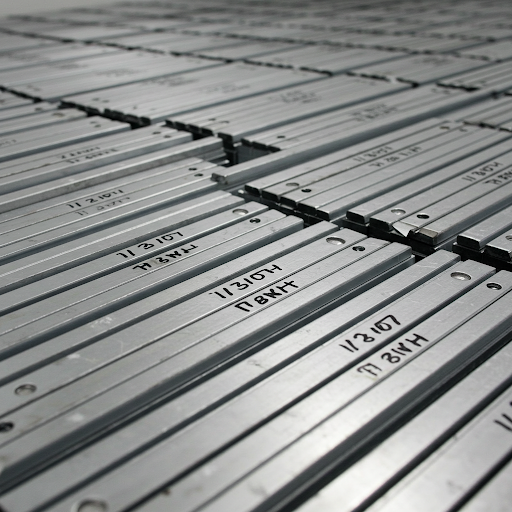
- Steel keel specifications, shape should meet the design requirements to ensure that it can withstand the weight of aluminum veneer and external forces.
- The keel needs to be checked when entering the field whether its size and shape are in line with the design drawings.
- Anti-corrosion treatment
- The keel needs to be descaled and antirust treatment before installation, usually using antirust paint or galvanized treatment to extend the service life.
- Check whether the anti-corrosion treatment is uniform and complete to ensure that the keel will not affect the structural safety due to rust and corrosion in long-term use.
Installation details
- Aluminum plate fixing method
- Aluminum plate installation using core aluminum rivets, the middle must be padded rubber ring to cushion the vibration and prevent deformation of the aluminum plate.
- Rivet spacing should be controlled within 100-150mm to ensure that the aluminum plate is fixed firmly and evenly distributed.
- Gap processing between the boards
- The gap between the plate and the plate needs to be processed internally, using rubber strips or sealing elastic materials to fill, to ensure that the gap is flat and smooth.
- The gap treatment should pay attention to the aesthetic and waterproof, to avoid water seepage or deformation problems in the later stage.
- Protection after installation
- After the installation of aluminum veneer, in the parts that are easy to be polluted (such as near the ground or construction area) with plastic film or other materials to cover the protection.
- Before removing the scaffolding or construction of special frames, remove the protective film, to avoid the protective film for a long time to affect the surface of the aluminum plate beautiful paste.
Construction Safety and Efficiency
- Observation and improvement
- In the construction process, you need to be good at observation to find out the problems that affect the construction efficiency and quality, and make timely improvements.
- For example, making special tools (such as trolleys) to improve the efficiency of material transportation, or optimize the installation process to reduce duplication of labor.
- Tool management
- Use hand-held toolkits to ensure that each construction worker can carry frequently used tools with them to avoid loss or inconvenience of tools.
- The toolkit should contain common tools such as screwdrivers, wrenches, hand drills, etc., so that they can be easily accessed at any time when working at height.
- Points and marks
- Aluminum veneer points must use a large pen on the back of the aluminum plate marking number, to avoid confusion due to memory errors lead to the installation.
- After counting, the aluminum veneer should be arranged according to the layout plan to ensure that the aluminum veneer can be quickly found during installation.
- Teamwork
- Aluminum veneer installation requires teamwork, especially when handling and installing large-sized aluminum panels, which requires the cooperation of many people.
- The use of efficient transfer methods (such as passing aluminum panels in a row) can improve construction efficiency and reduce physical exertion.
- Confirmation by Project Manager
- In the key construction nodes (e.g. size confirmation, adjustment of closing program, etc.), it is necessary to communicate with the project manager and sign to confirm to ensure the quality of construction.
- The signature of the person in charge of the project is not only a guarantee of construction quality, but also a basis for the division of responsibility of the construction team.
gluing process
Foam strip filling
- Selection of foam strip
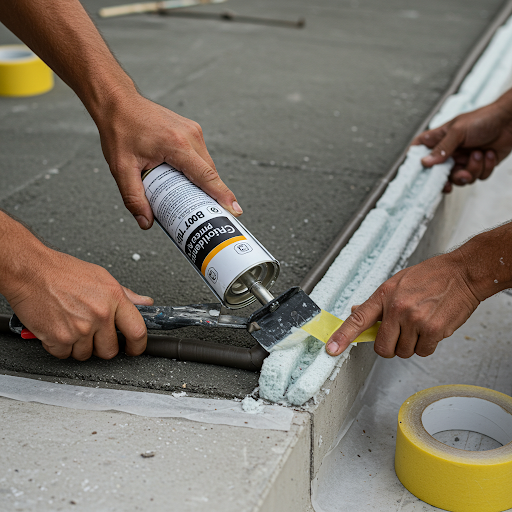
- According to the size of the glue joints to choose the appropriate foam strip, ensure that the diameter of the foam strip is slightly larger than the width of the glue joints to ensure that the filling is tight.
- Foam strip should have good elasticity and weather resistance, and be able to adapt to temperature changes without deformation.
- Cutting and filling
- Cut the foam strips into appropriate lengths and fill them with the cut side facing inwards to ensure that the inside of the seam is flat after filling.
- When filling, pay attention to the depth of the foam strip to avoid the phenomenon of unevenness.
- Use a ruler
- When filling the foam strip, use a ruler to ensure that the foam strip is filled in flat, to avoid uneven filling effect of gluing.
the paste of beautiful paper

- Pasting requirements
- The paste of the beautiful paper should be horizontal and vertical, to ensure that the edge of the glue seam is neat and beautiful.
- Avoid twisting or skewing when pasting, and make sure that the paper is parallel to the edge of the aluminum plate.
- Precautions
- The paper should be pasted on both sides of the glue joints, with moderate width, avoiding too wide or too narrow to affect the gluing effect.
- Check whether the paper is firm after gluing to avoid falling off during the gluing process.
Glueing operation
- Gluing requirements
- Gluing should be continuous and full to ensure that there is no gap inside the glue seam to avoid water seepage or cracking problems in the later stage.
- When injecting glue, you need to control the moving speed of the glue gun to ensure that the glue is evenly distributed.
- Scraping operation
- Immediately after the injection of glue, use the scraper to scrape the glue body to ensure that the surface of the glue seam is smooth and flat.
- The scraping force should be even to avoid skipping or accumulation of glue.
- Gluing direction
- Apply glue from the bottom up to ensure that the gel naturally fills the joints under the effect of gravity to avoid air bubbles.
- After glue application, scrape and trim the surface of the glue joints to ensure that the glue joints are smooth and beautiful.
- Construction time selection
- Gluing on the west or north side of the building in the morning, and on the east or south side of the building in the afternoon.
- In summer, high temperature (especially when the surface temperature of aluminum plate reaches 80℃) should be avoided, and choose the latter half of the afternoon or cloudy day construction, in order to reduce the blistering phenomenon of the glue joints.
 English
  Français
  Bahasa Indonesia
  Deutsch
  Italiano
  Español
  العربية
  Español de México
  Nederlands
  香港中文
香港中文