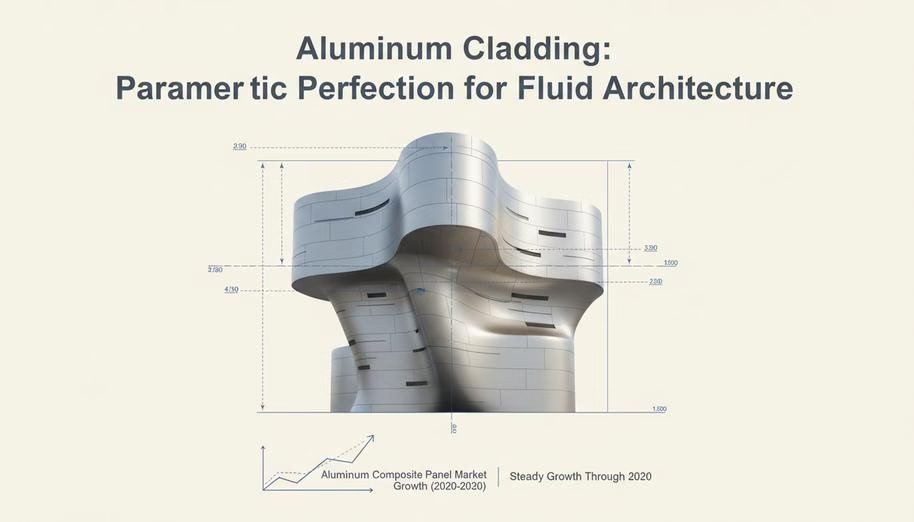
When architecture bends the rules, Aluminum Cladding keeps its cool—precision, power, and panels that turn chaos into skyline poetry.
Aluminum Cladding is the backstage crew that makes wild, gravity‑defying architecture look easy. Developers want curves that swoop like a jazz riff—but on site, those curves can turn into budget busters and finger‑pointing. When panels don’t align with the parametric model, it’s not art; it’s overtime. The pressure’s real: hit the design intent, pass fire and wind tests, and keep the schedule from going off the rails.
Grand View Research reports steady growth in the aluminum composite panel market through 2030—clear proof demand isn’t cooling off.
Here’s the twist: with precision fabrication tied to BIM, Aluminum Cladding turns digital poetry into bolt‑by‑bolt reality. Fluid forms, tight tolerances, fewer surprises. That’s not flair—that’s control.
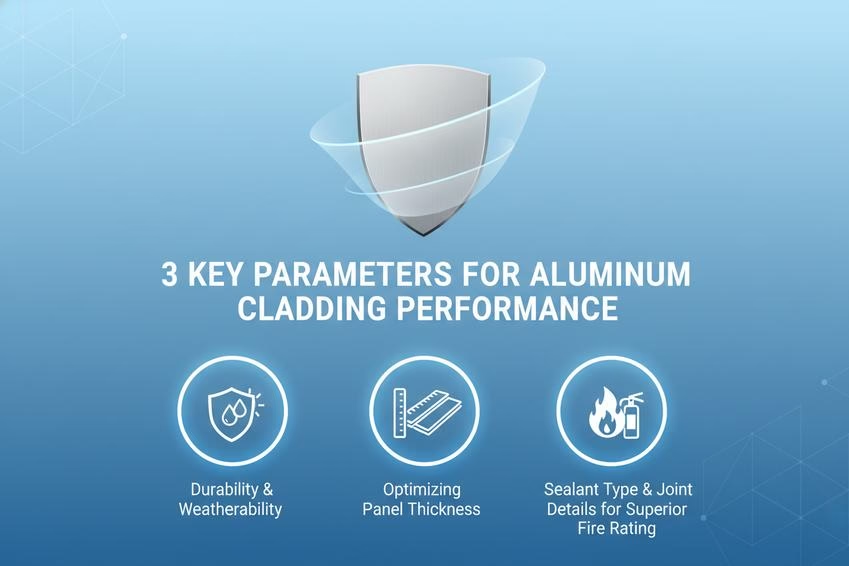
3 Key Parameters For Aluminum Cladding Performance
Aluminum Cladding—split into aluminum + cladding—sounds simple, yet the performance of any aluminum cladding system depends on a few technical choices that can make or break a facade. From aluminum panels on towers to metal cladding on schools, the details behind the skin matter more than most people think.
Durability and Weatherability: Ensuring Long-Term Facade Integrity
When Aluminum Cladding faces years of environmental exposure, its lifespan hinges on three core layers of protection and performance.
- Surface defense: UV resistance, fade resistance, coating adhesion
- Core stability: corrosion resistance, alloy grade, impact resistance
- System strength: fixings, backing rails, overall structural integrity
Under daily sun, wind, and rain, aluminum cladding panels expand and contract. That movement tests coating flexibility and edge sealing. If UV resistance is weak, color drift shows up fast. Poor corrosion resistance around cut edges can creep inward, quietly damaging structural integrity.
Performance indicators often follow certified testing protocols:
- Salt spray hours (ASTM B117)
- QUV weathering cycles
- Impact deformation values
- Adhesion ratings after aging
Below is a simplified reference table used in facade planning for Aluminum Cladding:
| Test Item | Standard Reference | Typical High-Grade Result | Risk if Below Standard |
|---|---|---|---|
| Salt Spray Resistance | ASTM B117 | 1,000+ hours | Edge corrosion |
| QUV Exposure | ASTM G154 | 3,000+ hours | Color fading |
| Impact Resistance | ASTM D2794 | ≥ 1.5 J | Denting |
| Coating Adhesion | ASTM D3359 | 5B | Peeling |
| Gloss Retention (5 yrs) | ISO 2813 | ≥ 80% | Dull finish |
For aluminum facade cladding on coastal buildings, certified weatherability testing is not a “nice to have.” It keeps maintenance costs low and warranties valid. Good metal cladding isn’t flashy—it just keeps doing its job year after year.
Optimizing Panel Thickness for Lightweight, High-Strength Designs
Choosing the right panel thickness in Aluminum Cladding feels like walking a tightrope. Too thin, and structural load capacity drops. Too thick, and you lose weight reduction benefits and cost efficiency.
Decision-making usually breaks down like this:
- Identify wind pressure and building height.
- Calculate expected structural load and deflection limits.
- Match alloy material strength with required span.
- Confirm compatibility with subframe and fixing layout.
- Align with factory manufacturing processes and bending limits.
In practice, thickness interacts with:
- Material strength (alloy 3003 vs 5005, for example)
- Target weight reduction for high-rise retrofits
- Desired design flexibility for curves or perforations
A thinner aluminum panel may still perform well if stiffeners or cassette returns are engineered correctly. That’s where smart design flexibility meets real-world math. For large-format Aluminum Cladding systems, slight thickness adjustments can improve transport efficiency and shorten production cycles without sacrificing safety.
Aluminium cladding used in airports and malls often balances visual scale with engineering restraint. The sweet spot isn’t always the thickest sheet—it’s the one that meets code while keeping the frame light and manageable.
Sealant Type and Joint Details for Superior Fire Rating
In any Aluminum Cladding system, joints are the quiet troublemakers. Poor joint design invites water ingress, air leakage, and in worst cases, flame spread.
Fire performance depends on several interconnected layers:
- Seal line
- Backing material
- Mechanical fastening
- Expansion allowance
Key evaluation areas include:
- Sealant performance under high temperature
- Compatibility with aluminum substrate
- Movement capacity for thermal expansion
- Compliance with local building codes
- Tested fire resistance rating of the full assembly
A reliable setup often follows this logic:
- Sealant
- Fire-rated silicone or hybrid polymer
- Certified for curtain wall use
- Tested for smoke development
- Fire-rated silicone or hybrid polymer
- Joint cavity
- Mineral wool backing
- Limits flame passage
- Supports fire resistance
- Mineral wool backing
- External geometry
- Overlapping or labyrinth joint design
- Reduces water ingress
- Controls air leakage
- Overlapping or labyrinth joint design
Thermal cycles constantly stress Aluminum Cladding joints. Without allowance for thermal expansion, sealant can crack, opening pathways for moisture. Once water ingress starts, corrosion and insulation damage follow.
High-rise aluminum cladding projects must align joint spacing, sealant class, and fastening systems with current building codes. When all these parts work together, the facade doesn’t just look sharp—it performs under pressure, heat, and time.
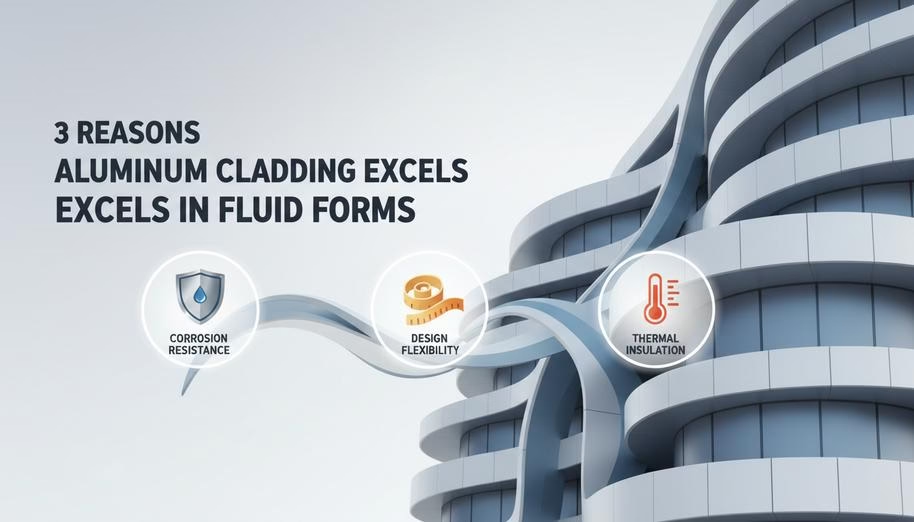
3 Reasons Aluminum Cladding Excels In Fluid Forms
Aluminum Cladding works hand in hand with bold architecture. When curves, waves, and flowing façades show up, the pairing of aluminum and cladding systems keeps things sharp, efficient, and surprisingly low-stress over time.
Corrosion Resistance Enables Sleek, Low-Maintenance Waves
When Aluminum Cladding wraps fluid forms, performance starts at the surface and moves inward.
- Material Core
- Aluminum cladding naturally forms an oxide layer.
- This built-in shield boosts corrosion resistance in humid, coastal, or polluted air.
- It protects long-term durability without bulky treatments.
- Compared with heavier façade options, aluminum panels resist rust streaks that ruin a sleek design.
- Aluminum cladding naturally forms an oxide layer.
- Protective Finishes
- High-grade coatings enhance corrosion resistance even further.
- PVDF and powder finishes reduce fading and chalking.
- Smooth finishes prevent dirt buildup on curved edges.
- High-grade coatings enhance corrosion resistance even further.
- Maintenance Impact
- Fewer stains mean real low maintenance cycles.
- Cleaning schedules stretch out.
- Curved fluid forms keep their crisp geometry.
- Fewer stains mean real low maintenance cycles.
In short, aluminum facade systems stay clean-looking with less effort, which matters when every curve is on display.
Design Flexibility: Custom Panel Shapes and Coatings
Aluminum Cladding gives architects room to play, and that freedom shows up fast.
- Custom-bent custom shapes for tight radii
- Precision panel fabrication for tapered edges
- Wide coating options for bold or subtle tones
- Digital modeling feeds directly into fabrication.
- Panels are cut, folded, or rolled to match curves.
- Finishes are applied to align with the wider architectural design vision.
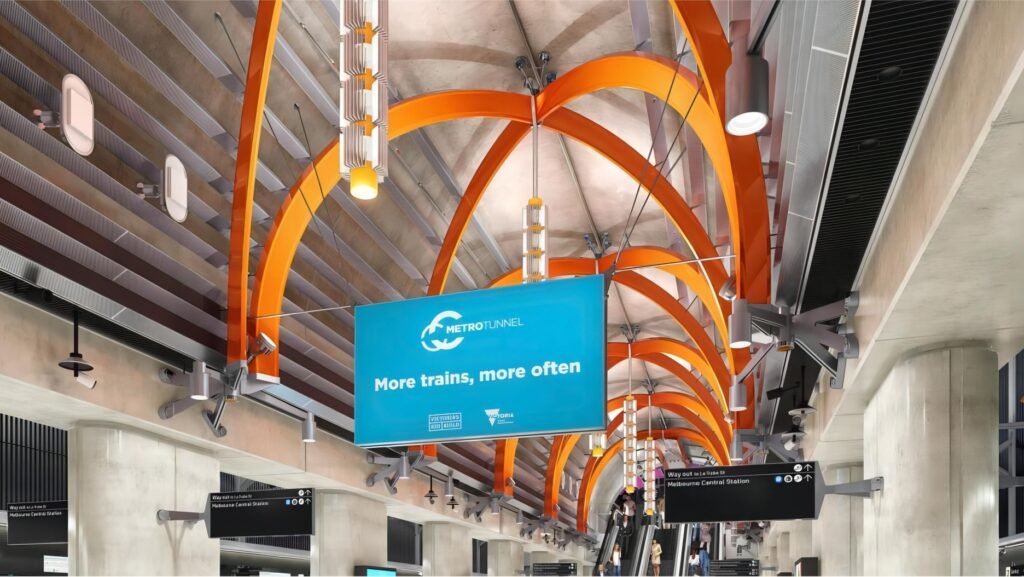
Need creative freedom? No problem. Design flexibility in aluminum panel systems supports sharp folds, soft arcs, even perforated skins. That level of creative expression makes aluminum cladding a go-to for cultural centers, transport hubs, and statement offices. Short lead times help too. Projects move. Ideas stick.
From matte textures to metallic sheen, Aluminum Cladding adapts without fighting the form.
Thermal Insulation Benefits for Curved, Energy-Efficient Facades
Curved walls are not just about looks. Aluminum Cladding strengthens building performance when insulation and airflow are dialed in.
- Thermal Layer Integration
- Continuous thermal insulation sits behind aluminum panels.
- Reduces heat transfer across curved facades.
- Supports stable climate control indoors.
- Continuous thermal insulation sits behind aluminum panels.
- Subframe Engineering
- Optimized brackets limit thermal bridging.
- Air cavities improve energy efficiency.
- Ventilated rainscreen setups manage moisture.
- Optimized brackets limit thermal bridging.
- Sustainability Outcomes
- Lower energy demand enhances sustainable architecture goals.
- Aluminum façade assemblies pair well with recycled content.
- Long service life supports lifecycle planning.
- Lower energy demand enhances sustainable architecture goals.
With smart detailing, aluminum cladding systems turn expressive curves into high-performing envelopes. The result? Energy efficiency, comfort, and style all moving in the same direction.
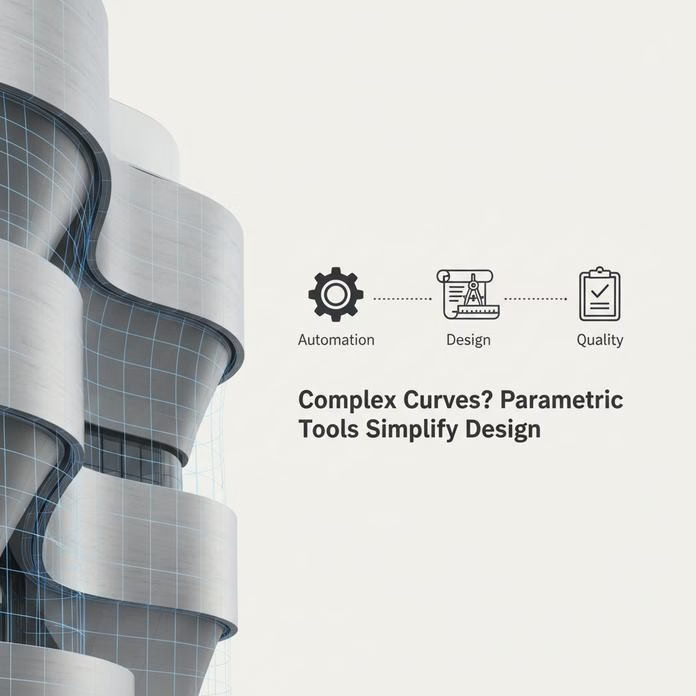
Complex Curves? Parametric Tools Simplify Design
Complex geometry used to slow projects down. Not anymore. With smart modeling and Aluminum Cladding systems, curved façades feel less like a headache and more like a calculated move. From aluminum panels to full aluminum cladding assemblies, digital workflows keep things tight, buildable, and code-ready.
Automated Subframe Design for Seamless Curvature Integration
When curves enter the conversation, Subframe design becomes the backbone of success. In Parametric modeling, geometry drives logic, not guesswork.
- Geometry Input1.1 Surface rationalization1.2 Panel grid alignment for Aluminum Cladding1.3 Curvature analysis for tolerance control
- Structural Coordination2.1 Load mapping onto Structural components2.2 Node optimization through Automated design scripts2.3 Clash detection within Facade engineering platforms
- Fabrication Output3.1 CNC-ready data for Digital fabrication3.2 Bracket angle calibration3.3 Numbered aluminum panel tagging
This workflow supports true Curvature integration, especially where aluminum cladding panels twist across compound arcs. Instead of redrawing details again and again, teams update one parameter and the Aluminum Cladding layout follows. Less drama. More precision. The aluminum façade system stays aligned with structure and intent.
Ventilation Gaps and Fastening Systems in Parametric Models
Good looks mean nothing if airflow fails. Ventilation gaps inside an aluminum façade are modeled early, not patched later.
- Envelope Strategy1.1 Define cavity depth for Building envelope compliance1.2 Simulate airflow behind Aluminum Cladding1.3 Adjust spacing to reduce Thermal bridging
- Connection Logic2.1 Embed Fastening systems into Parametric models2.2 Assign bracket loads to rails2.3 Validate pull-out resistance
- Performance Checks3.1 Moisture drainage mapping3.2 Acoustic performance simulations3.3 Code review loops within Facade detailing
On curved aluminum cladding projects, tiny gap shifts can change pressure behavior. Digital checks keep aluminum panels dry and stable. No guessing onsite. Just clear data driving install sequences.
Material Traceability and Testing Protocols in Digital Workflows
Traceability sounds boring—until something fails. With Digital workflows, every sheet of Aluminum Cladding is logged, tested, and traceable.
Material performance reference table for aluminum cladding systems
| Parameter | Standard Reference | Test Result Range | Compliance Status | Review Cycle (Months) |
|---|---|---|---|---|
| Coating Thickness (µm) | EN 13523-1 | 60–80 | Pass | 12 |
| Fire Classification | EN 13501-1 | A2-s1,d0 | Pass | 24 |
| Wind Load Resistance (kPa) | EN 1991-1-4 | 2.5–4.0 | Pass | 12 |
| Corrosion Resistance (hrs) | ISO 9227 | 1000–1500 | Pass | 18 |
| Panel Deflection (mm) | Project Spec | ≤ L/200 | Pass | 12 |
Within Supply chain management, each batch links to Testing protocols, inspection photos, and warranty data. For Quality control, digital logs tie aluminum panels to site zones and installers.
“Digital traceability in façade systems is becoming a baseline expectation for risk-managed construction projects through 2025 and beyond.” — McKinsey & Company, Capital Projects Outlook 2025
For teams handling aluminum cladding at scale, that shift feels real. Performance verification is no longer optional; it protects long-term value in every aluminum façade.
High-Rise Towers: Adaptive Panel Systems
High-rise projects move fast, and no one has time for clunky façades. Aluminum Cladding keeps towers sharp, light, and durable. By breaking it down—aluminum + cladding—teams get flexible skins that snap into place. From panel sizing to delivery, smart systems make Aluminum Cladding a real game changer.
Modular Panel Dimensions for Rapid On-Site Assembly
When planning Aluminum Cladding for tall buildings, getting panel size right is everything. Smart sizing drives assembly speed and smooth on-site construction.
- Standardized modular units1.1 Core width and height logic
- Balanced for crane limits
- Tuned for wind-load zones
- Supports installation efficiency
- Maintains structural targets
- Prefabrication workflow2.1 Factory-cut aluminum panels2.2 Pre-drilled fixing points2.3 Labeled units for floor-by-floor sequencing
Within this setup, prefabrication reduces guesswork. Crews lift, align, secure. Done. Fewer surprises, tighter joints, better aluminum facade results. Wallnova fine-tunes each Aluminum Cladding layout so tower crews don’t waste daylight adjusting misfit panels.
Quality Control Processes Meet High-Rise Building Codes
High-rise aluminum cladding has zero room for shortcuts. Quality sticks to details.
- Quality assurance checks at raw material intake
- Batch tracking for material integrity
- Lab reviews for compliance testing
- Code alignment1.1 Local building regulations1.2 Fire and wind safety standards
During production, teams monitor structural performance under load simulation. On-site, inspectors confirm code adherence before sign-off. Aluminum cladding panels that pass these gates protect both schedule and reputation. With Wallnova, documentation flows cleanly, so audits feel routine, not stressful.
Packaging Requirements and Delivery Schedule for Tight Urban Sites
Dense city blocks test every Aluminum Cladding shipment. Streets are narrow. Timing is tight.
- Packaging design priorities1.1 Edge guards for aluminum panels1.2 Moisture barriers for cladding finish1.3 Clear lift-point markings for safe material handling
- Logistics management flow2.1 Route study around urban site constraints2.2 Staggered loads for just-in-time delivery2.3 Crane-slot booking and delivery coordination
- Pre-call driver confirmation
- Limited laydown planning
- Rapid unloading to protect site access
Aluminum cladding that arrives scratched is money lost. Careful aluminum packaging and sharp scheduling keep projects moving without drama.
The Rise Of BIM-Driven Aluminum Panels
BIM is reshaping how Aluminum Cladding moves from concept to construction. From early aluminum panel layouts to final cladding installation, digital tools now guide finish, fabrication, and logistics. For architects working with Aluminum Cladding systems, this shift means fewer surprises, tighter budgets, and sharper visual results.
3D Modeling of Panel Finish and Color for Visual Impact
- Design Layer: Visual Definition
- 3D modeling links architectural design intent with precise panel finish selections.
- Color selection tools simulate sunlight, shadow, and reflection on Aluminum Cladding façades.
- Metallic tones highlight material properties.
- Matte coatings soften glare on aluminum panels.
- Real-time rendering improves client approvals for aluminum facade concepts.
- Performance Layer: Material Accuracy
- BIM libraries embed coating thickness, gloss levels, and durability ratings.
- Adjusting finish automatically updates quantities for Aluminum Cladding systems.
- Brand Application
- Wallnova integrates finish data directly into BIM objects, so Aluminum Cladding choices look right and build right.
Technical Support and Custom Fabrication within BIM Platforms
- Integration Workflow
- BIM platforms sync manufacturing data with live models.
- Panel dimensions feed directly into CNC fabrication.
- Tolerances reflect real factory limits.
- BIM platforms sync manufacturing data with live models.
- Fabrication Logic
- Custom fabrication rules guide curved aluminum panels and perforated cladding.
- Embedded technical support flags clashes between structure and cladding systems.
- Coordination Benefits
- Shared dashboards improve project coordination across architects, engineers, and suppliers.
- Wallnova connects production lead times to Aluminum Cladding schedules, reducing redesign loops.
Storage Conditions and Site Access Planning via Clash Detection
- Logistics Mapping
- Clash detection simulates crane swing paths and site access routes.
- Checks turning radius for delivery trucks.
- Tests lift zones for large Aluminum Cladding panels.
- Clash detection simulates crane swing paths and site access routes.
- Material Handling Controls
- Digital zones define storage conditions:
- Ventilated racks for coated aluminum sheets.
- Elevated platforms to avoid water pooling.
- Sequenced installation aligns with construction sequencing logic.
- Digital zones define storage conditions:
- Constraint Management
- BIM overlays highlight site constraints before material arrives.
- Smart planning keeps Aluminum Cladding, aluminum panels, and façade systems moving without chaos.
FAQs about Aluminum Cladding
What determines the long-term durability of Aluminum Cladding panels?
Durability is never an accident—it’s engineered.
At the material level:
- Corrosion resistance protects against moisture and pollution.
- Certified weatherability preserves panel color and finish under UV exposure.
- Verified fire rating supports compliance in high-rise facade systems.
At the system level:
- Accurate joint details and compatible sealant type prevent water intrusion.
- Proper ventilation gaps reduce condensation risk.
- Documented testing protocols and clear warranty terms confirm long-term reliability.
When these layers align, the facade keeps its strength and visual impact for decades.
How does panel thickness influence performance and cost?
Panel thickness is a balance between strength and efficiency.
| Factor | Thinner Panels | Thicker Panels |
|---|---|---|
| Weight | More lightweight | Higher structural rigidity |
| Subframe design | Lighter support needed | May require reinforced framing |
| Wind-load resistance | Suitable for mid-rise | Ideal for tall buildings |
| Production lead time | Faster in bulk runs | May extend fabrication time |
Choosing the right thickness improves manufacturing capacity, controls budget, and ensures the Aluminum Cladding integrates smoothly with the fastening systems and facade system.
Why are quality standards critical when selecting a supplier?
Behind every elegant facade stands strict discipline.
A reliable supplier should provide:
- Proof of industry certifications and compliance with local building codes.
- Transparent material traceability and defined quality control processes.
- Clear documentation of testing protocols for fire rating and durability.
Add to this strong technical support, stable manufacturing capacity, and dependable custom fabrication, and risk drops sharply—especially on complex projects.
How do installation details affect facade safety and appearance?
Aluminum Cladding may look effortless, but precision governs its success.
Critical installation requirements include:
- Compatible fastening systems aligned with structural loads.
- Carefully designed subframe design for alignment and expansion control.
- Correct sealant type and tight joint details to resist flame spread and water entry.
Even minor errors can compromise thermal insulation, durability, and fire rating. When installed correctly, the panels maintain crisp lines, consistent panel shape, and lasting visual impact.
How can logistics and coordination improve large-scale projects?
Large facades move like choreography—timing matters.
Project logistics should consider:
- Protective packaging requirements to preserve panel coating and finish.
- A realistic delivery schedule matched to installation sequencing.
- Suitable shipping method and controlled storage conditions on site.
- Early coordination for site access in dense urban areas.
When logistics, production lead time, and custom panel dimensions are synchronized, Aluminum Cladding arrives ready—protecting aesthetic requirements while keeping the project on track.
 English
  Français
  Bahasa Indonesia
  Deutsch
  Italiano
  Español
  العربية
  Español de México
  Nederlands
  香港中文
香港中文