
Aluminum is the workhorse of modern building facades, but the big decision for most projects is not aluminum versus a rival metal — it is choosing between two very different aluminum products: panneaux en aluminium massif et aluminum composite panels (ACM/ACP). Both are used for exterior cladding and curtain walls, yet they differ fundamentally in construction, cost, durability, and the applications they suit best. This guide breaks down what actually separates them so you can specify the right system — and buy it at the right price.
What Is the Difference Between Solid Aluminum Panels and Aluminum Composite Panels
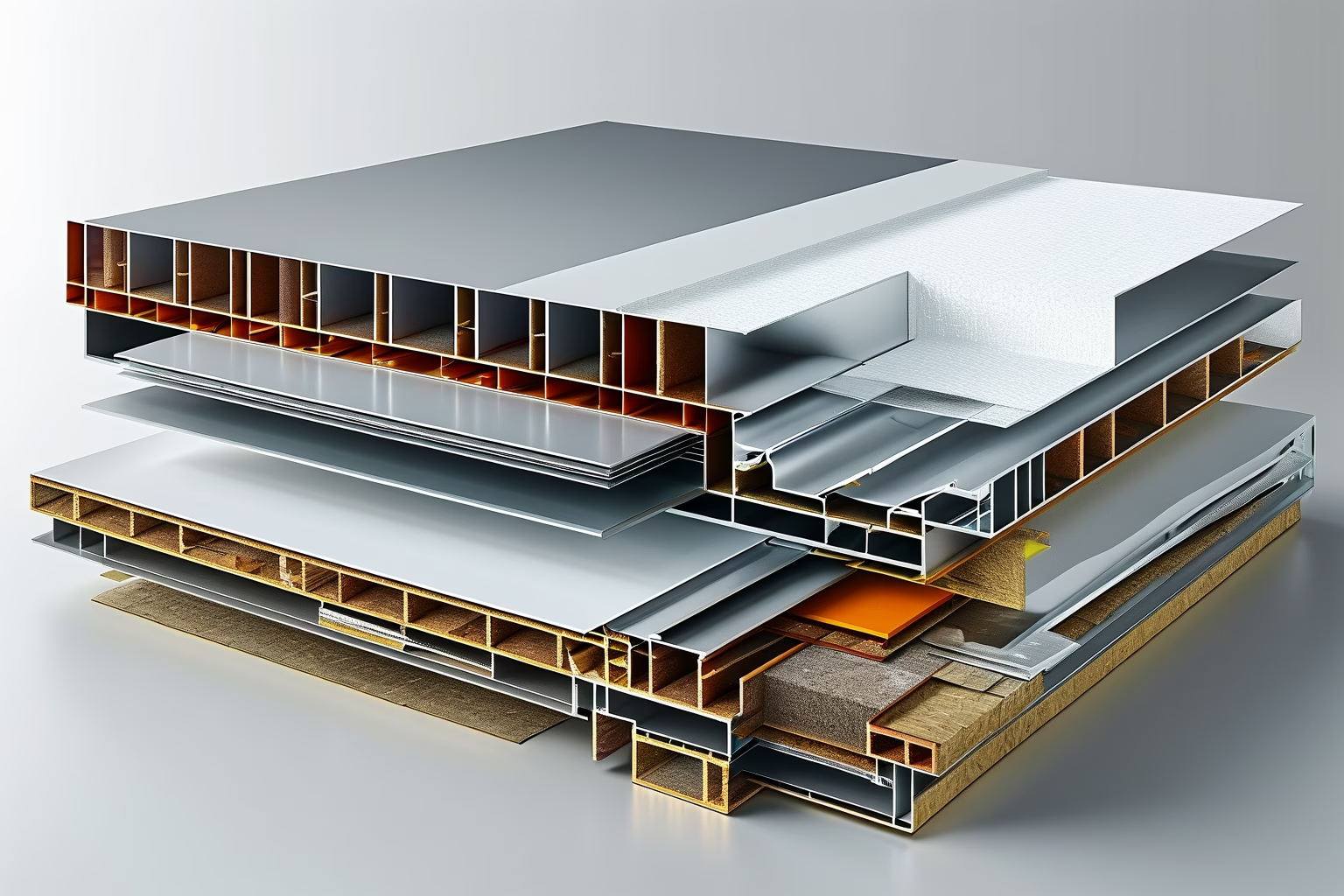
At first glance, a solid aluminum panel and an aluminum composite panel may look nearly identical on a building facade, but they are fundamentally different products with distinct construction, performance, and budget profiles. Understanding the difference matters for architects, contractors, and specifiers because it shapes everything from fabrication and installation cost to long-term maintenance and thermal performance. In short, a solid aluminum panel is a single, homogenous sheet of metal, while an aluminum composite panel (also called ACM or ACP) is a sandwich of two thin aluminum skins bonded to a core material — typically polyethylene (PE) or a fire-retardant mineral core.
Construction and Core Material
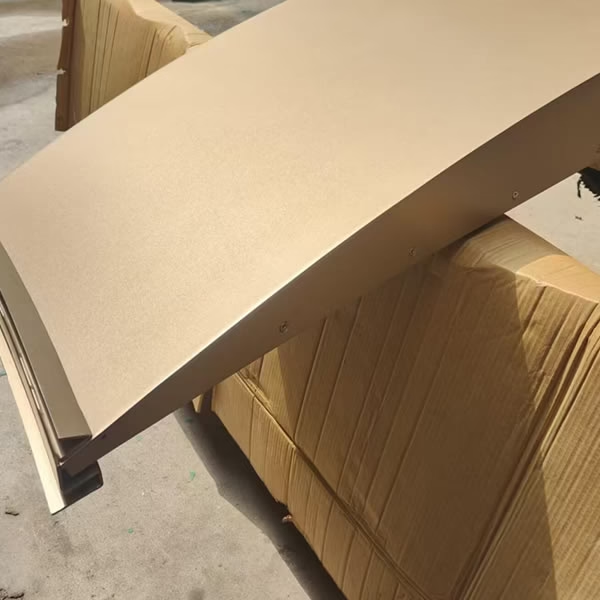
The most significant difference lies in the cross-section. Panneaux en aluminium solides are made from a single monolithic aluminum sheet, usually in the 2 mm to 3 mm range, with no core filler of any kind. The entire panel is metal, so it offers consistent strength and behaves predictably under load. Panneaux composites en aluminium, by contrast, are built from two thin aluminum layers (typically around 0.3 mm to 0.5 mm each) permanently fused around a plastic or mineral core. That lightweight core is what gives ACP its rigidity relative to weight, but it also makes the panel’s behavior depend heavily on the core material chosen.
Solid Aluminum vs. Aluminum Composite: Key Differences
| Propriété | Solid Aluminum Panel | Aluminum Composite Panel (ACM/ACP) |
|---|---|---|
| Matériau de base | None — single solid sheet | Plastic (PE) or fire-retardant mineral core |
| Typical thickness | 2 mm – 3 mm | 3 mm – 6 mm overall (thin skins + core) |
| Poids | Heavier, roughly double per unit area | Lightweight, generally far lighter despite greater thickness |
| Joinery & fab | Welds, folds, and rainscreen joinery; stiffer edge detailing | Tape-seamed or gasketed joints; easier curves and bends |
Practical Considerations for the Spec Sheet
Choosing between the two usually comes down to a few practical trade-offs:
- Flatness and stability: Solid aluminum panels hold a tighter, flatter plane and are generally more dent-resistant, while ACP is more prone to oil-canning on large spans.
- Formabilité : ACP is more flexible and easier to form into curves, radii, and complex shapes, whereas solid panels excel at sharp, crisp corners and heavy-duty edge returns.
- Fire performance: Fire-retardant (FR) mineral-core ACP and solid aluminum both meet stricter requirements; standard PE-core ACP should be limited to lower-risk, non-combustible applications.
- Maintenance and durability: Solid panels offer longer-term resistance to impact and perforation; ACP is easier to replace in sections if a single cassette is damaged.
- Cost and weight: ACP is typically the more budget-friendly, lighter option that eases structural and crane loads; solid aluminum commands a premium but adds structural robustness.
A reputable fabricator — such as Wallnova, an architectural aluminum cladding manufacturer — can guide you on panel sizing, joinery detail, and the right alloy and coating for your climate, so the material you specify actually performs as the design intends. Whichever you choose, define the thickness, core type, and jointing method clearly at tender stage; that is where the real cost and performance differences live.
Cost Comparison: Solid Aluminum vs Composite Aluminum Panels per Square Meter

cURL Too many subrequests by single Worker invocation. To configure this limit, refer to https://developers.cloudflare.com/workers/wrangler/configuration/#limits
cURL Too many subrequests by single Worker invocation. To configure this limit, refer to https://developers.cloudflare.com/workers/wrangler/configuration/#limits
cURL Too many subrequests by single Worker invocation. To configure this limit, refer to https://developers.cloudflare.com/workers/wrangler/configuration/#limits
cURL Too many subrequests by single Worker invocation. To configure this limit, refer to https://developers.cloudflare.com/workers/wrangler/configuration/#limits
cURL Too many subrequests by single Worker invocation. To configure this limit, refer to https://developers.cloudflare.com/workers/wrangler/configuration/#limits
cURL Too many subrequests by single Worker invocation. To configure this limit, refer to https://developers.cloudflare.com/workers/wrangler/configuration/#limits
| Facteur de coût | Solid Aluminum Panel | cURL Too many subrequests by single Worker invocation. To configure this limit, refer to https://developers.cloudflare.com/workers/wrangler/configuration/#limits |
|---|---|---|
| cURL Too many subrequests by single Worker invocation. To configure this limit, refer to https://developers.cloudflare.com/workers/wrangler/configuration/#limits | cURL Too many subrequests by single Worker invocation. To configure this limit, refer to https://developers.cloudflare.com/workers/wrangler/configuration/#limits | cURL Too many subrequests by single Worker invocation. To configure this limit, refer to https://developers.cloudflare.com/workers/wrangler/configuration/#limits |
| cURL Too many subrequests by single Worker invocation. To configure this limit, refer to https://developers.cloudflare.com/workers/wrangler/configuration/#limits | cURL Too many subrequests by single Worker invocation. To configure this limit, refer to https://developers.cloudflare.com/workers/wrangler/configuration/#limits | cURL Too many subrequests by single Worker invocation. To configure this limit, refer to https://developers.cloudflare.com/workers/wrangler/configuration/#limits |
| Fabrication | cURL Too many subrequests by single Worker invocation. To configure this limit, refer to https://developers.cloudflare.com/workers/wrangler/configuration/#limits | cURL Too many subrequests by single Worker invocation. To configure this limit, refer to https://developers.cloudflare.com/workers/wrangler/configuration/#limits |
| cURL Too many subrequests by single Worker invocation. To configure this limit, refer to https://developers.cloudflare.com/workers/wrangler/configuration/#limits | cURL Too many subrequests by single Worker invocation. To configure this limit, refer to https://developers.cloudflare.com/workers/wrangler/configuration/#limits | cURL Too many subrequests by single Worker invocation. To configure this limit, refer to https://developers.cloudflare.com/workers/wrangler/configuration/#limits |
| cURL Too many subrequests by single Worker invocation. To configure this limit, refer to https://developers.cloudflare.com/workers/wrangler/configuration/#limits | cURL Too many subrequests by single Worker invocation. To configure this limit, refer to https://developers.cloudflare.com/workers/wrangler/configuration/#limits | cURL Too many subrequests by single Worker invocation. To configure this limit, refer to https://developers.cloudflare.com/workers/wrangler/configuration/#limits |
| Fire-retardant grade | Inherently non-combustible | FR core adds cost |
| Typical delivered cost | Generally higher | Generally lower |
| Order volume / wholesale | Scales with quantity | Scales with quantity |
Hidden costs to watch for
Beyond the panel price itself, several line items can quietly move the total. Keep these in mind when comparing quotes:
- Plus tolerances and waste — solid aluminum generates more offcut waste in fabrication, which suppliers often build into the per-square-meter rate.
- Cutting, folding, and routing — complex panel layouts and open-joint profiles add fabrication hours for both systems, but especially for solid panels.
- Sealing and install details — joint design, backer rods, gaskets, and fixing systems add labor and materials that are easy to overlook when comparing panel-only prices.
- Transportation and logistics — heavier solid panels raise freight and handling costs on a per-meter basis for large-volume orders.
- Minimums and lead time — custom colors, thicker gauges, or FR cores can trigger minimum order quantities and longer production cycles that affect both price and scheduling.
- Replacements and rework — any misalignment or coating mismatch found on site costs time and money; specify tolerances clearly before placing the order.
For projects where budget control is the deciding factor, a supplier that offers both technologies — such as Wallnova — can help you compare apples to apples and match the right panel system to the right part of the building. The practical takeaway: ACP generally wins on first-cost for flat, large-area cladding, while solid aluminum tends to justify its higher per-square-meter price where impact resistance, longevity, and design flexibility are non-negotiable.
Durability, Fire Safety and Performance: Solid Aluminum vs Composite Panels
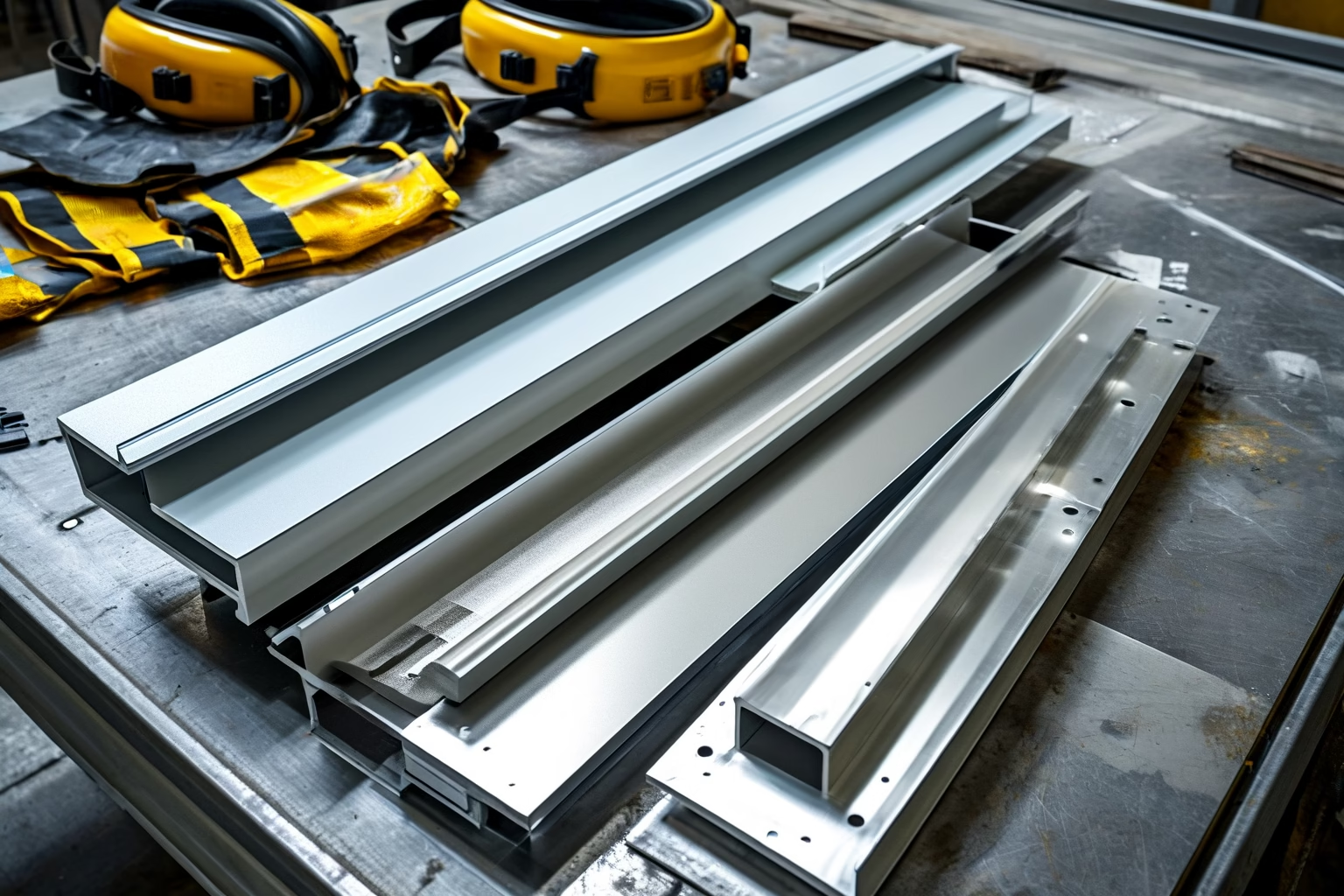
Beyond first cost, the long-term behavior of a cladding system is what determines whether a project holds its value — or becomes a maintenance liability. Here is where solid aluminum and aluminum composite panels (ACM/ACP) genuinely diverge, and where an honest specifier weighs more than the surface finish.
Flatness and waviness over time. ACP’s advantage begins at the panel line: the rigid core keeps large sheets visibly flat straight out of the box, which is why composite is a go-to for smooth, long-span facades. The trade-off emerges under long-term thermal cycling. Aluminum cladding expands and contracts roughly twice as much as steel, and in a bonded composite this differential stress is absorbed by the core. With repeated heating and cooling, thin-skinned ACP can develop subtle panelite ripple or coating telegraphing, especially in dark colors or harsh sun. Solid aluminum, milled or formed as a homogeneous plate, expands and contracts as one piece — it resists distortion predictably and holds a crisp edge, though it demands more robust substructure and stiffer fabrication to stay flat across a wide cavity.
Impact resistance. A solid aluminum panel is effectively a single structural member; a dent or penetrating strike deforms the face sheet but rarely pushes through the wall envelope. Composite, by contrast, has a thin outer skin over a soft core — a localized impact can crush the core and leave a permanent depression that is difficult to repair without replacing the panel. In at-grade, high-traffic, or vandalism-exposed zones, the beefier solid panel carries a clear edge.
The essential differences in day-to-day structural behavior can be summed up simply:
| Propriété | Aluminium massif | Composite (ACM/ACP) |
|---|---|---|
| Flatness retention | Holds over time with stiff substructure | Excellent at first; requires proper detail under thermal cycling |
| Résistance aux impacts | Strong — localized dents rarely breach the envelope | Soft core susceptible to crushing and permanent dents |
| Repairability | cURL Too many subrequests by single Worker invocation. To configure this limit, refer to https://developers.cloudflare.com/workers/wrangler/configuration/#limits | cURL Too many subrequests by single Worker invocation. To configure this limit, refer to https://developers.cloudflare.com/workers/wrangler/configuration/#limits |
| cURL Too many subrequests by single Worker invocation. To configure this limit, refer to https://developers.cloudflare.com/workers/wrangler/configuration/#limits | cURL Too many subrequests by single Worker invocation. To configure this limit, refer to https://developers.cloudflare.com/workers/wrangler/configuration/#limits | cURL Too many subrequests by single Worker invocation. To configure this limit, refer to https://developers.cloudflare.com/workers/wrangler/configuration/#limits |
| cURL Too many subrequests by single Worker invocation. To configure this limit, refer to https://developers.cloudflare.com/workers/wrangler/configuration/#limits | cURL Too many subrequests by single Worker invocation. To configure this limit, refer to https://developers.cloudflare.com/workers/wrangler/configuration/#limits | cURL Too many subrequests by single Worker invocation. To configure this limit, refer to https://developers.cloudflare.com/workers/wrangler/configuration/#limits |
cURL Too many subrequests by single Worker invocation. To configure this limit, refer to https://developers.cloudflare.com/workers/wrangler/configuration/#limits cURL Too many subrequests by single Worker invocation. To configure this limit, refer to https://developers.cloudflare.com/workers/wrangler/configuration/#limits
cURL Too many subrequests by single Worker invocation. To configure this limit, refer to https://developers.cloudflare.com/workers/wrangler/configuration/#limits cURL Too many subrequests by single Worker invocation. To configure this limit, refer to https://developers.cloudflare.com/workers/wrangler/configuration/#limits
cURL Too many subrequests by single Worker invocation. To configure this limit, refer to https://developers.cloudflare.com/workers/wrangler/configuration/#limits cURL Too many subrequests by single Worker invocation. To configure this limit, refer to https://developers.cloudflare.com/workers/wrangler/configuration/#limits
cURL Too many subrequests by single Worker invocation. To configure this limit, refer to https://developers.cloudflare.com/workers/wrangler/configuration/#limits Wallnova cURL Too many subrequests by single Worker invocation. To configure this limit, refer to https://developers.cloudflare.com/workers/wrangler/configuration/#limits
cURL Too many subrequests by single Worker invocation. To configure this limit, refer to https://developers.cloudflare.com/workers/wrangler/configuration/#limits
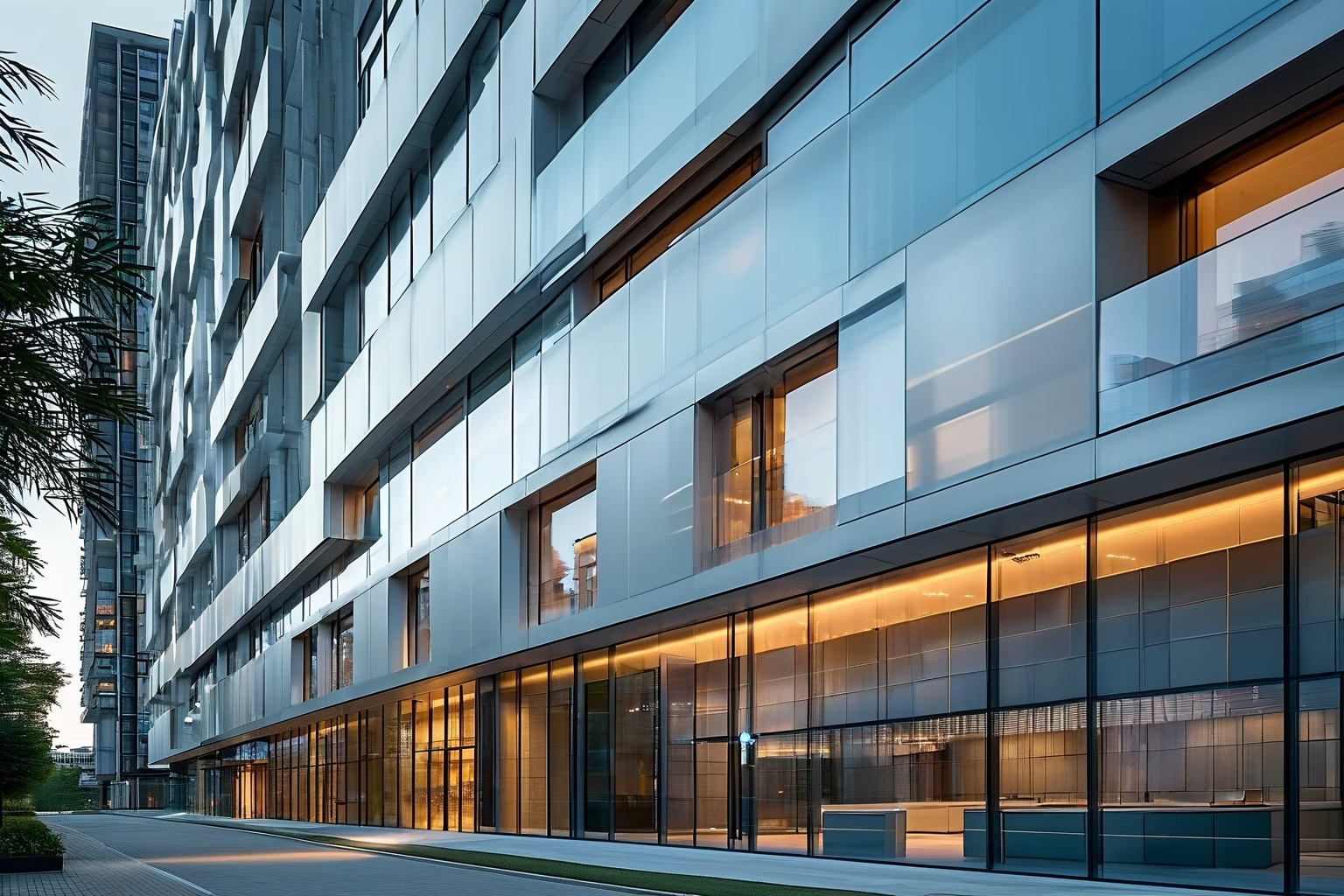
cURL Too many subrequests by single Worker invocation. To configure this limit, refer to https://developers.cloudflare.com/workers/wrangler/configuration/#limits
cURL Too many subrequests by single Worker invocation. To configure this limit, refer to https://developers.cloudflare.com/workers/wrangler/configuration/#limits
cURL Too many subrequests by single Worker invocation. To configure this limit, refer to https://developers.cloudflare.com/workers/wrangler/configuration/#limits cURL Too many subrequests by single Worker invocation. To configure this limit, refer to https://developers.cloudflare.com/workers/wrangler/configuration/#limits
cURL Too many subrequests by single Worker invocation. To configure this limit, refer to https://developers.cloudflare.com/workers/wrangler/configuration/#limits Free-floating, back-ventilated assemblies reward a panel that resists oil-canning and holds crisp geometry over a large unsupported span. Solid aluminum is the conventional, low-risk choice for premium rainscreens where visual flatness and long-term stability matter more than shaving the material budget.
Custom curved and parametric panels. When a facade needs gentle radii, folded returns, deep reveals, or tight three-dimensional geometry, solid aluminum can be brake-pressed, roll-formed, and welded into shapes a composite core simply cannot hold. The material is a natural fit for the sculptural, high-design facades increasingly specified for flagship architecture.
Premium commercial builds. For headquarters, civic buildings, and hospitality where budget is secondary to longevity and finish quality, solid aluminum is the transparent, defensible default.
Where aluminum composite panels make the call
Signage and brand identity. ACP is light, easy to cut, and available in an enormous range of colors and finishes—which is exactly why it dominates signage, fascia, and lightweight branding cladding. At modest panel sizes the flatness concerns that trouble large spans rarely apply.
Smooth, large-format flat cladding on a budget. Where the facade is essentially flat, panel sizes are moderate, and the cost envelope is tight, ACP delivers a clean appearance at a fraction of solid material cost. The aluminum skins are thin, but for low-exposure soffits, infill panels, and podium cladding the trade-off is often acceptable.
Renovation and overcladding. Lightweight ACP is a go-to for retro-fit and overcladding work, where dead-load limits and existing-substrate attachment drive the decision. It can be fixed to older structures without the reinforcement that heavier solid panels demand.
Cost-sensitive projects. When first cost is the controlling factor, ACP is frequently the pragmatic answer.
A quick guide by building type
| Building type | Better choice | Pourquoi |
|---|---|---|
| High-rise curtain wall | Solid aluminum | Wind load, flatness, unitized integration |
| Large-faced rainscreen | Solid aluminum | Oil-canning resistance, stable geometry |
| Curved / parametric facade | Solid aluminum | Formability, welded details, folded returns |
| Signage & fascia | ACP | Lightweight, cut-ability, color range |
| Flat infill / soffit (budget) | ACP | Cost-effective flat appearance |
| Overcladding / retrofit | ACP | Low dead load, easy attachment |
Making the final call
A few heuristics cover most projects. Choose solid aluminum when the panel is large, the span unsupported, the geometry curved, or the building tall. Choose ACP when the panels are flat and modest in size, the view is close-range, or weight and first cost dominate. Above all, resist the temptation to default to the cheaper option on a large, highly visible or high-exposure facade—the savings are easy to see up front and the flatness and longevity trade-offs are expensive to address later. For large or complex facade programs, a specialist supplier can help pin down which panels perform where; Wallnova, for one, provides both solid aluminum and composite solutions tailored to project-specific performance and budget requirements, making it easier to specify confidently in either direction.
The right answer is the one that fits the geometry, the exposure, and the budget of your specific elevation.
How to Choose Between Aluminum and Aluminum Composite Panels for Your Project

Deciding between solid aluminum panels and aluminum composite panels (ACM/ACP) doesn’t come down to one magic factor. It comes down to how your specific project weighs a handful of real-world requirements. Work through the checklist below in order, and the right cladding choice will become clear.
Step-by-Step Decision Checklist
1. Project height and building type. cURL Too many subrequests by single Worker invocation. To configure this limit, refer to https://developers.cloudflare.com/workers/wrangler/configuration/#limits
cURL Too many subrequests by single Worker invocation. To configure this limit, refer to https://developers.cloudflare.com/workers/wrangler/configuration/#limits cURL Too many subrequests by single Worker invocation. To configure this limit, refer to https://developers.cloudflare.com/workers/wrangler/configuration/#limits
cURL Too many subrequests by single Worker invocation. To configure this limit, refer to https://developers.cloudflare.com/workers/wrangler/configuration/#limits cURL Too many subrequests by single Worker invocation. To configure this limit, refer to https://developers.cloudflare.com/workers/wrangler/configuration/#limits
cURL Too many subrequests by single Worker invocation. To configure this limit, refer to https://developers.cloudflare.com/workers/wrangler/configuration/#limits cURL Too many subrequests by single Worker invocation. To configure this limit, refer to https://developers.cloudflare.com/workers/wrangler/configuration/#limits
cURL Too many subrequests by single Worker invocation. To configure this limit, refer to https://developers.cloudflare.com/workers/wrangler/configuration/#limits cURL Too many subrequests by single Worker invocation. To configure this limit, refer to https://developers.cloudflare.com/workers/wrangler/configuration/#limits
cURL Too many subrequests by single Worker invocation. To configure this limit, refer to https://developers.cloudflare.com/workers/wrangler/configuration/#limits cURL Too many subrequests by single Worker invocation. To configure this limit, refer to https://developers.cloudflare.com/workers/wrangler/configuration/#limits
cURL Too many subrequests by single Worker invocation. To configure this limit, refer to https://developers.cloudflare.com/workers/wrangler/configuration/#limits cURL Too many subrequests by single Worker invocation. To configure this limit, refer to https://developers.cloudflare.com/workers/wrangler/configuration/#limits
cURL Too many subrequests by single Worker invocation. To configure this limit, refer to https://developers.cloudflare.com/workers/wrangler/configuration/#limits
| cURL Too many subrequests by single Worker invocation. To configure this limit, refer to https://developers.cloudflare.com/workers/wrangler/configuration/#limits | Panneaux en aluminium massif | cURL Too many subrequests by single Worker invocation. To configure this limit, refer to https://developers.cloudflare.com/workers/wrangler/configuration/#limits |
|---|---|---|
| cURL Too many subrequests by single Worker invocation. To configure this limit, refer to https://developers.cloudflare.com/workers/wrangler/configuration/#limits | Plus élevé | Inférieur |
| cURL Too many subrequests by single Worker invocation. To configure this limit, refer to https://developers.cloudflare.com/workers/wrangler/configuration/#limits | Meilleur | cURL Too many subrequests by single Worker invocation. To configure this limit, refer to https://developers.cloudflare.com/workers/wrangler/configuration/#limits |
| Résistance au feu | Excellent | cURL Too many subrequests by single Worker invocation. To configure this limit, refer to https://developers.cloudflare.com/workers/wrangler/configuration/#limits |
| cURL Too many subrequests by single Worker invocation. To configure this limit, refer to https://developers.cloudflare.com/workers/wrangler/configuration/#limits | cURL Too many subrequests by single Worker invocation. To configure this limit, refer to https://developers.cloudflare.com/workers/wrangler/configuration/#limits | Low (flat/cut-to-size) |
| Résistance aux impacts | Excellent | Modérée |
| Edge/cores | Homogeneous, no voids | Core exposed at edges |
| Typical profile | High-rise, flagship facades | Retail, signage, budget builds |
The Decision, Converged
There is no universally “best” panel — there is what fits your building. Buyers with modest budgets, quick timelines, and forgiving, low-rise applications will get real value from ACM. But for owners who want a facade that holds its appearance and structural integrity for decades, who face strict fire codes, and who view the building as a long-term asset rather than a short-term expense, solid aluminum is the more defensible specification.
Across the full comparison — cost, durability, fire safety, fabrication, and maintenance — solid aluminum panels consistently prove themselves the right call for demanding, long-life projects. If you are planning that kind of building, partnering with an experienced architectural cladding manufacturer matters. With a team that engineers, fabricates, and finishes to precise project requirements, Wallnova builds solid aluminum systems built to perform for the life of the building. Choose the material that matches your project’s real priorities — and when that points to longevity, you’ll have made the right one.
 Français
  English
  Bahasa Indonesia
  Deutsch
  Italiano
  Español
  العربية
  Español de México
  Nederlands
  香港中文
香港中文