How Much Does Aluminum Veneer Curtain Wall Cost per Square Meter?

Table of Contents

Aluminum veneer, as a cost-effective metal decorative material, has become the mainstay of the curtain wall decoration industry. When shopping for aluminum veneer products, it is natural to need to understand how much the price of aluminum veneer is in the flat market. So, how is the price of aluminum veneer calculated? Although we can see some aluminum veneer price formulas on the Internet, for different aluminum veneer manufacturers, their offers still vary significantly. Specifically, quotes are given according to the project drawings and the actual situation of the site. After all, under different demand conditions, aluminum veneer prices are not the same.
Curtain Wall Aluminum Veneer Price Analysis

1. The Cost of Raw Materials

Aluminum Price Fluctuations on the Cost of
Aluminum ingot prices are influenced by the international market (such as the LME aluminum prices) and supply and demand. Price fluctuations are directly transmitted to the cost of aluminum veneer.

  • Example: If the price of aluminum ingots rises by 1000 yuan per ton, the cost of aluminum veneer may increase by 5% to 8% (assuming that aluminum accounts for 60% of the cost).

Different Alloy Composition of the Price Difference

Alloy ModelFeaturePrice Difference (compared with 3003 alloy)
3003Commonly used, general rust resistanceBenchmark price
5052High strength, good corrosion resistance+15% to 20%
6061Good processability, high strength+25% to 30%

2. Processing

Influence of Surface Treatment on Price

Processing MethodProcess CharacteristicsCost Increase
Powder coatingBasic anti-corrosion, color optionalBase price
Fluorocarbon baking paintSuper weather-resistant, 20 years without fading color+30% to 40%
Wood grain transferImitation of wood grain effect, strong decorative+25% to 35%
AnodizingMetallic texture, wear-resistant+50% to 60%

Processing Precision and Complexity

  • Bending times: Each additional complex bending increases the cost by 5% to 10%.
  • Punching/engraving: For every 10% increase in hole density or engraving area, the cost rises by 8% to 12%.
  • Shaped plate processing: Custom molds or laser cutting is required, the cost increases by 30%.
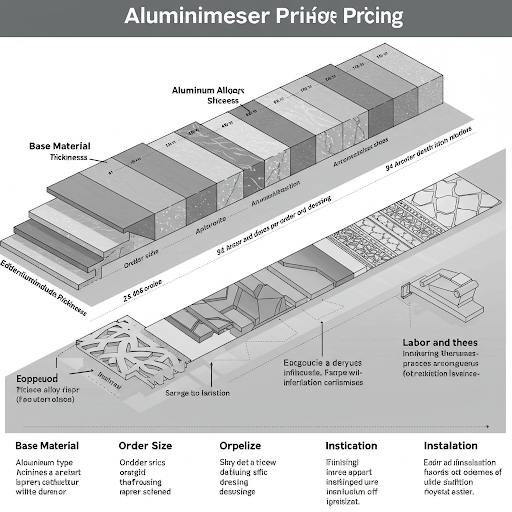
Influence of Surface Treatment on Price

3. Specification and Thickness

Thickness and Price Relationship

Thickness (mm)Price Range ($/㎡)Remarks
1.5180~260Commonly used for indoor or low-rise buildings
2.0240~320General-purpose, most cost-effective
2.5300~400High-rise or high wind pressure resistance requirement
3.0360~480Ultra-high-rise buildings or special needs

Shaped Panel/Oversized Panel Additions

  • Shaped panel: 15% to 40% markup according to processing difficulty.
  • Oversized boards (e.g., more than 1.5m×4m): 20% to 35% price increase due to low material utilization.

4. Brand and Quality

Brand Premium

  • Well-known brands: Prices are 10% to 30% higher than ordinary brands, but provide longer warranties (e.g., 10 to 15 years).
  • Common brand: Lower price, but shorter warranty (usually 5 to 8 years).

Quality Standard Impact

Type of StandardTesting RequirementsCost Increase
National standardBasic performance testingBenchmark price
European standardStricter corrosion resistance and wind pressure resistance test+10% to 15%

5. Other Factors

Transportation and Installation Costs

  • Transportation cost: Calculated by distance, usually USD 0.8 to 1.2/㎡ per kilometer.
  • Installation cost: Average market price $120 to 180/㎡, complex projects may exceed $200/㎡.

Market Supply and Demand

  • Tight supply and demand period: Prices may go up by 10% to 15%.
  • Loose supply and demand period: Price may go down by 5% to 8%.

Summary and Purchasing Suggestions

Core Price Drivers:

  • Raw materials (40% to 50%)
  • Processing technology (30% to 35%)
  • Specifications and thickness (15% to 20%)

Procurement Recommendations:

  • Define project requirements (thickness, surface treatment, wind pressure resistance level) to avoid over-design.
  • Compare at least 3 suppliers and focus on total cost (material + processing + transportation + installation).
  • Prioritize suppliers with certifications (e.g., ISO, European Standard) to reduce the risk of late maintenance.

Curtain Wall Aluminum Veneer Price FAQ Analysis

1. “Does the quotation of curtain wall aluminum veneer include transportation and installation cost?”

Answer:
The quotation range is different: In the actual procurement process, the quotation range given by different suppliers varies. Some manufacturers’ quotes include transportation costs and installation services, while some quotes are limited to material costs.
Specific project requirements: If the project has special requirements for transportation conditions (e.g., protective measures, transportation distance) and installation environment, additional costs are usually attached.
Suggestion: Before purchasing, you should confirm the composition of the offer with the supplier, make it clear whether the transportation and installation costs are included, and indicate the relevant terms in the contract to avoid disputes due to unclear costs at a later stage.

2. “How much will different processing techniques affect the price?”

Solution:

  • Surface treatment method:
    • Spraying: The process is simpler, the equipment investment is lower, and the cost is relatively low.
    • Fluorocarbon baking paint: The cost will increase significantly due to higher process requirements and good weather resistance of the coating.
    • Wood grain transfer printing: For the pursuit of decorative effect, the process requirements are higher, more labor-consuming, and the price is higher.
  • Processing precision and complexity:
    • Bending, punching, engraving, etc.: These processes, if the design is more complex, require high-precision equipment and longer processing hours, which directly leads to an increase in labor and equipment costs.
  • Overall impact: The choice of each process will be different in product appearance and performance, and therefore will be directly reflected in the product offer. It is recommended to select the appropriate process according to the actual project requirements, while paying attention to the balance between cost and performance.
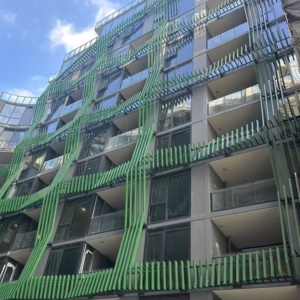
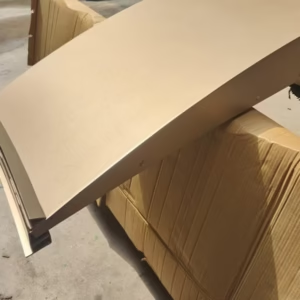
Laser-Cut Aluminum Decorative Facade Screens: Creative & Functional

Some buildings wear their identity like a silk suit—sleek, expressive, and full of attitude. That’s the charm of laser-cut aluminum decorative facade screen panels. They don’t just cover walls—they flirt with sunlight, play with shadow, and whisper messages through patterns only artists could dream up. A project manager from Wallnova said it best in an April 2024 briefing: “Design isn’t just what you see—it’s how a structure breathes. These panels let buildings exhale.” And that quote? It stuck like duct tape in a hurricane. You’ve got deadlines breathing down your neck and clients wanting magic on a budget. These aren’t just pretty sheets of metal; they solve real headaches—heat control, airflow, privacy—all while looking sharp enough for an architecture magazine cover. So if you’re planning to turn concrete into conversation—and still meet code—you’re exactly where you should be. Quick Answers for Elevating Design with Laser-Cut Aluminum Decorative Facade Screen Panels Material Smarts: Choose aluminum alloy 5052 or marine grade sheets for strength, corrosion resistance, and ease of handling.Finish First: PVDF coatings and powder-coated extrusions offer both weather durability and sleek aesthetics.Design Brilliance: Intricate laser cuts, custom artistry, and geometric perforations turn buildings into visual statements.Function Meets Form: Ventilation-optimized panel layouts enhance airflow without sacrificing style or privacy.Fit to Perfection: Custom dimensions and heavy gauge specs ensure long-term structural integrity on any scale of installation. Five Reasons To Choose Aluminum For Facade Screens Aluminum’s no lightweight when it comes to performance—it’s a smart pick for modern facade screens. Here’s why it keeps topping the list. Aluminum Alloy 5052: Optimal Strength and Durability Lightweight Marine Grade Aluminum Sheets for Easy Handling From delivery truck to building frame, these aluminum sheets make the process smoother than you’d expect. Advantages of Powder-Coated Aluminum Extrusions in Aesthetics Grouped Benefits: With powder-coated finishes on your side, you don’t just build walls—you make statements. Weather Resistance: The Role of PVDF Coatings According to a recent report by BCC Research published in early 2024, demand for PVDF-coated architectural materials is up by nearly 18%, driven by rising climate unpredictability worldwide. PVDF coatings bring serious muscle when protecting your facade: In short? PVDF makes sure your investment doesn’t just survive—it shines through storms and sunlight alike. Creative Designs Using Laser-Cut Aluminum Screens Laser-cut aluminum decorative facade screen panels are where art meets engineering. These designs aren’t just stylish—they’re smart, functional, and full of character. Intricate Laser Cut Patterns: Endless Design Possibilities Swirling florals, abstract fractals, or classic arabesques—laser cutting enables it all with incredible precision. From minimalist grids to ornate motifs, the design spectrum is wide open thanks to advanced digital fabrication techniques. And here’s the kicker: these intricate patterns don’t just look cool—they also allow light play and shadow casting that changes throughout the day, adding dynamic movement to a static surface. Custom Artistic Screen Designs for Unique Aesthetics The beauty of custom artistic screens lies in their ability to reflect personal taste or brand identity: – Want something bold? Go with high-contrast shapes and negative space.– Prefer subtlety? Opt for finer detailing and muted tones in your decorative elements. One recent report by ArchiData Insights noted that “over 63% of architects now prioritize facade personalization as a key design driver,” showing how much weight is placed on custom designs today. With laser-cut aluminum decorative facade screen panels, you’re not just choosing a material—you’re curating an experience. Geometric Perforation Design Options for Modern Finesse Grouped options include: ■ Chevron arrays – angular precision meets modern chic.■ Hexagonal tessellations – sharp yet fluid geometry ideal for contemporary buildings.■ Diamond mesh – clean lines with strong visual rhythm. Every pattern brings its own flavor of contemporary style, helping architects blend utility with flair through calculated geometric perforation choices that still allow airflow or privacy where needed. Ventilation Optimized Panel Designs for Functionality Step-by-step flow: Step 1: Identify airflow needs based on building orientation and climate zone.Step 2: Choose panel layouts with integrated vents or micro-perforations designed to optimize cross-breeze without compromising aesthetics.Step 3: Test air exchange performance using CFD modeling before final fabrication. This kind of smart design ensures your laser-cut aluminum decorative facade screen panels work hard behind the scenes while still looking sharp out front. Architectural Facade Design Integration: Blending Art and Structure These facades aren’t slapped on as afterthoughts—they’re woven into the building’s DNA from day one: – They act as both skin and skeleton—balancing form with function seamlessly.– Integrated lighting can turn them into glowing canvases at night. The trick lies in thoughtful placement—aligning cutouts with windows or structural framing so nothing feels accidental. When done right, these screens become more than decoration; they become architectural signatures that express both artistry and engineering discipline through every cut line and contour of the building envelope. Best Practices For Installing Aluminum Decorative Screen Panels Nail your install game with these pro tips for getting aluminum screens up right the first time. Custom Dimensions Facade Elements: Measuring for Perfection Don’t forget edge clearance—leave at least a quarter inch around each panel. When you’re working with custom dimensions, even a few millimeters off can ruin alignment. Wallnova recommends pre-fitting panels before final mounting, especially when dealing with intricate measuring tolerances for modern buildings. Short tip bursts:Match panel seams to structural joints.Account for substrate irregularities.Use mock-ups to test fit before production. Maximum Width Aluminum Sheets: Ensuring Adequate Support Installing wide aluminum sheets? Then you better bring the backup—literally. Grouped essentials: Here’s what support spacing looks like based on common widths: Sheet Width (mm) Recommended Support Spacing (mm) Load Type Fastener Type ≤1200

Read More »

Custom Curved Aluminum Panels for Building Facade|Wallnova manufacture

Curved aluminum panels are more than just a design feature — they are a statement of innovation and craftsmanship. These panels allow architects to create flowing lines, dynamic shapes, and unique surface effects that flat panels simply can’t achieve.Whether you’re designing a commercial complex, cultural center, or modern high-rise, Wallnova’s curved aluminum facade panels ensure

Read More »

Why Choose PVDF Coated Aluminum Panels for Exterior Walls

You ever stand outside a high-rise and think, “Dang, how does that thing still look brand new after battering wind, rain, and sun for years?” Well, odds are it’s rocking PVDF coated aluminum panels for exterior wall cladding—the unsung hero of modern buildings. These bad boys aren’t just about sleek looks; they’re built to take

Read More »

Custom Aluminum Panels Curtain Wall: High-Quality Aluminum Choices

Custom Aluminum Panels Curtain Wall systems aren’t just shiny metal skins slapped on buildings—they’re the armor, the identity, and let’s be honest—the first thing people judge when they roll up to your project site. If you’re wrangling specs for a high-rise or mapping out a sleek civic center, you know this isn’t a game of

Read More »

Join Our Newsletter

Ready to Start Your Project? Contact Us for Expert Solutions