
Behind every flawless façade stands an Aluminum Panel Factory mastering chaos into precision, deadlines, and glossy perfection that never quits.
An Aluminum Panel Factory isn’t just a warehouse with loud machines—it’s the backstage crew behind every sharp skyline and slick storefront you pass on your morning coffee run. When a project falls behind, it’s rarely the blueprint’s fault. It’s supply hiccups, uneven finishes, panels that don’t line up when the clock is ticking and the budget’s sweating. Big builds don’t need drama. They need precision that shows up on time, every time.
As one Wallnova production manager put it in a 2025 industry briefing, “Consistency is what keeps a façade beautiful ten years later—not just on ribbon-cutting day.”
From site planning to CNC prototyping to high-volume roll forming, the real story is control—over quality, cost, and deadlines. Think of it like cooking for a stadium instead of a dinner table. The recipe must scale without losing flavor. That’s where smart manufacturing turns architectural ambition into panels that fit, ship safely, and install without a hitch.
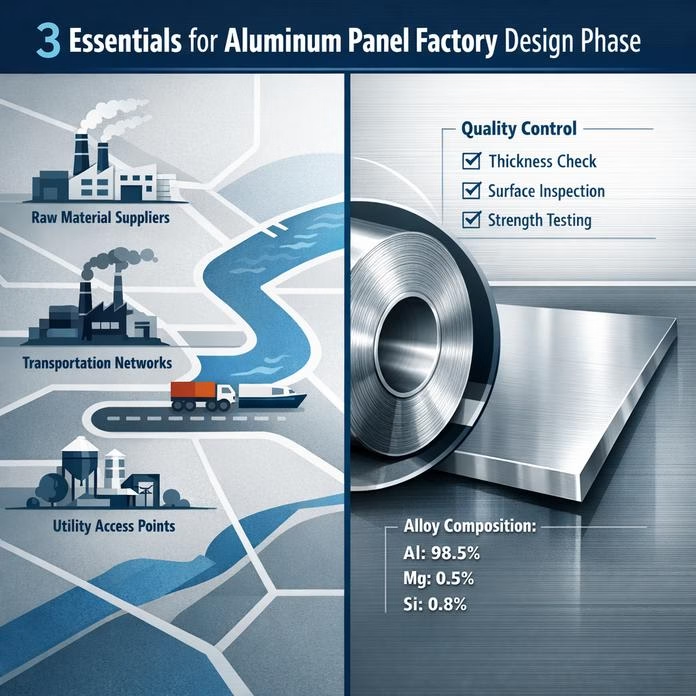
3 Essentials for Aluminum Panel Factory Design Phase
A smart Aluminum Panel Factory starts with clear ground rules: right place, right inputs, right material choice. Miss one, and the whole plant feels it.
Location Matters: Picking Your Ideal Building Material Production Hub
For any Aluminum Panel Factory, the factory site shapes cost and growth. A practical layout looks like this:
1) Supply Chain Proximity
- Near raw material suppliers
- Short haul distance to transportation networks
- Easy link to distributor hubs
2) Operational Foundations
- Stable utility access (power ≥20MW for mid-scale plant)
- Skilled labor availability within 50 km
- Reliable logistics infrastructure for coil and panel flow
3) Compliance Layer
- Friendly regulatory environment
- Clear emission and waste permits
A well-placed aluminum panel factory keeps freight low and production steady. That’s how an Aluminum Panel Factory scales without drama.
Quality Inputs from Raw Material Suppliers
An Aluminum Panel Factory runs only as well as its inputs. Think of it in three checkpoints:
• Core Materials
- Certified aluminum coils and aluminum sheets
- Verified alloy composition (3003, 5005 common)
- Controlled surface finish for coating adhesion
- Supplier Qualification1.1 Audit production lines1.2 Review material specifications1.3 Inspect in-house quality control labs
★ Performance Match
Coatings must meet ASTM and EN fire and weather standards.
A serious aluminum panel factory treats coil thickness tolerance (±0.02 mm) like gold. Consistency keeps every Aluminum Panel Factory product line smooth and reduces scrap inside the panel manufacturing plant.
Solid Aluminum vs ACM Panel Material
Material choice defines how an Aluminum Panel Factory is equipped and staffed.
I. Solid aluminum panels
A. Dense structure, no panel core
B. Higher panel thickness (2–4 mm typical)
C. Strong wind resistance and long-term material properties stability
II. Aluminum composite material
A. Lightweight with PE or FR panel core
B. Flexible fabrication methods (routing, folding)
C. Fire-rated options meeting B1/A2 fire rating levels
An Aluminum Panel Factory focused on facade systems may prefer solid sheets. A flexible aluminum composite panel line fits signage and cladding. The right setup keeps the aluminum panel factory efficient, cost-aware, and structurally sound.
Aluminum Panel Factory Prototyping and Tooling Strategies
Smart prototyping keeps every Aluminum Panel Factory competitive, fast, and ready for demanding facade projects.
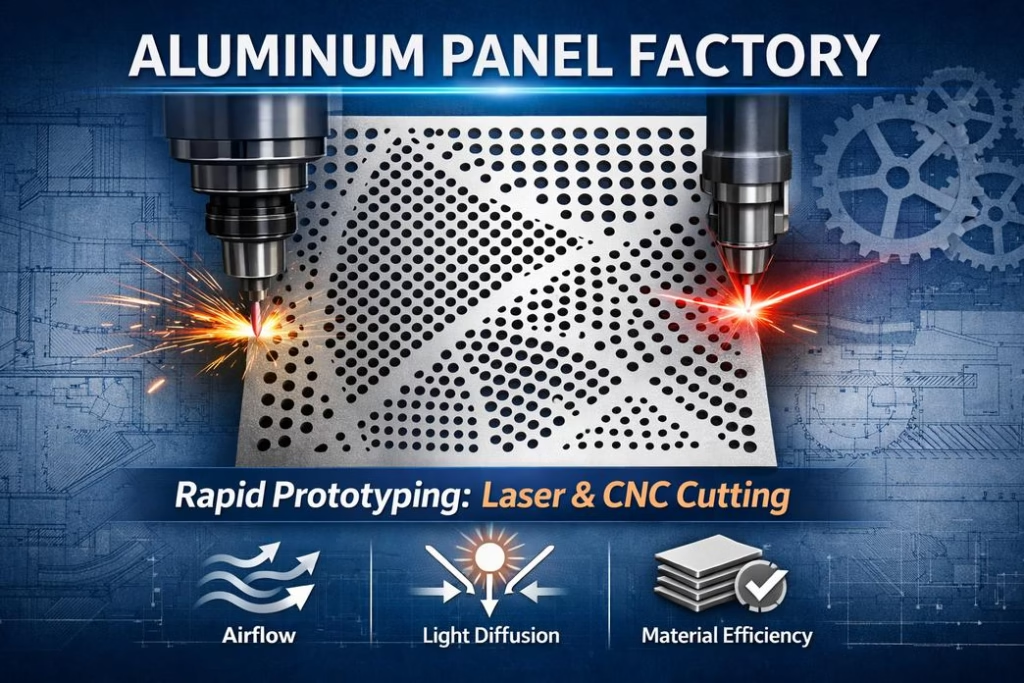
3 Rapid Prototyping Methods for Perforated Aluminum Panels
Inside an Aluminum Panel Factory, testing perforated panels is not guesswork; it’s structured validation.
- Rapid prototyping with laser cutting for fast pattern swaps.
- Adjust hole diameter on aluminum sheets
- Check airflow and light diffusion
- Review facade aesthetics
- CNC cutting within the Aluminum Panel Factory floor
- Sync with digital design files
- Optimize tool path generation
- Reduce scrap, improve material efficiency
- Hybrid trials
- Limited additive manufacturing inserts
- Trial sheet metal forming for edge strength
A capable aluminum panel factory shortens approval cycles. An advanced Aluminum Panel Factory like Wallnova keeps revisions smooth and production-ready.
Why Is CNC Cutting Critical for Your Sample Runs?
In any Aluminum Panel Factory, CNC cutting anchors reliable sample runs.
• Accurate precision fabrication for tight tolerances
• Clean edges for coating tests
• Repeatable prototyping accuracy
1) Import digital design
2) Calibrate spindle and feed rate
3) Execute cut
4) Inspect against CAD
An efficient Aluminum Panel Factory tracks dimensional drift daily. A modern aluminum panels factory treats every prototype as future mass production.
“Precision-driven fabrication is now central to facade innovation and cost control,” noted a 2025 McKinsey construction technology update.
That insight hits home on every Aluminum Panel Factory floor.
Custom Tooling from Architectural Firm Collaboration
An Aluminum Panel Factory grows stronger through project collaboration.
- Align architectural design intent
- Translate design specifications into tooling data
- Coordinate die manufacturing timelines
Tooling flow inside the Aluminum Panel Factory:
- Concept review
- A. Geometry mapping
- B. Tolerance stacking
- Mold creation
- A. Steel selection
- B. Heat treatment
- Pilot bend trials
This fabrication partnership keeps the aluminum panel factory agile. Smart tooling reduces rework before full roll forming begins.
Meeting ASTM Standards through Precision Surface Treatment
Compliance inside an Aluminum Panel Factory depends on disciplined quality control.
• Pre-treatment cleaning
• Controlled anodizing bath timing
• Uniform powder coating thickness
Grouped workflow in the Aluminum Panel Factory:
- Surface prep
- Degreasing
- Rinse balance
- Material finishing
- Coating adhesion test
- Film thickness check
- Validation
- Confirm ASTM standards
- Verify corrosion resistance
- Record panel durability
A serious Aluminum Panel Factory treats finishing as engineering, not decoration. That mindset keeps exterior panels tough for decades.
Large-Scale Production: Achieving Consistent Quality
Scaling an Aluminum Panel Factory is not luck. It’s systems, discipline, and tight control from coil to crate.
Automated Roll Forming for Uniform Panel Profiles
At a high-output Aluminum Panel Factory, consistency starts on the automated roll forming line.
- Core control points:
- aluminum sheets feed accuracy
- calibrated forming dies
- synchronized material handling
1) Input inspection
2) Die alignment check
3) Inline quality control
Within the production line:
- Thickness variance stays within tolerance
- Edge straightness is laser-checked
- Surface tension monitored
A modern aluminum panel factory running stable roll forming simply produces uniform panel profiles—no drama, no rework.
ISO Certification: Your Guarantee of Production Consistency
A serious Aluminum Panel Factory runs on documented logic, not guesswork.
Under a certified quality management system:
- Level 1: Policy
- standard operating procedures
- process documentation
- Level 2: Execution
- Internal auditing
- Corrective logs
- Level 3: Review
- KPI tracking
- continuous improvement
“Manufacturers with mature ISO-based systems reported up to 23% lower defect rates in 2025 audits,” noted an International Organization for Standardization industry brief (2025).
An ISO-driven aluminum panel factory builds real production consistency trusted by contractors.
Inconsistent Joints? Precision Assembly for Flawless Facades
Joint gaps kill facade aesthetics. A disciplined Aluminum Panel Factory avoids that.
Inside assembly:
- precision assembly stations
- Digital alignment tools
- Verified tolerances
- Structured fastening methods
- Torque control
- Pull-test sampling
- Final review
- Visual seam scan
- Mock-up installation techniques
Quick checks help:
• Panel flatness
• Corner symmetry
• Clean panel joints
That’s how an aluminum panel factory delivers flawless facades without site headaches.
Optimizing Storage Conditions for Bulk Panel Inventory
Production means nothing if storage fails. Every Aluminum Panel Factory needs strict storage conditions.
Warehouse logic:
1) Climate layer
- environmental control (humidity <60%)
- Air circulation
2) Stack layer
- Protective pads
- Limited height
3) Flow layer
- inventory rotation
- Barcode-based warehouse management
For bulk panel inventory, smart material protection plus coordinated logistics keep coatings intact.
This is where brands like Wallnova stand out—tight control from factory floor to delivery truck, just how a reliable aluminum panel factory should run.
FAQs about Aluminum Panel Factory
Why is strategic planning essential when launching an Aluminum Panel Factory?
Launching an Aluminum Panel Manufacturing Plant is more than installing machines; it is aligning location, partners, and standards into one disciplined system.
- Location Logic
- Near a reliable Raw Material Supplier of Coated Aluminum Coil or Aluminum Composite Material (ACM) to control cost and consistency.
- Close to major logistics routes to protect the Delivery Schedule and reduce risk during long-distance Shipping Methods.
- Operational Backbone
- Stable utilities to support continuous Roll Forming, Surface Treatment, and precise Panel Assembly.
- Space planning that separates fabrication, inspection, and packing zones to avoid surface damage.
- Compliance & Trust
- Alignment with ASTM Standards or EN Standards.
- Structured quality documentation toward ISO Certification.
When these layers connect, the factory grows from a workshop into a dependable Building Material Production Hub serving facade and cladding markets with confidence.
How do materials and processes influence panel performance in an Architectural Panel Factory?
Performance begins with material discipline and ends with controlled fabrication inside an Architectural Panel Factory or Composite Panel Production Facility.
- Material Selection
- Solid Aluminum Sheet: high strength for demanding Building Facade systems.
- Aluminum Composite Material (ACM): lighter weight for Ceiling System and Interior Wall Cladding.
- Perforated Aluminum Panel or Anodized Aluminum: chosen for airflow, aesthetics, or corrosion resistance.
- Process Precision
- CNC Cutting refines patterns and reduces error before mass production.
- Controlled Bending and Folding ensures tight corner lines for Column Cover or Signage Substrate.
- Calibrated Surface Treatment protects coating adhesion and supports Fire Rating Compliance.
Quality is not an accident; it is the quiet result of disciplined material control meeting accurate fabrication.
How can an Aluminum Panel Factory maintain quality and protect products before delivery?
Consistency inside a Metal Cladding Fabrication Site depends on layered control, from inspection to storage.
- In-Process Control
- Automated Roll Forming keeps thickness uniform.
- Inspection checkpoints compare output against ASTM Standards and internal tolerances.
- Periodic Weather Resistance Testing guards long-term facade durability.
- Final Handling Discipline
- Clear Packaging Requirements: protective film, corner guards, labeled stacks.
- Managed Storage Conditions: humidity control to prevent corrosion.
- Verified Loading Capacity to avoid deformation during transport.
- Supply Chain Coordination
- Tight communication between Panel Manufacturer, Distributor Network, and Project Contractor.
- Confirmed site readiness before dispatch to protect the Delivery Schedule.
A factory that respects these steps does more than ship panels—it delivers assurance with every crate.
 English
  Français
  Bahasa Indonesia
  Deutsch
  Italiano
  Español
  العربية
  Español de México
  Nederlands
  香港中文
香港中文